
Sawdust at the base of a tree. A branch that dies for no obvious reason. Bark that starts cracking in a spot that looked fine last season. These are the signs most homeowners notice too late, after tree borers have already done significant damage beneath the surface. Tree borer treatment is most effective when it starts early, before the infestation spreads through the cambium and compromises the tree’s ability to move water and nutrients.
This guide covers how to identify borer damage, determine whether your tree can recover, choose the right treatment, and prevent future infestations. If you are already seeing symptoms, professional tree health care is often the fastest path to an accurate diagnosis and a treatment plan that actually matches your pest.
Signs of Tree Borer Damage: How to Tell If Your Tree Has Borers
Borers do their damage out of sight, underneath the bark. By the time the exterior of a tree looks obviously sick, the infestation has usually been active for weeks or months. Knowing what to look for and where makes a real difference in catching it while treatment is still likely to work.
Diagnostic Checklist: Do You Have Tree Borers?
Consider these symptoms before assuming borers are the culprit. Other problems, such as drought stress, fungal disease, mechanical injury, can produce similar issues.
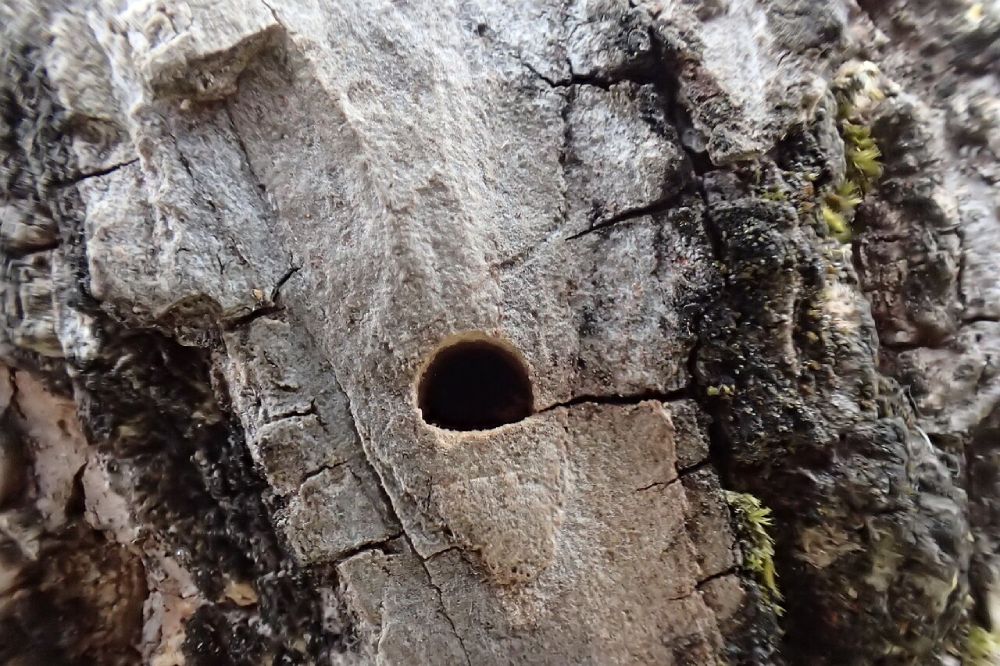
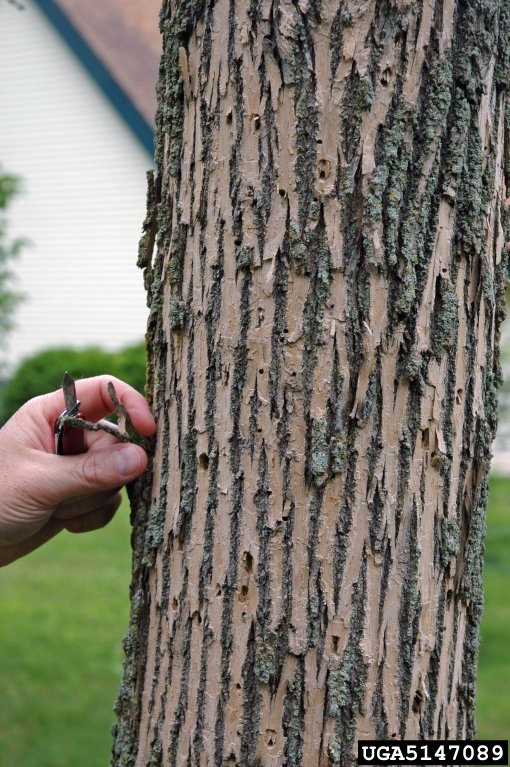
- Small round, oval, or D-shaped holes in the bark
- Frass (fine sawdust mixed with excrement) packed into holes or accumulating at the base of the tree
- Sap staining, wet spots, or pitch tubes oozing from the trunk
- Cracked or blistering bark, especially on the trunk or main scaffold limbs
- Foliage dying from the top down or from one limb outward — also worth checking for white tree fungus as a possible co-factor
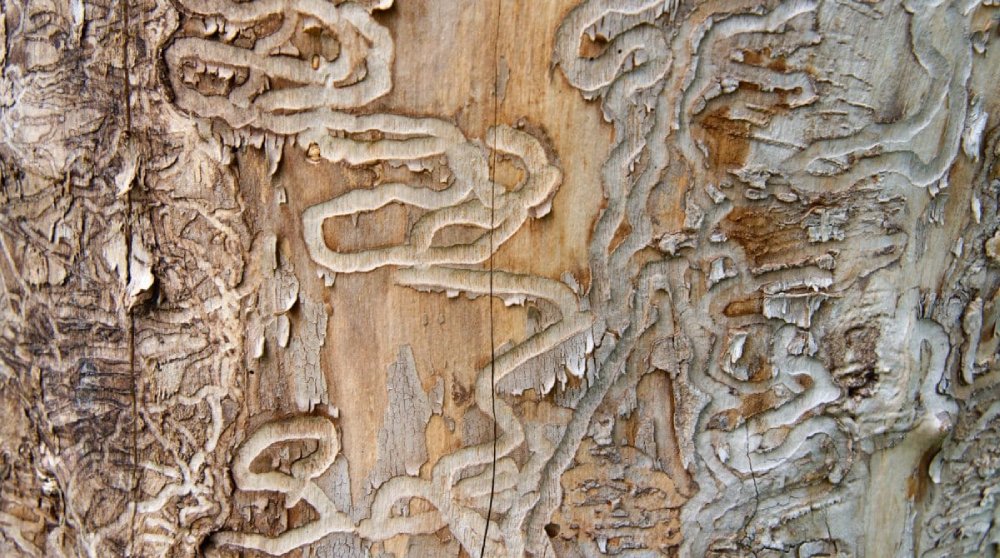
- S-shaped galleries visible when loose bark is peeled back
Early Warning Signs of an Infestation
The most valuable window for treatment is early, before larvae are deep in the heartwood. Early signs are easy to dismiss — a single wilting branch, a small resin dot on the bark, one section of foliage that seems slightly off-color. Branches showing out-of-season dieback with no obvious disease cause is worth a closer look, especially on species known to attract borers.
At this stage, the infestation is localized and treatment options are broad. Waiting until damage is visible across multiple sections of the canopy narrows those options significantly.
Advanced Tree Borer Damage Symptoms
Large sections of bark sloughing off, heavy frass accumulation at the root flare, dead limbs across different parts of the canopy, and any visible structural instability all indicate the borers have been feeding for more than one season. At this point, the infestation has seriously progressed and removal may be the right call.
How to Confirm Borers Are Causing the Damage
Peel back a small section of loose bark near an active-looking hole. Living larvae, fresh meandering galleries, or moist frass packed under the bark confirm an active infestation. Dry, empty galleries with no frass mean the borers have already emerged and treatment timing will be different.
The shape of the exit holes helps narrow down the species: D-shaped holes point to flatheaded borers like the emerald ash borer, round holes to roundheaded borers or bark beetles, and larger irregular openings to clearwing moths.
Not sure if your tree needs professional attention?
A Plus Tree’s ISA Certified Arborists serve homeowners across the West Coast. A free assessment takes 15 minutes and gives you a clear answer.
Can Your Tree Be Saved?
Whether your tree can be saved depends on how far the infestation has progressed and whether the tree still has the structural integrity to recover. A tree that has lost more than 50% of its canopy, has significant hollowing or cracking in the trunk, or has galleries that have reached the root flare is unlikely to respond to treatment. Chemical applications can kill the insects, but they cannot repair tissue that has already been destroyed.
Signs the Tree Can Recover
A tree is a reasonable candidate for treatment if less than a third of the crown is dead or declining, the infestation appears limited to one section of the trunk or a few limbs, the tree is still producing new growth, and the trunk is structurally sound. Trees without compounding problems, such as adequate moisture, no significant root damage, no secondary disease, have the best recovery odds.
Signs Tree Removal May Be Necessary
When the canopy is more than half dead, when the trunk shows serious structural compromise, or when the tree poses a hazard to structures or people, tree removal performed by a certified arborist is the responsible choice. An infested tree left standing also becomes a source for re-infestation, spreading borers to neighboring trees on the same property. Removing it protects what is still healthy.
What Kind of Borer Is Attacking Your Tree?
Treating without knowing which pest is infecting your tree is one of the most common reasons borer treatment fails. Different species are active at different times of year, target different tree species, and respond to different products. Identification first, treatment second.
Borer Beetles vs. Clearwing Moth Borers (Why the Difference Matters)
Borer beetles — bark beetles, flatheaded borers, roundheaded borers — are the most diverse group. Their larvae bore into the cambium and heartwood, creating the galleries that cut off water and nutrient transport.
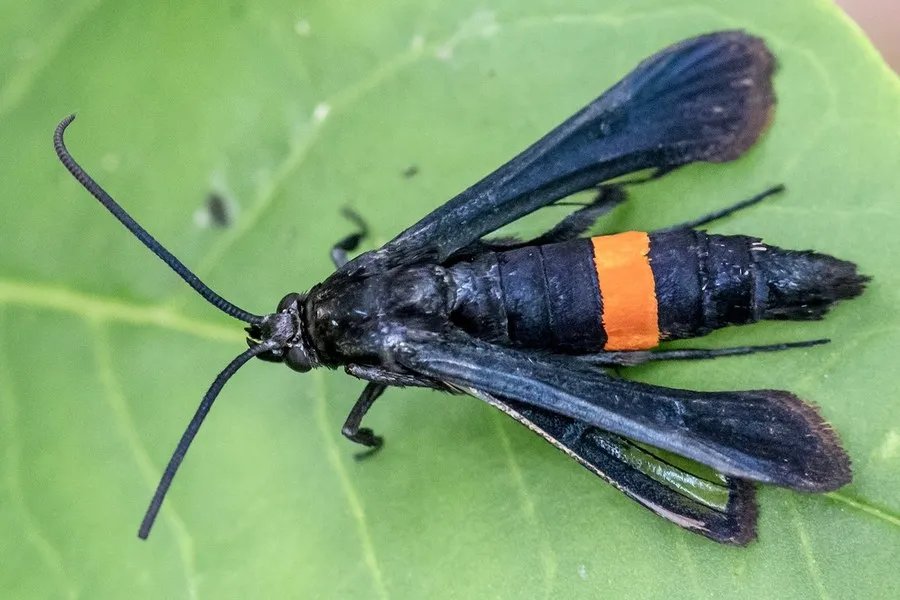
Clearwing moths look nothing like what you might expect: they mimic wasps, fly during the day, and target the lower trunk and root crown rather than the upper canopy. Peach tree borers are the most common clearwing species in the western U.S. Both groups can be addressed with bark contact sprays at the adult stage, but systemic treatment timing and method differ significantly between them.
Common Types of Tree Borers
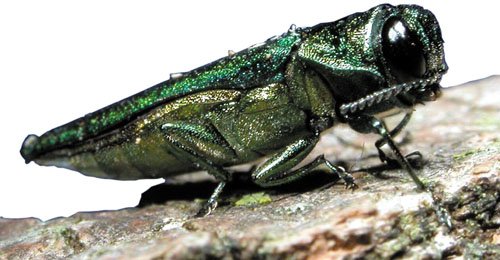
Emerald ash borer produces the D-shaped exit holes that have become a signature of this pest across North America. Emerald ash borers are now established in parts of the Pacific Northwest, and all ash trees in the region should be evaluated.
The Pacific flatheaded borer is extremely common in California on oaks, maples, and fruit trees, especially after drought stress. Shot hole borer (PSHB) is devastating sycamore, avocado, and dozens of other species in Southern California, carrying a Fusarium fungus that compounds the damage. Bronze birch borer targets birch trees and causes the characteristic top-down dieback pattern. The South American palm weevil is an increasing threat to palms in Southern California and worth knowing if you have palms on your property.
Why Tree Borers Are Dangerous to Trees
Borers attack the cambium — the thin layer just under the bark that moves water and nutrients between roots and canopy. When larvae carve through it, they disrupt that transport system. Many borer species also introduce or travel with fungal pathogens that accelerate decline, making the damage compound faster than the insect feeding alone would cause.
What Kills Tree Borers?
Treatment type depends on where the borers are in their life cycle. Larvae inside the tree are protected by bark and cannot be reached by contact sprays. Adults on the surface and young larvae that have just hatched and are starting to tunnel are vulnerable. Getting the right product to the right life stage at the right time is what determines whether treatment works.
Bark and Contact Sprays (for Adults and New Larvae)
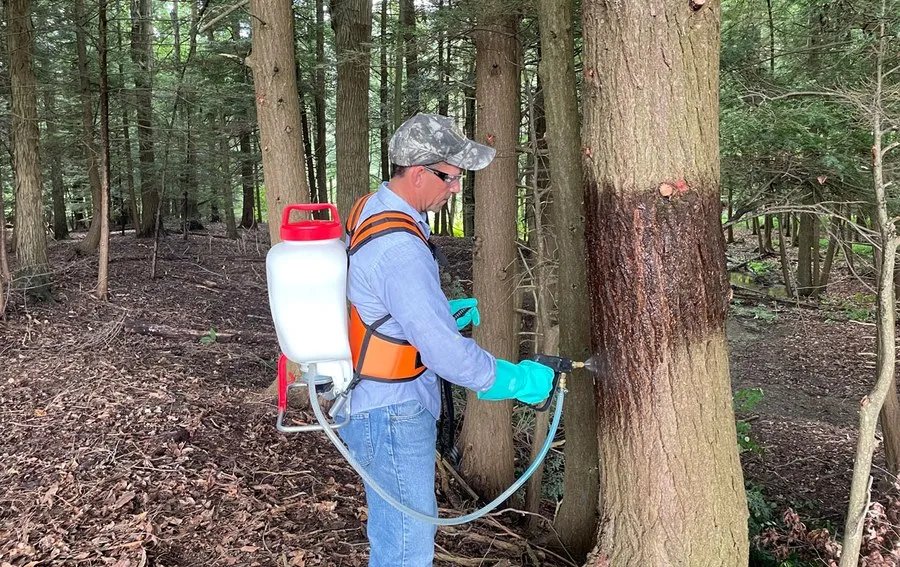
Pyrethroid-based bark sprays — permethrin, bifenthrin — applied to the trunk and main scaffold limbs kill adult borers before they lay eggs and intercept young larvae before they tunnel deep. Timing to adult flight periods matters more than the product itself. Coverage also matters: the entire trunk surface needs to be treated, not just the visible entry holes. For species-specific applications, tree care products designed for bark treatment are more targeted than general-purpose pesticides.
Systemic Tree Borer Treatments (and Where They Are Restricted)
Systemic insecticides are absorbed through the roots or injected directly into the vascular system, reaching larvae as they feed. Imidacloprid, applied as a soil drench around the root zone, works well for many beetles including EAB and provides residual protection for one to two years. It is a neonicotinoid, and California, Oregon, and Washington all have location-specific restrictions — do not apply near water or in pollinator-sensitive areas without confirming compliance first.
Emamectin benzoate (sold as TREE-äge and similar) is trunk-injected and highly effective against EAB and cambium-feeding species. It requires professional equipment and a pesticide applicator license. It is not a product homeowners can apply themselves, but it is one of the most effective tools available for high-value trees and established infestations.
When Treatment May Not Work
Chemical treatment cannot reverse structural damage. It kills living insects but cannot restore destroyed cambium, repair galleries, or fill voids in the heartwood. A severely infested tree may stop declining after treatment, but it will not regain what has already been lost. Trees with multiple seasons of damage often host adults, young larvae, and deep-feeding larvae simultaneously — a single product or application rarely addresses all three. Phased, professionally managed treatment is the most reliable approach when infestations are extensive.
When Tree Borers Are Most Active (and the Best Time to Treat)
Spring Activity and Egg Laying
Most borer species become active in spring as temperatures climb and new tree growth begins. Adults emerge, mate, and start laying eggs in bark crevices, around wounds, or at the root crown. This is the window when preventive bark sprays are most effective — eggs and newly hatched larvae are still accessible before they tunnel past the point of contact. Emerald ash borer adults typically emerge late April through June in the Pacific Northwest. Peach tree borer adults are active from late May through August. Trees at lower elevations in California will see earlier emergence than trees in Oregon or Washington.
Summer Feeding and Damage
By midsummer, most borer larvae are actively feeding and damage is accelerating — canopy dieback, frass production, and bark cracking all become more pronounced. This is also when cumulative feeding stress makes trees most vulnerable to secondary pests and drought. Bark sprays are less effective against established larvae at this stage, but systemic treatments applied in spring are still moving through the vascular system and can intercept larvae as they feed.
Best Time to Apply Treatments
Preventive bark sprays are most effective from late March to mid-May, before adults begin laying eggs. Soil-applied systemics like imidacloprid need to go down four to six weeks before adult emergence to allow full uptake — early spring application is the target. Trunk injections work best when trees are actively transporting water, which means spring through early summer. If you are seeing active damage now and missed the preventive window, a professional assessment will determine what options are still on the table for the current season.
Should You Treat Tree Borers Yourself or Call a Professional?
Some borer situations can be managed by a knowledgeable homeowner, but many cannot. Trunk injection products require licensed applicator, soil-applied systemics near water or protected habitat require local compliance review, and DIY treatment that misses the adult flight window or applies the wrong product to the wrong life stage accomplishes very little while the infestation continues.
If you’re concerned about your trees, consider consulting a certified arborist.
High-Value Trees
If your tree is a mature specimen — one that took decades to reach its current size and provides significant shade, aesthetic value, or screening — there are big repercussions for getting treatment wrong. Professional treatment on a high-value tree is almost always worth the investment rather than a DIY attempt with uncertain timing and coverage.
Severe or Widespread Infestations
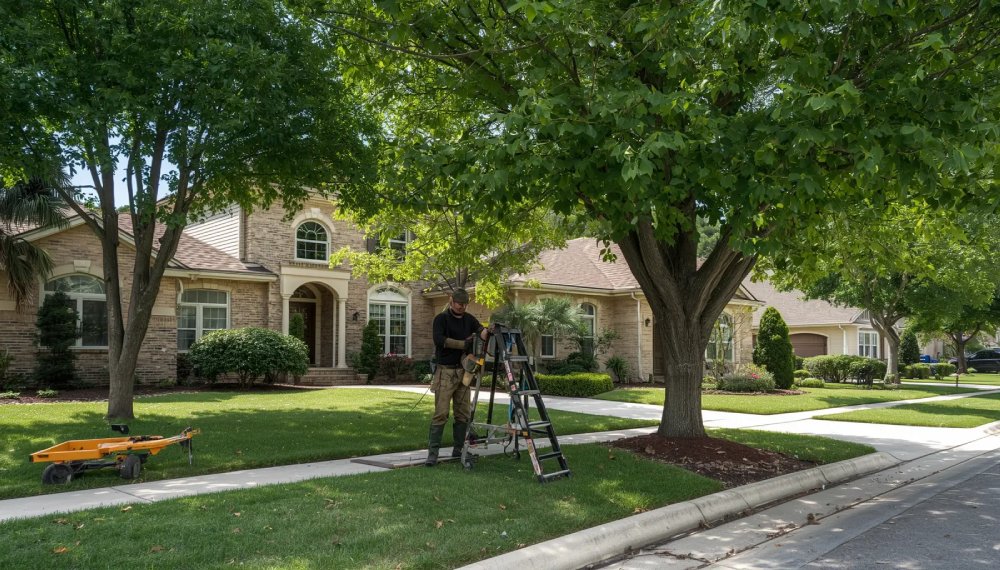
When multiple trees are affected or a single tree shows infestation across the trunk and multiple scaffold limbs, the scope exceeds what most homeowners can manage effectively. An ISA Certified Arborist can assess the full extent of the infestation, identify the species, and build a multi-season treatment plan that addresses each life stage at the right time.
Long-Term Tree Health Management
Stressed trees attract borers. If you treat the pest without addressing the underlying cause — water stress, compacted soil, past construction damage, root problems — the infestation is likely to return. Arborist consulting addresses both the pest and the conditions that invited it.
If borer pressure is coming from neighboring properties or disturbed soil, a root barrier installation may also be worth discussing as part of a broader site management plan.
What a Professional Assessment Involves
A professional assessment covers crown condition and canopy density, bark and trunk inspection to identify hole type and frass, root zone evaluation for soil compaction and drainage issues, species-specific risk factors, and a treatment recommendation with a realistic timeline for what to expect. The goal is an accurate picture of the tree’s current condition and develop a plan for treatment, if necessary.
Tree Borer Treatment by Tree Type
Treatment approach varies by species — different borers target different trees, respond to different products, and become active at different times.
Ash Tree Borer Treatment (Emerald Ash Borer)
Ash tree borer treatment needs to start before canopy loss reaches 50%. Once more than half the crown is dead, the tree is unlikely to recover regardless of treatment. Both imidacloprid soil drenches and emamectin benzoate trunk injections are approved for EAB, but injection is preferred for moderate-to-severe infestations because of faster uptake and higher canopy concentration. Treatments need to be repeated every one to three years depending on the product and infestation level.
EAB is now found in Oregon and spreading westward — all ash trees in the Pacific Northwest should be evaluated proactively, not reactively.
Peach Tree Borer Treatment
Peach tree borer treatment targets clearwing moth larvae at the root crown and lower trunk. The giveaway symptom is gummy frass mixed with sap right at the soil line. Permethrin trunk sprays applied in late spring before egg-laying begins are the primary chemical control. Pheromone traps can help time applications accurately. For lighter infestations, beneficial nematodes applied to the root zone in fall can target overwintering larvae. Heavily infested wood at the base should be removed before treating.
Apple Tree Borer Treatment
Apple tree borer treatment addresses the roundheaded apple tree borer (Saperda candida), which targets the lower trunk and root crown. Permethrin bark sprays applied every three to four weeks from May through August are the main defense during the adult egg-laying window. Young trees are most vulnerable, so it is best to start protection in the first or second year. For established trees with significant gallery damage, individual larvae may need to be removed mechanically before chemical treatment.
West Coast and California Borers to Watch
Several region-specific borers in California do not appear in national treatment guides. The Pacific flatheaded borer attacks oaks, madrone, and ornamental trees, particularly after drought stress or wildfire. The goldspotted oak borer is a serious threat to native California oaks and spreads primarily through firewood movement. Shot hole borer (PSHB) is affecting avocado, sycamore, and dozens of other species in Southern California and carries a Fusarium fungus into the vascular tissue. The California flatheaded borer is common in Central Valley orchards on almonds, walnuts, and stone fruits. If you are seeing unfamiliar borer damage in California, do not assume it is a common species — several of these require specific management approaches.
Treatment Considerations for Other Common Trees
Bronze birch borer targets birch with a characteristic top-down dieback pattern, and imidacloprid soil drenches are effective before the canopy is more than half dead. For western pine beetle and Ips beetle attacking stressed pines, bark sprays and prompt disposal of infested wood are the primary response. Flatheaded borer on maple is largely preventable through avoiding summer pruning and maintaining irrigation. Elm bark beetle is the vector for Dutch elm disease, so insecticides protect against the beetle but not the fungus it carries — both need to be addressed.
How to Get Rid of Tree Borers Naturally
Homeowners asking how to get rid of tree borers naturally usually want to avoid chemical treatment entirely. For an active, established infestation, natural methods alone are not going to be enough. Larvae feeding inside the cambium are physically protected by bark, and no natural spray penetrates to reach them. Although they cannot treat serious infections, natural treatments can support prevention, reduce re-infestation risk, and supplement conventional treatment for light infestations.
What “Natural” Treatment Can and Cannot Do
No organic or natural product currently available can penetrate bark and kill larvae that are already tunneling in the cambium. The options that exist for getting rid of borers naturally are either preventive, effective only at the soil level (like nematodes), or useful for contact killing adults on the bark surface. For any infestation beyond the very early stage, natural methods work best as part of a broader management plan, not as its foundation.
Beneficial Insects and Biological Controls
Parasitic wasps including Spathius agrili and Tetrastichus planipennisi have been released through USDA biocontrol programs specifically to target emerald ash borer. These are regional population management tools, not a treatment that individual homeowners can deploy, but they contribute to broader EAB suppression in established populations. Beneficial nematodes, specifically Steinernema and Heterorhabditis species, can target peach tree borer larvae near the soil surface. Fall application with adequate soil moisture gives the best results.
Lower-Toxicity Options for Light Infestations
Kaolin clay applied to the bark creates a physical barrier that discourages adult egg-laying, and works best on smooth-barked young trees. Pyrethrin-based sprays derived from chrysanthemum flowers provide contact kill of adults without the residual activity of synthetic pyrethroids. For isolated entry holes, a stiff wire probe can mechanically reach and kill larvae in individual galleries. This treatment is impractical at a larger scale, but an option when damage is genuinely limited to one or two spots.
Preventing Future Borer Infestations
Borers rarely establish in truly healthy trees. A vigorous tree produces resin, closes wounds quickly, and has bark chemistry that makes it a difficult target. Keeping trees healthy is not just good practice — it is the most effective borer prevention available.
Proper Watering and Mulching
Drought stress is the leading factor that makes California, Oregon, and Washington trees vulnerable to borers. A water-stressed tree produces less resin and has weakened bark defenses. Deep, infrequent watering that reaches the full root zone is more effective than frequent shallow irrigation.
A three-to-four-inch layer of mulch applied out to the drip line (not piled against the trunk) conserves soil moisture, moderates root temperature, and reduces turf competition. Mulch piled directly against the trunk creates the warm, moist conditions that attract borers and promote bark rot.
Pruning Best Practices
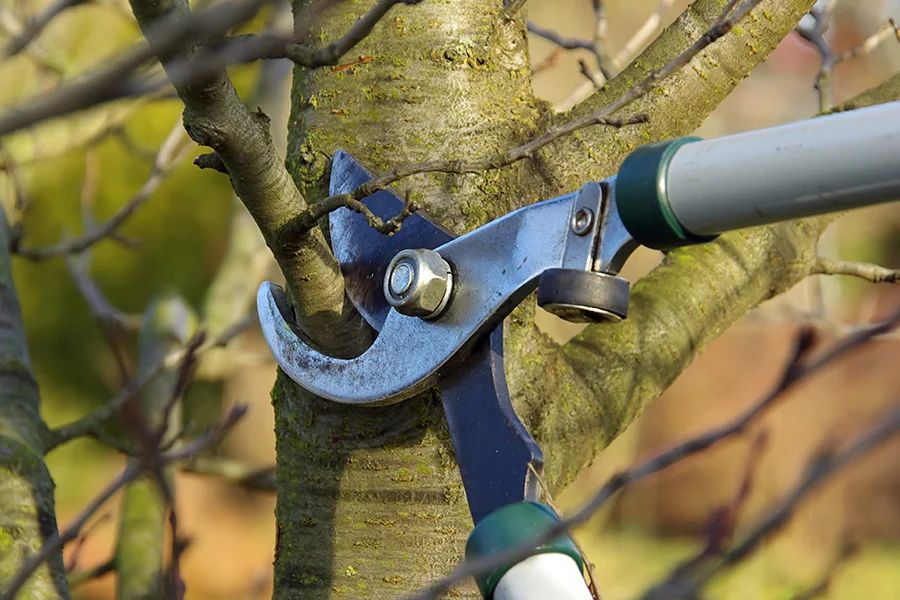
Open pruning wounds are one of the most common borer entry points. Prune during the dormant season when borer adults are not active and trees are positioned to compartmentalize wounds efficiently. Avoid summer pruning on high-risk species when possible. When summer pruning is unavoidable on valuable trees, a protective wound treatment may be appropriate, though wound dressing is not recommended for routine cuts. For more on managing tree stress from pest pressure and pruning, see our guide on webworm management in trees.
Reducing Tree Stress
Lawn mower and string trimmer wounds at the base of the trunk are an easily preventable cause of borer entry on landscape trees. Keep equipment away from the root flare. Soil compaction around the root zone — common near driveways, patios, and high-foot-traffic areas — significantly reduces a tree’s ability to stay vigorous. Construction activity that damages roots may not show up as borer vulnerability for two to three years, by which time the connection is easy to miss.
Annual Tree Health Inspections
Annual inspections catch early-stage infestations before they become expensive problems. A first-season borer infestation that is identified in spring can often be treated with a bark spray and a preventive systemic. A third-season infestation in the same tree may require removal. Scheduling an inspection in late winter or early spring — before adult emergence — gives you the most treatment options if something is found.
The Best Tree Borer Treatment Starts With the Right Diagnosis
Treating the wrong pest, at the wrong time, with the wrong product is how tree borer treatment fails. The underlying biology is not complicated, but the margin for error is narrow — especially for species like EAB where missing the treatment window by a season can mean the difference between saving a tree and removing it.
A Plus Tree’s ISA Certified Arborists serve California, Oregon, and Washington. We identify the pest, assess the tree, and put together a treatment plan matched to your species, your region, and where the infestation actually is in its life cycle. Call 866-815-2525, email [email protected], or visit A Plus Tree to schedule an assessment.
Tree Borer Treatment FAQs
What Should I Do First If I See Holes or Sawdust on My Tree?
Do not treat yet. Identify first. Peel back a small section of loose bark near an active hole. Living larvae, fresh galleries, or moist frass under the bark confirm an active infestation. Dry, empty galleries mean the borers have already emerged, and treatment timing changes significantly in that scenario. Getting that detail wrong before purchasing and applying a product is a common and avoidable mistake.
How Long Does Tree Borer Treatment Take to Work?
Contact bark sprays kill adults and young larvae within days. Soil-applied systemics take four to six weeks to reach effective concentrations in the canopy. Trunk injections typically reach working levels within one to two weeks. Visible recovery, such as new canopy growth, reduced dieback, takes one full growing season at minimum. Some trees require two to three years to show full recovery after a successful treatment program.
Are Tree Borers Harmful to Healthy Trees?
Most borer species preferentially target stressed, weakened, or recently wounded trees. A fully vigorous tree has resin production and wound-closure mechanisms that make it a difficult target. That said, aggressive species like emerald ash borer and shot hole borer can establish in apparently healthy trees when populations are high enough. The short answer: keep your trees healthy and most borer beetle treatment situations become preventable.
Will Tree Borers Come Back After Treatment?
Borers can come back after treatment, particularly if the stress conditions that attracted them in the first place have not changed. A tree that drew borers during a drought year will attract them again in the next dry season if irrigation has not been improved. Imidacloprid soil treatments provide residual protection for one to two years. Emamectin benzoate trunk injections protect ash trees for two to three years. Preventive bark sprays need to be reapplied annually during the adult flight window. Ongoing borer treatment for trees combined with tree health management is more reliable than single-season treatment with no follow-up.
Get a Free Tree Assessment — No Obligation
Tell us about your tree. One of our ISA Certified Arborists will review your situation and get back to you within 24 hours.