
GLOSSARY OF TREE CARE TERMS
Credentials, Standards, and Expertise
| TERM | DEFINITION | IMAGE EXAMPLE |
|---|---|---|
| ANSI A300 |
A set of industry standards that guide professional tree care practices, including pruning, planting, soil care, risk assessment, and tree preservation. |
|
| Arborist Report |
A written report prepared by a qualified arborist that documents tree condition, risks, defects, health concerns, and recommended actions. |
|
| Best Management Practices |
Recommended tree care methods that explain how industry standards should be applied in the field. |
|
| Consulting Arborist |
An expert arborist who provides professional advice, inspections, reports, and recommendations for tree health, safety, preservation, and management. |
|
| ISA Certified Arborist |
A tree care professional certified by the International Society of Arboriculture who has demonstrated knowledge of proper tree care, safety, diagnosis, and maintenance. |
|
| Tree Risk Assessment |
A structured inspection used to evaluate the likelihood of tree failure, the likelihood of impact, and the possible consequences. |
|
| Tree Risk Assessment Qualification (TRAQ) |
An ISA qualification that trains tree care professionals to use a standardized process for assessing and documenting tree risk. |
|
| Urban Forest Management |
The strategic planning and maintenance of trees within city boundaries, including street trees, parks, and residential properties |
|
| Urban Forestry | The care and management of trees and green spaces in cities, neighborhoods, commercial properties, parks, and public areas. |
Tree Management, Planning, and Preservation
| TERM | DEFINITION | IMAGE EXAMPLE |
|---|---|---|
| Canopy Assessment |
An evaluation of tree canopy cover across a property, site, or urban area to understand tree coverage, shade, gaps, and long-term management needs. |
|
| Critical Root Zone (CRZ) |
The area around a tree where roots are most important for stability, water uptake, and overall tree health. |
|
| Crown Assessment |
A professional evaluation of an individual tree’s crown, including foliage density, dieback, branch structure, clearance, defects, and overall crown condition. |
|
| Tree Assessment |
An inspection of a tree’s health, structure, site conditions, defects, and care needs. |
|
| Tree Inventory |
A comprehensive survey that records the location, species, size, and health of individual trees within a defined area |
|
| Tree Inventory Management |
The ongoing use and updating of tree inventory data to plan pruning, removals, planting, inspections, and budgets. |
|
| Tree Mapping |
The process of marking tree locations on a map or digital platform for tracking, planning, and maintenance. |
|
| Tree Preservation |
The legal, physical, and environmental methods used to protect mature, valuable, or ecologically significant trees from destruction, damage, or removal |
|
| Tree Protection Zone (TPZ) | A designated, fenced-off area around a tree where construction, excavation, and heavy equipment are prohibited to preserve the tree’s roots, trunk, and canopy. |
Wildfire and Vegetation Management
| TERM | DEFINITION | IMAGE EXAMPLE |
|---|---|---|
| Defensible Space |
The managed area around a structure where vegetation is reduced or maintained to help slow wildfire spread. |
|
| Fire Clearance |
The area around a tree where roots are most important for stability, water uptake, and overall tree health. |
|
| Fuel Load |
The amount of burnable vegetation or material in an area, including dry grass, brush, deadwood, leaves, and branches. |
|
| Home Ignition Zone |
The area around a structure where vegetation, materials, and maintenance have the greatest effect on wildfire exposure. |
|
| Horizontal Fuel Continuity |
The spread of burnable vegetation across the ground or canopy that can allow fire to move sideways through a site. |
|
| Ladder Fuels |
Low or mid-level vegetation that can carry fire from the ground into tree canopies. |
|
| Vegetation Management |
Vegetation management is the systematic control, removal, or modification of plant life |
|
| Vertical Fuel Continuity |
The connection between ground fuels, shrubs, low branches, and tree canopies that can help fire move upward. |
|
| Wildland Urban Interface (WUI) | An area where homes, buildings, or developed properties meet or mix with wildland vegetation. |
Plant Health Care, Soil, and Roots
| TERM | DEFINITION | IMAGE EXAMPLE |
|---|---|---|
| Arbor Mulch |
Wood mulch made from tree material and used to support soil health, moisture retention, and root protection. |
|
| Biochar |
A charcoal-like soil amendment that can help improve soil structure, moisture retention, and nutrient holding capacity. |
|
| Canker |
A dead or diseased area on bark, branches, or stems that can weaken tree tissue. |
|
| Chlorosis |
Yellowing of leaves caused by issues such as nutrient deficiency, poor soil conditions, root problems, or disease. |
|
| Deep Root Watering |
A watering method that delivers water into the soil near the root zone instead of only wetting the surface. |
|
| Girdling Roots |
Lateral roots that grow in a circular or spiral pattern around the base of a tree’s trunk rather than radiating outward. |
|
| Integrated Pest Management (IPM) |
An ecosystem-based, sustainable strategy that focuses on the long-term prevention of pests and their damage |
|
| Mulching |
The practice of placing organic material over soil to help retain moisture, moderate temperature, reduce weeds, and improve soil over time. |
|
| Pest and Disease Management | The inspection, diagnosis, treatment, and prevention of insects, diseases, and other health issues affecting trees. | |
| Plant Health Care | A proactive approach to tree and landscape care that focuses on soil, water, pests, diseases, nutrition, and site conditions. | |
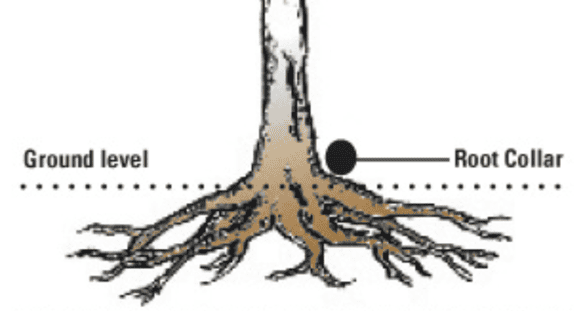
| Root Collar | The transition area at the base of a tree where trunk tissue changes into root tissue. | |
| Root Flare | The visible widening at the base of a tree where major roots begin to spread outward from the trunk. | |
| Root Invigoration | A specialized arboricultural treatment designed to reverse soil compaction and rehabilitate the root systems of stressed or declining trees. | |
| Root Zone | The area of soil where a tree’s roots grow and absorb water, oxygen, and nutrients. | |
| Soil Aeration | A process that loosens compacted soil and improves the movement of air, water, and nutrients into the root zone. | |
| Soil Amendment |
Material added to soil to improve structure, nutrients, drainage, moisture retention, or biological activity. | |
| Soil Compaction | A mechanical stress that presses soil particles together, dramatically reducing the pore space needed for air and water. | |
| Soil Health | The condition of soil based on structure, nutrients, water movement, organic matter, compaction, and biological activity. | |
| Tree Fertilization | The application of nutrients to support tree health when soil conditions or tree symptoms show a need. |
Tree Structure, Defects, and Risk
| TERM | DEFINITION | IMAGE EXAMPLE |
|---|---|---|
| Branch Bark Ridge |
The raised line of bark that forms in the union between a branch and the trunk or parent limb. |
|
| Branch Union |
The point where a branch connects to another branch or to the trunk. |
|
| Cavity |
An open hollow or void in a trunk, stem, branch, or root area. |
|
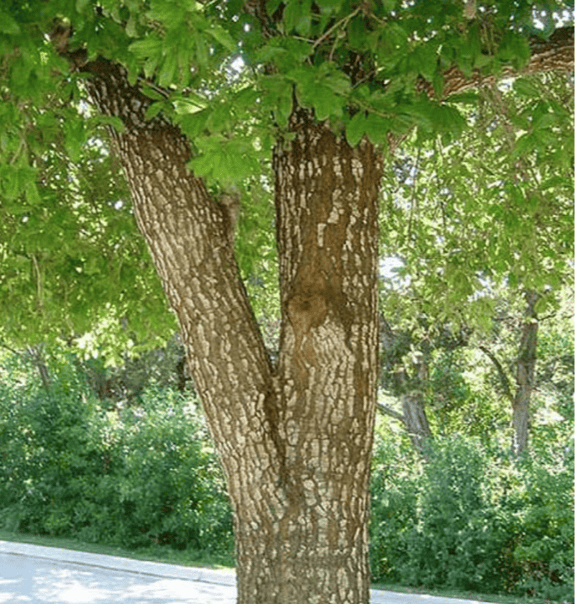
| Codominant Stems |
Two or more main stems of similar size growing from the same area of the tree. |
|
| Consequences of Failure |
The expected severity of damage or injury if a tree or tree part fails and strikes a target. |
|
| Decay |
The breakdown of wood caused by fungi or other organisms, often reducing strength over time. |
|
| Hazard Tree |
A tree with defects or conditions that may create an unacceptable risk to people, property, roads, or utilities. |
|
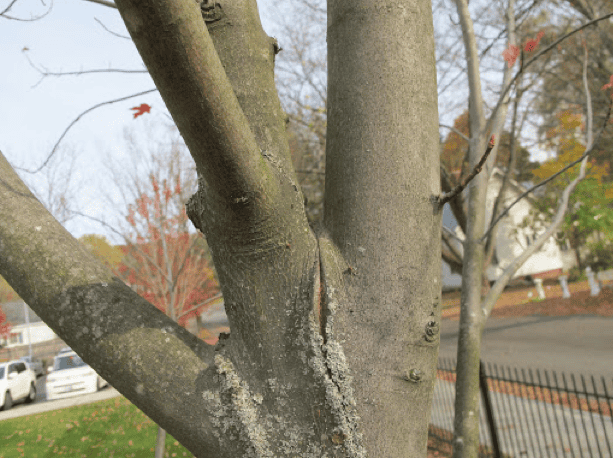
| Included Bark |
A structural defect in trees where bark gets trapped between two stems or branches as they grow, rather than forming strong connective wood. |
|
| Leaning Tree |
A tree that grows or shifts away from a vertical position, sometimes because of root issues, soil movement, wind, or natural form. |
|
| Likelihood of Failure |
The estimated chance that a tree or tree part will break or fall during a certain time period. |
|
| Likelihood of Impact |
The estimated chance that a failed tree or tree part will strike a target. |
|
| Load Reduction |
Pruning that reduces weight or wind force on a branch, stem, or tree. |
|
| Reaction Wood |
Wood formed by a tree to support leaning stems, heavy branches, or areas under stress. |
|
| Structural Defect |
A weakness in a tree’s form or wood that may affect stability or increase the chance of failure. |
|
| Target |
A person, structure, vehicle, road, utility, or other object that could be struck if a tree or branch fails. |
|
| Tree Defect |
A structural weakness, injury, decay, crack, poor branch attachment, or other condition that can affect tree stability. |
|
| Tree Failure |
The breaking or falling of a whole tree, trunk, stem, branch, or root system. |
|
| Weak Branch Union |
A branch attachment that has poor structure and may be more likely to split or fail. |
Pruning and Crown Management
| TERM | DEFINITION | IMAGE EXAMPLE |
|---|---|---|
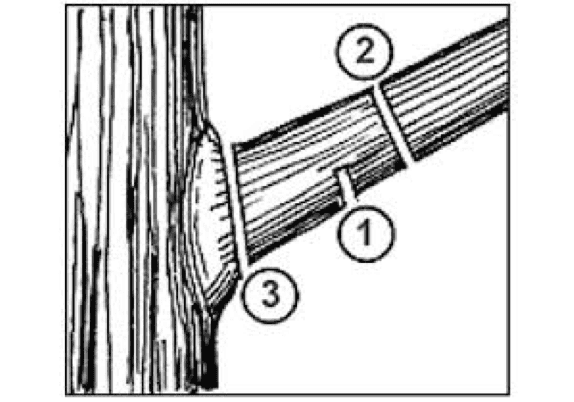
| Branch Collar |
The swollen area at the base of a branch where it connects to the trunk or parent limb. |
 |
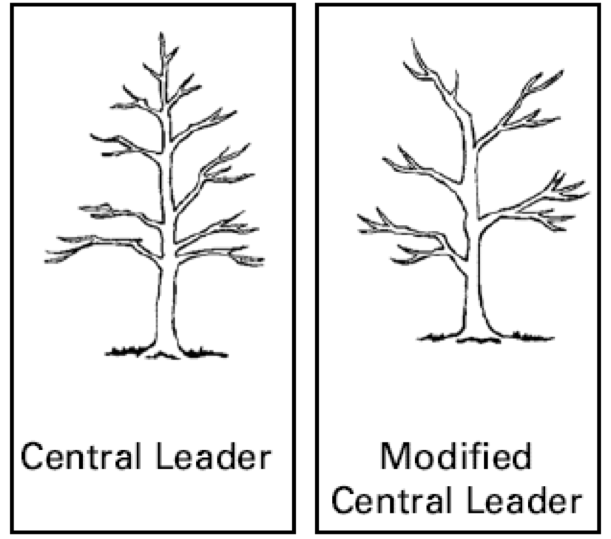
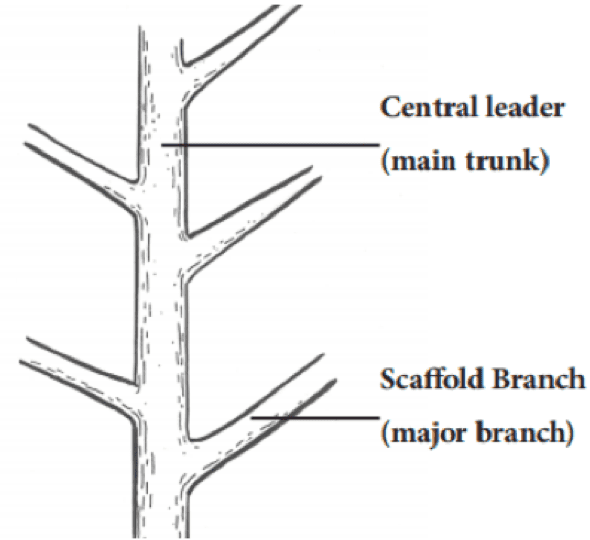
| Central Leader |
The main upright stem of a tree, usually forming the dominant trunk. |
|
| Clearance Pruning |
Pruning that provides space around buildings, signs, sidewalks, roads, lights, or utilities. |
|
| Crown Cleaning |
Pruning that removes dead, broken, diseased, or weak branches from the crown. |
|
| Crown Reduction |
Pruning that reduces the overall size or spread of a tree’s canopy using proper reduction cuts. |
|
| Crown Thinning |
Selective pruning that removes branches to reduce crown density while keeping the tree’s natural shape. |
|
| Deadwooding |
The removal of dead branches from a tree. |
|
| End Weight Reduction |
Pruning that reduces weight near the end of a branch to lower stress and reduce failure potential. |
|
| Heading Cut |
A pruning cut made through a branch or stem without cutting back to a suitable lateral branch. |
|
| Live Crown Ratio |
The ratio between the part of the tree with live foliage and the total height of the tree. |
|
| Lowest Permanent Branch |
The lowest major branch intended to remain as part of the mature tree structure. |
|
| Proper Pruning Cut |
A pruning cut made outside the branch collar without damaging the collar or leaving an excessive stub. |
|
| Reduction Cut |
A pruning cut that shortens a branch or stem back to a smaller lateral branch. |
|
| Removal Cut |
A pruning cut that removes an entire branch at the trunk or parent limb. |
|
| Restoration Pruning |
A person, structure, vehicle, road, utility, or other object that could be struck if a tree or branch fails. |
|
| Tree Defect |
A structural weakness, injury, decay, crack, poor branch attachment, or other condition that can affect tree stability. |
|
| Tree Failure |
Pruning used to improve the structure and appearance of trees that were damaged, topped, neglected, or poorly pruned. |
|
| Scaffold Branch |
A main limb that helps form the permanent structure of a tree’s canopy. |
|
| Structural Pruning |
Pruning that improves a tree’s branch arrangement, trunk development, and long-term strength. |
|
| Subordinate Pruning |
An arboricultural technique used to slow the growth of a competing, co-dominant stem or an overly vigorous branch. |
|
| Thinning Cut |
A pruning cut that removes a branch back to its point of origin. |
Tree Biology and Growth Habit
| TERM | DEFINITION | IMAGE EXAMPLE |
|---|---|---|
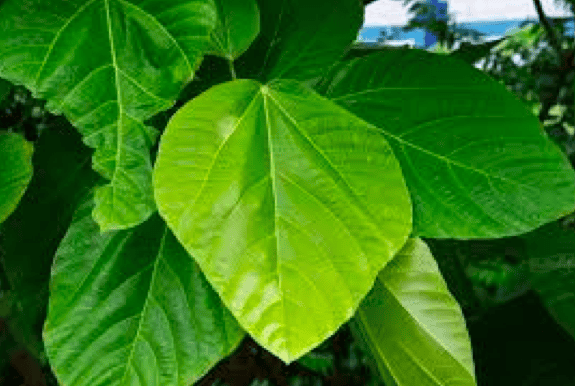
| Deciduous |
A tree that sheds its leaves during part of the year. |
|
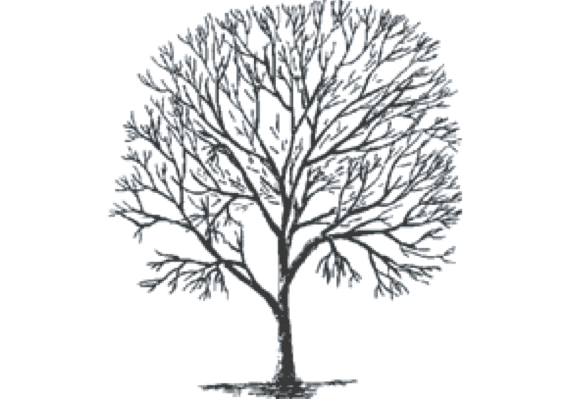
| Decurrent Tree |
A tree with a broad, spreading canopy and multiple large limbs. Oaks often show this form. |
|
| Evergreen |
A tree that keeps foliage throughout the year, although individual leaves or needles may still be shed over time. |
|
| Excurrent Tree |
A tree with one strong central trunk and smaller side branches. Redwoods often show this form. |
|
| Lateral Pruning |
Pruning that cuts a branch back to a lateral branch or parent limb. |
|
| Sucker Growth |
Vigorous, fast-growing shoots that sprout from the base of a tree, root system, or between the main stem and leaves. |
|
| Water Sprouts |
vigorous, fast-growing shoots that emerge vertically from a tree’s trunk or main branches. |
Planting and Establishment
| TERM | DEFINITION | IMAGE EXAMPLE |
|---|---|---|
| Establishment Period |
The time after planting when a tree is developing new roots and needs consistent care. |
|
| Planting Depth |
The depth at which a tree is planted, with the root flare kept at or slightly above soil level. |
|
| Root Ball |
The mass of roots and soil moved with a tree during planting or transplanting. |
|
| Root Crown |
The area where the trunk base meets the main roots, also called the root flare or root collar. |
|
| Staking |
The temporary support of a newly planted tree to help it remain stable while roots establish. |
|
| Tree Establishment Watering |
Regular watering during the early years after planting to help roots grow into the surrounding soil. |
|
| Tree Planting |
The process of placing a tree in the ground at the correct depth and location to support healthy establishment. |
|
| Tree Transplanting |
The process of moving a tree from one location to another while preserving enough roots for survival. |