
You look out at your yard and something needs attention. Maybe a large oak is leaning a little closer to the house than it used to, the lawn looks tired, or a winter storm left a few branches hanging where they should not be. The hard part is knowing who to call. A tree care company and a landscaping company can both show up with trucks and ladders, so the difference is not always obvious from the outside.
A tree care company focuses on the long-term health, safety, and structure of your trees, with trained arborists at the center of that work. A landscaping company shapes and maintains the wider outdoor space, from lawns and planting beds to patios and irrigation. Both have real value, and they are not interchangeable.
This guide will help you tell the two apart, recognize which jobs belong to each, and feel confident about who to bring in for the work in front of you.
Source: A Plus Tree
Tree Care vs Landscaping: Key Differences at a Glance
Before we get into specific situations, it helps to see the two side by side. The table below gives you a quick reference you can scan in a few seconds.
| Factor | Tree Care Company | Landscaping Company |
| Main focus | Health, safety, and structure of trees | Design and upkeep of the wider outdoor space |
| Key expert | ISA Certified Arborist | Landscape designer or maintenance crew |
| Typical work | Pruning, removal, diagnosis, cabling, storm response | Lawns, planting beds, patios, irrigation, mulch |
| Core training | Tree biology, climbing, rigging, risk assessment | Horticulture, design, general grounds maintenance |
| Equipment | Aerial lifts, cranes, chippers, climbing gear | Mowers, trimmers, hand tools, light power equipment |
| Risk level | High, often involves heights and heavy limbs | Lower, mostly ground-level work |
| You call them when | A tree’s health, size, or safety is in question | You want the overall yard shaped, planted, or maintained |
A helpful way to picture it: the landscaper makes the space look and function well at ground level, while the tree care company protects the largest and most valuable living things on your property. Most homes need both at some point, often for very different reasons.
Not sure if your tree needs professional attention?
A Plus Tree’s ISA Certified Arborists serve homeowners across the West Coast. A free assessment takes 15 minutes and gives you a clear answer.
When to Call a Tree Care Company vs a Landscaper
The clearest way to choose is to match the professional to the work. The size of the tree, the level of risk, and the goal of the project usually point you in the right direction.
When to Call a Tree Care Company
Reach out to a tree care company any time the work involves the health, stability, or structure of a tree, especially a large one. These are the jobs that carry real risk and require trained judgment.
Call a tree care company when you notice:
- A tree that is leaning, has lifting roots, or shifted after a storm
- Large dead or hanging branches over a roof, driveway, walkway, or play area
- Cracks in the trunk, large cavities, or mushrooms growing at the base
- A tree that needs removal, or one too close to power lines
- Pest or disease symptoms such as sudden leaf loss, oozing bark, or thinning at the top of the canopy
- Pruning on mature trees, which affects long-term health and structure
If a tree is touching power lines or looks ready to fail, treat it as an emergency and keep your distance. This is work for a trained crew, and many tree care companies offer emergency tree services for exactly these moments.
Here is what this looks like in real life. After a strong Pacific storm, a homeowner sees a tall pine leaning toward the house with soil heaving up around the base. The instinct might be to call the landscaper who already mows the lawn. The safer call is a tree care crew with the rigging, training, and insurance to take that tree down without dropping it on the roof or a neighbor’s fence.
When to Call a Landscaper
A landscaper is the right choice when your goal is the overall look, layout, and ongoing upkeep of the space around your home. This is design and maintenance work, mostly at ground level, and it keeps the yard healthy and attractive through the seasons.
Call a landscaper when you want to:
- Design or refresh planting beds, borders, and garden layouts
- Install or repair lawns, sod, or ground cover
- Build or maintain patios, walkways, retaining walls, and other hardscape
- Set up or adjust irrigation and drainage
- Handle seasonal cleanup, mulching, fertilizing, and general yard maintenance
- Plant small ornamental shrubs and young plants
A good practical rule: if the project is about shaping the space and keeping it looking its best, a landscaper is your professional. If the project is about a tree’s safety or survival, that belongs to a tree care company.

When You Need Both a Tree Care Company and a Landscaper
Plenty of projects pull in both, and the smartest results often come from sequencing them in the right order. Trees set the conditions for everything growing beneath them, so decisions about the trees usually come first.
A full backyard redesign is a common example. Before a landscaper plans beds, lighting, and a new patio, a certified arborist can assess the existing trees, confirm which are healthy enough to keep, and flag any that pose a risk to the new design. Once the tree work is settled, the landscaper can build the surrounding space with confidence, knowing a hidden hazard will not undo the project a year later.
New planting is another place the two overlap. A landscaper might handle the overall planting plan, while a tree care company advises on species selection and safe placement away from foundations and utilities, along with the long-term spacing a tree needs to mature safely.
When in doubt, a short arborist consultation early in a project can save you from expensive corrections later.
Why Tree Care Is a Different Discipline From Landscaping
It is easy to assume that anyone comfortable working outdoors can handle a tree. In practice, tree care is a specialized field with its own science, training, and risk profile. Understanding why makes it much easier to choose well, so the sections below explain what sets it apart.
What Is a Certified Arborist?
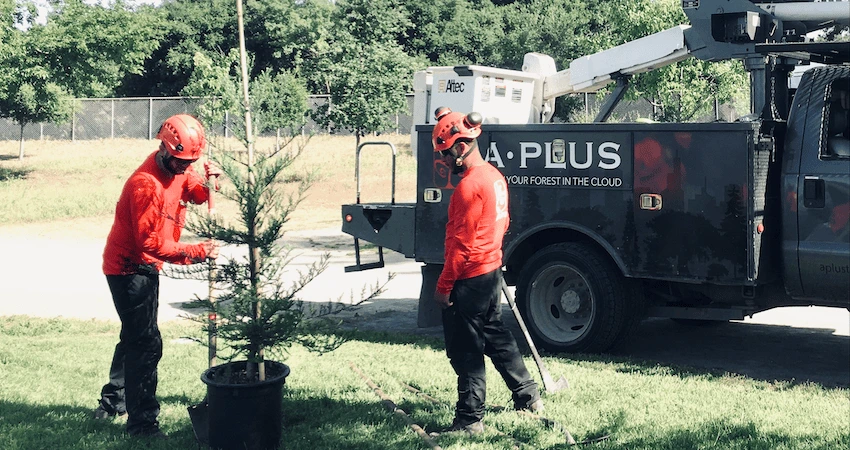
A certified arborist is a tree care professional who has earned the ISA Certified Arborist credential through the International Society of Arboriculture. To earn the credential, an arborist has to demonstrate knowledge of tree biology, diagnosis, pruning, safety, and proper care, then keep that certification current through ongoing education.
In plain terms, an ISA Certified Arborist is the tree expert inside the broader tree care world. A tree care company may include climbers, removal crews, and groundworkers, and the arborist is the trained specialist who assesses tree health and guides the right approach. For you as a homeowner, that credential is a reliable signal that the person advising on your tree actually understands it.
Why Tree Biology Matters
Trees are living systems, and how you treat them today shapes how they grow for decades. A cut in the wrong place, at the wrong time, can invite decay or disease that may not show up for years. That is why pruning and trimming are not the same. Proper pruning protects the tree’s structure and long-term health.
Think of it like the difference between a doctor and a personal stylist. Both can improve how something looks, but only one is trained to protect the underlying health and prevent serious problems over time. An arborist reads the tree the way a doctor reads a patient, looking at growth patterns, wound response, and signs of stress that a general crew may not notice.
Training, Certifications, and Continuing Education
Tree care training goes well beyond running a chainsaw. Arborists study how trees respond to cuts, how to assess structural defects, how to rig and lower heavy limbs safely, and how to recognize disease and pest pressure specific to a region. On the West Coast, that often includes familiarity with local species, drought stress, and wildfire considerations.
Certification also comes with a requirement to keep learning. ISA credentials must be renewed through continuing education, which keeps arborists current on evolving best practices. Landscaping has its own valuable skill set in horticulture and design, but it does not center on the structural and safety science that defines tree work.
Trees Are Long-Term Infrastructure, Not Just Landscape Features
It helps to think of mature trees as living infrastructure rather than decoration. A healthy, well-placed tree can stand for generations, cool your home, raise property value, and anchor the character of a neighborhood. A neglected or poorly handled one can become a liability that threatens your house, your neighbors, and the people who walk past it.
Because the stakes stretch across decades, the decisions deserve a long view. Removing the wrong tree, or topping a tree to make it smaller, can cause problems that outlast the convenience of a quick fix. Good tree care protects an asset you cannot quickly replace.
Managing Risk, Safety, and Tree Health Over Decades
Tree care is as much about ongoing assessment as it is about any single visit. A trained arborist looks for patterns over time, not one-day changes, watching how a tree responds to pruning, weather, and shifting site conditions. The goal is to catch small issues, such as a developing crack or early canopy thinning, before they become a hazard.
A good monitoring mindset includes checking large trees after major storms, watching for new lean or soil movement around the base, and noting whether symptoms are stabilizing or spreading. This steady attention is what keeps a big tree both healthy and safe across many years.
How Professional Tree Care Supports Healthier Urban Forests
Your trees are part of a larger living network. The trees on one property contribute to the shade, air quality, and habitat of an entire street and community. When trees are cared for properly, that benefit extends well beyond your own yard.
Responsible tree care also supports smarter use of resources. Wood and green waste from removals and pruning can be chipped, mulched, or repurposed rather than sent to a landfill. In wildfire-prone regions, thoughtful tree care and defensible space work also reduce risk for whole neighborhoods, not only individual homes.
Equipment, Safety, Insurance, and Licensing Requirements
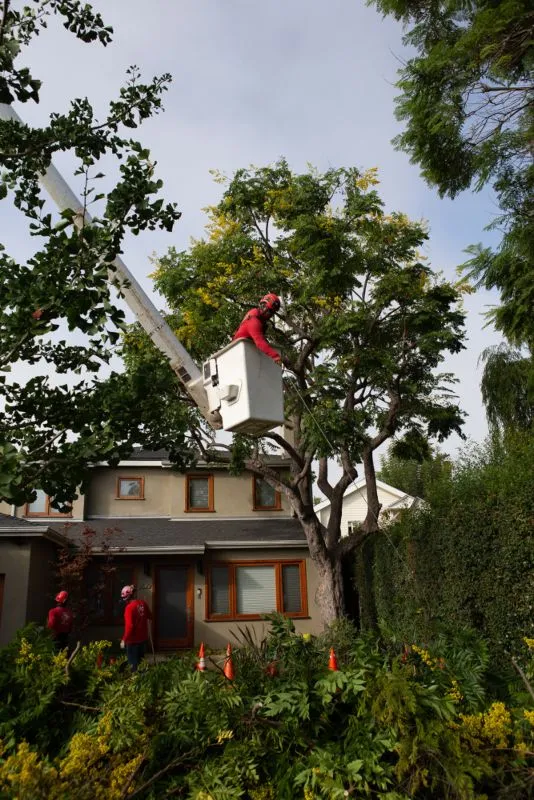
A lot of the difference between the two professions comes down to risk and the resources needed to manage it. Tree work happens at height, with heavy material, in conditions a ground-level crew rarely faces.
Specialized Tree Care Equipment
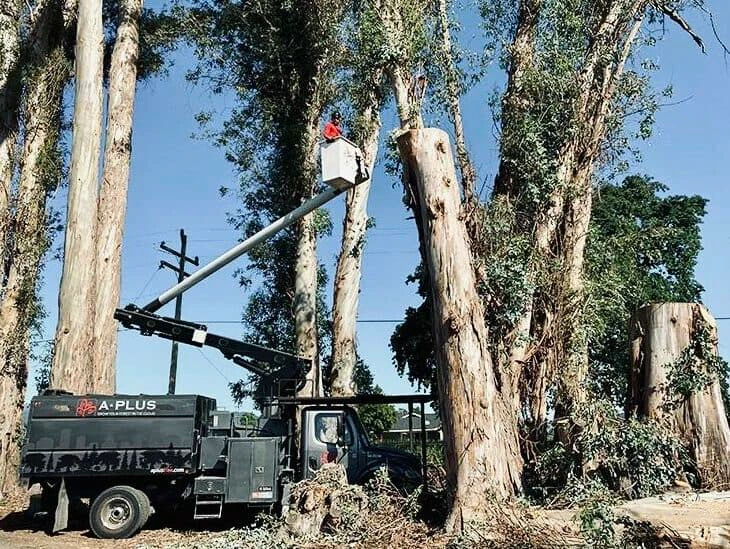
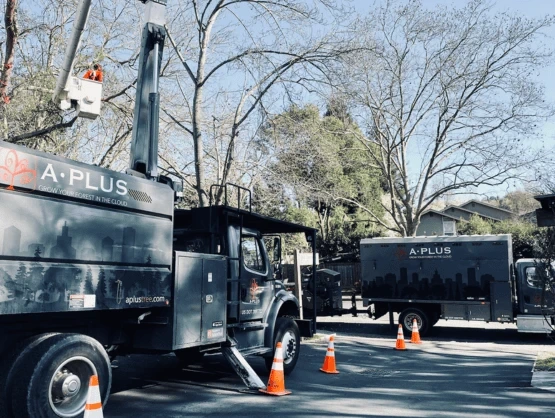
Tree care crews rely on heavy, specialized gear that most landscaping companies do not carry. The right equipment is what allows large, dangerous work to be done in a controlled way.
Common tree care equipment includes:
- Aerial lifts and bucket trucks for reaching high canopies
- Cranes for lifting and lowering large limbs and trunk sections
- Wood chippers and stump grinders
- Professional climbing systems, ropes, and rigging hardware
- Rated chainsaws and pole saws built for tree work
Landscaping equipment centers on mowers, trimmers, blowers, and hand tools suited to ground-level care. The tools tell you a lot about the kind of work each company is built to handle.
Safety Risks Associated With Tree Work
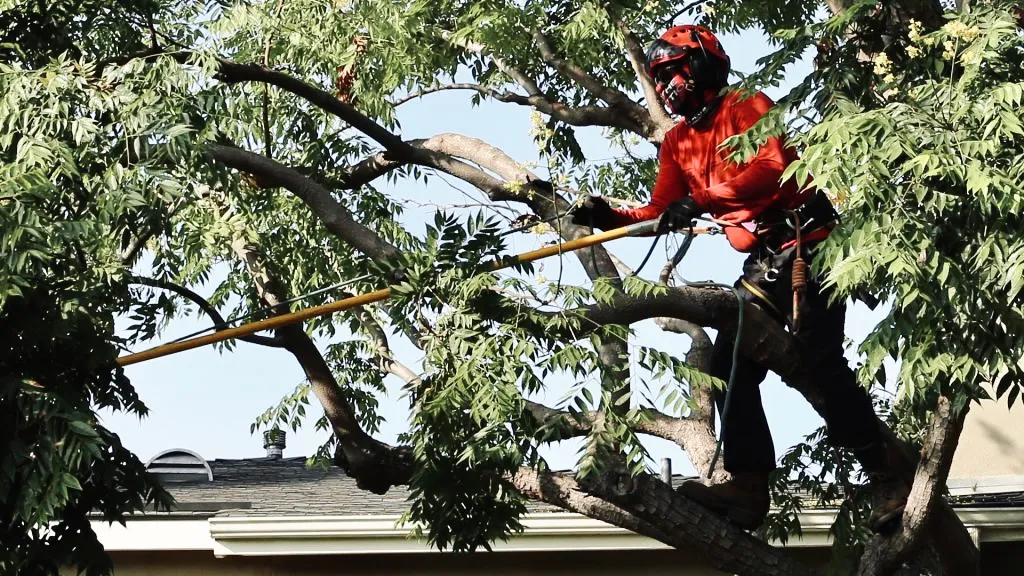
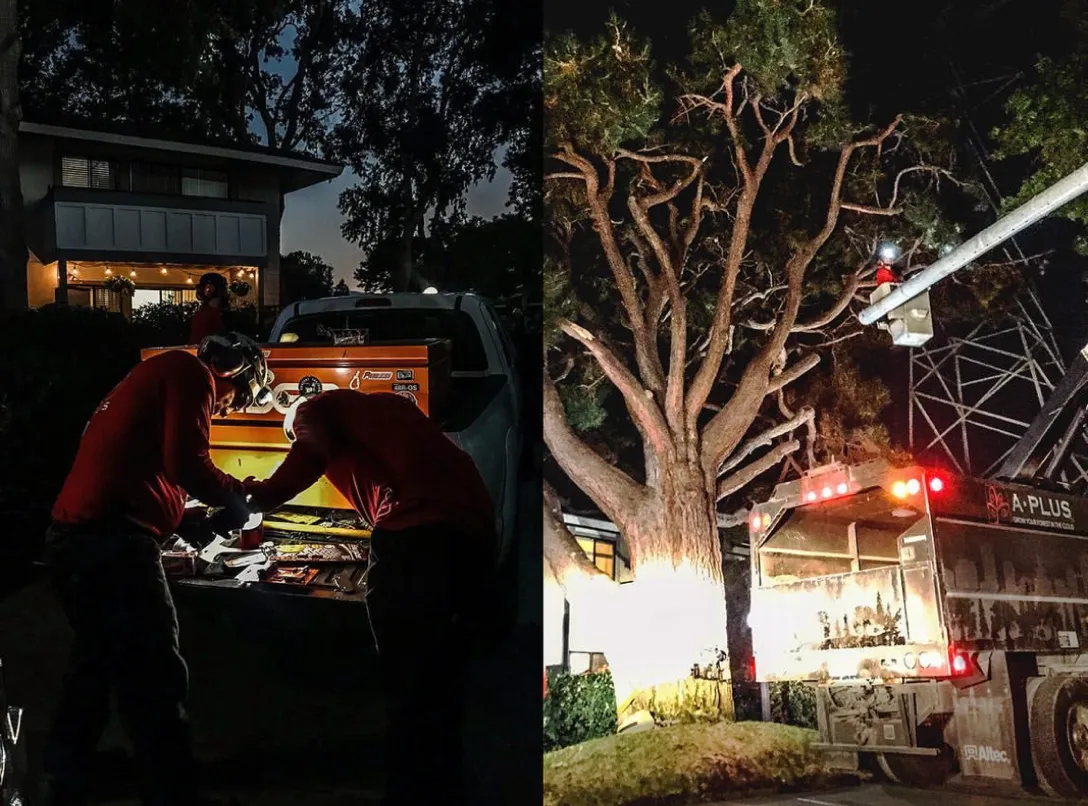
Tree work involves potentially fatal tree care hazards, and the reasons are easy to picture. Crews work high off the ground, near power lines, and around limbs that can weigh hundreds of pounds. A branch that looks manageable from the driveway can behave very differently once it is cut and under tens
This is why large pruning and removal are not appropriate do-it-yourself tasks, and not the right work for a general landscaping crew. We say that plainly because the risk is real.
A trained tree crew uses rigging to control how every piece falls, keeps people clear of the drop zone, and plans for what the tree will do once weight shifts. That planning is the difference between a safe job and a serious accident.
Licensing, Permits, and Legal Scope
Licensing requirements vary by state and city, and tree work often carries its own rules. That scope starts with the license a company carries.
In California, a landscaper holds a C-27 Landscaping Contractor license, which covers design, planting, grading, and grounds maintenance. Removing trees falls under a different classification, the C-49 Tree and Palm Contractor license, which covers tree and palm planting, pruning, stump grinding, and removal.
The practical takeaway for you is simple. A company holding only a C-27 is not licensed to remove your tree, while a qualified tree care company carries both, so the same team can handle the landscape work and the tree work legally.
Licensing is only part of the legal picture. Even a properly licensed company may need a city permit before removing certain trees. In many West Coast communities, removing a mature or protected tree requires a permit from the city, even when the tree is on your own property. For example, San José’s official guidance explains when local tree removal permits apply to street, heritage, ordinance-size, and other trees.
A reputable tree care company understands these local ordinances and can guide you through the permit process before any cutting begins. A good practical rule is to confirm whether a permit applies before scheduling tree removal, since removing a protected tree without one can lead to fines. Landscaping work less often triggers these tree-specific permit requirements.
Insurance Coverage Differences
Insurance is one of the most important and most overlooked differences between the two. Because tree work is high risk, proper coverage costs more and matters more. A qualified tree care company should carry both general liability insurance and workers’ compensation for its crews.
This protects you directly. If a worker is injured on your property, or a falling limb damages your home or a neighbor’s, the right coverage means you are not the one left responsible. Always confirm that any company doing tree work is fully insured, and ask to see current certificates.
General landscaping crews carry insurance too, but the coverage levels needed for tree work are higher for a reason.
How to Vet and Hire the Right Professional
Once you know which type of company you need, a short round of vetting protects you. The strongest sign of a trustworthy provider is that they answer clear questions openly and put their qualifications in writing. Here is how to sort the reliable companies from the rest.
Questions to Ask Before Hiring
A few direct questions will tell you most of what you need to know. Ask any tree care company you are considering:
- Do you have an ISA Certified Arborist on staff, and will one assess my tree?
- Can you provide proof of general liability insurance and workers’ compensation?
- Are you familiar with local permit requirements for tree removal?
- Can you give me a written estimate that explains the scope of work?
- Can you share references or reviews from recent local jobs?
Clear, confident answers are a good sign. Vague responses, or pressure to skip the paperwork, are not.
Red Flags to Watch For
Some warning signs should make you pause before signing anything. Watch for these red flags:
- No proof of insurance, or hesitation to provide it
- Door-to-door pressure, especially right after a storm
- A large deposit demanded up front before any work begins
- Recommendations to top trees, which harms long-term health
- No certified arborist involved in assessing or planning the work
- Quotes far below every other bid, which often means the work will be rushed or done poorly
Storm chasers are a common problem after major weather. If someone shows up unannounced offering fast, cheap removal, take the time to verify their credentials before letting them touch your trees.
Final Takeaway: Match the Professional to the Risk, Not Just the Yard
The choice between a tree care company and a landscaping company comes down to one question: what is the level of risk involved? When the work touches a tree’s health, size, stability, or safety, it belongs to a tree care company with trained arborists, the right equipment, and proper insurance. When the work is about shaping, planting, and maintaining the broader outdoor space, a landscaper is the right call.
For many homes, the best outcome comes from using both in the right order, with tree decisions handled first so the rest of the yard can be built around healthy, safe trees. When you are unsure where a job falls, lead with safety and start with an assessment.
Working with a professional tree service gives you more than a crew with saws and equipment. It gives you trained judgment on tree health, structure, risk, species needs, and local requirements.
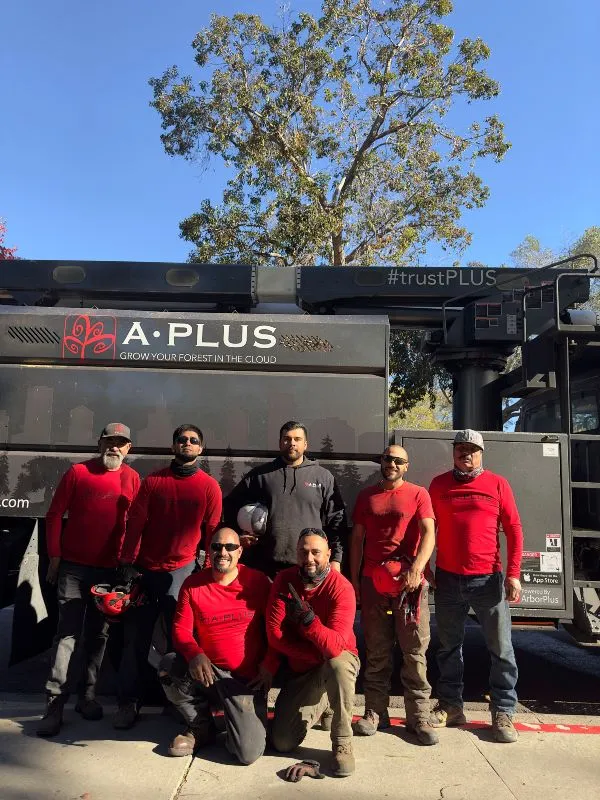
At A Plus Tree, our teams include ISA-Certified Arborists and Urban Forest Managers with experience across California and the Pacific Northwest, so tree decisions are guided by both technical knowledge and regional conditions.
If you have a tree that looks questionable, or a project where a tree’s health or stability is in play, our certified arborists are here to take a look and help you decide on the right next step. A short conversation now can save you a much larger problem later.
Frequently Asked Questions
Is Tree Service the Same as Landscaping?
No. Tree service focuses on the health, safety, and structure of trees, usually led by trained arborists. Landscaping covers wider outdoor design and maintenance like lawns, beds, and hardscape.
Can a Landscaper Trim or Remove Trees?
Some handle light trimming, but large pruning or removal needs a tree care crew. Big trees carry real safety and liability risk that general landscaping crews are not trained for.
Should I Call an Arborist Before a Landscaper?
If a tree’s health, stability, or safety is in question, yes. An arborist can assess the tree first, then your landscaper can plan the surrounding space around it.
Why Is Tree Work More Expensive Than Landscaping?
Tree work involves specialized climbing gear, trained crews, higher insurance, and serious risk. You are paying for safety and expertise, not only the time spent on the job.
Can a Tree Care Company Also Provide Landscaping Services?
Some larger companies offer both, but the tree care side should still be handled by certified arborists. Always confirm who is doing the actual tree work before you hire.
Get a Free Tree Assessment — No Obligation
Tell us about your tree. One of our ISA Certified Arborists will review your situation and get back to you within 24 hours.