
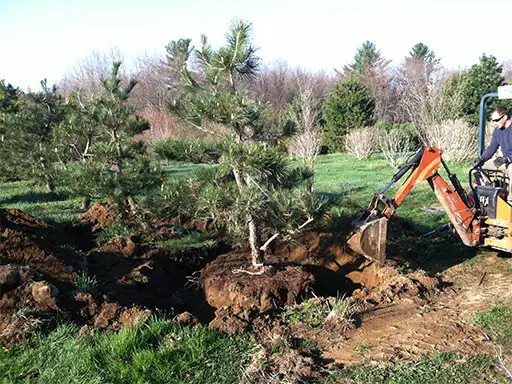
A pine tree can end up in the wrong place for all kinds of reasons. Sometimes it was planted too close to a house, driveway, or other trees. Sometimes a yard project changes the space around it. In other cases, a homeowner wants to save a younger pine before construction or landscape work begins. Whatever the reason, moving a pine tree can feel risky, especially if it has been growing on the property for years.
The good news is that tree planting and transplanting can work when the timing is right and the process is handled carefully. In most cases, success depends much more on preparation than luck.
This guide explains when transplanting makes sense, how to prepare both the tree and the new site, what the move should look like, and how to care for the tree afterward so it has the best chance to recover.
Quick Answer: The best time to transplant pine trees is early spring before new growth starts, or fall about six to eight weeks before the first hard frost. Smaller pines under 6 feet tall usually transplant more successfully than mature trees. The most important factors are a solid root ball, correct planting depth, and steady deep watering during the first two to three years after the move.
Do Pine Trees Transplant Well
Pine trees can survive transplanting, but they are usually less forgiving than many deciduous trees. A pine often depends on a root system that extends deep and wide, which makes moving it more difficult. When many of those roots are lost during digging, the tree has to rebuild enough of that system to support the growth aboveground.
Smaller and younger pines usually handle the process better than mature trees. If the pine is healthy, the new site is suitable, and the move happens at the right time, it can establish well in its new location. The important thing to remember is that transplanting is more than relocating a tree. You are asking it to recover from major root loss while staying alive and stable above ground. That is why preparation matters so much.
Not sure if your tree needs professional attention?
A Plus Tree’s ISA Certified Arborists serve homeowners across the West Coast. A free assessment takes 15 minutes and gives you a clear answer.
When Is the Best Time to Transplant Pine Trees
Timing has a major effect on success. Many people focus on digging and replanting, though the season can matter as much as the technique. A well-handled move at the wrong time can still leave the tree struggling.
Why Dormancy Matters
Pine trees usually respond best when they are dormant or close to dormant. During that period, the tree is not putting as much energy into new shoots and active top growth. That gives it a better chance to direct resources toward root recovery after the move.
If a pine is transplanted during active growth, especially in warm weather, stress rises quickly. The tree is trying to support its needles and shoots while also coping with a reduced root system. That is a hard balance to maintain.
Spring or Fall
Early spring is often the safest option in many regions, and in many cases it is the best time of year to transplant trees. Soil moisture is usually better, temperatures are milder, and the tree has a full growing season ahead to begin re establishing roots.
Fall can also work well, especially where winters are not severe. At that point, the tree can put more energy into root recovery instead of pushing strong new top growth. In colder climates, spring is often the safer choice. In milder areas, fall can be very effective as long as the tree has time to settle before the ground becomes too cold.
When to Avoid Moving a Pine
Summer is usually the hardest time for transplanting because heat, dry weather, and active growth all increase transplant stress. Deep winter can also be a poor time in many locations because frozen soil limits root activity and water uptake, especially when you consider how pine trees handle winter conditions.
A simple rule is to move a pine when conditions are cool enough to reduce stress, but not so cold that root establishment is stalled.
Preparation Gives the Tree a Real Chance
Much of transplant success is decided before the tree is ever lifted from the ground. The move may take one day, but the odds of survival are shaped by the preparation that comes first. This is the part many homeowners underestimate, even though it often makes the greatest difference.
Assess the Tree Honestly
Start with the size and overall health of the tree. A healthy pine with a trunk diameter under 2 inches is often a realistic homeowner project. Trees between 2 and 4 inches in diameter become much harder. Larger trees usually require professional equipment and experience.
Also inspect the tree for needle loss, insect activity, disease, trunk injury or damaged bark, or other signs of decline. Moving a pine that is already stressed rarely fixes the problem. In many cases, it adds more pressure to a tree that is already struggling.
Root Pruning Can Improve the Odds
If the move is planned in advance, root pruning can help a great deal. Cutting a circle around the tree months before transplanting encourages more feeder roots to develop closer to the trunk.
That matters because the final root ball can only capture so much of the root system. If more useful roots are concentrated near the center, the tree has a better chance of surviving the move. It is a way to prepare the tree for a smaller underground footprint before it is transplanted.
Choose the New Site Carefully
The new location should suit the tree long term. Most pines prefer full sun and well drained soil. Low spots where water collects can lead to root problems, and this guidance notes that poorly drained soils can suffocate roots and kill a plant. Heavy shade can also reduce vigor over time.
You also need to think ahead. A pine that looks manageable now may become very large later. Make sure there is enough room between the tree and buildings, driveways, walkways, overhead lines, and nearby trees. It is better to solve the site issue now than to face the same problem again a few years from now.
How to Transplant a Pine Tree
Once the timing is right and the new site is ready, the move should be handled in a careful sequence. Rushing often leads to root damage, planting-depth problems, or unnecessary stress on the trunk. A steady approach usually gives you the best result.
Water Before Digging
Water the tree deeply one to two days before transplanting. Moist soil tends to hold together better than dry soil, which helps protect the root ball during digging. It also reduces moisture stress at the start of the move.
Dig a Proper Root Ball
A common rule is to allow about one foot of root ball diameter for every inch of trunk diameter. It is only a starting point, though it gives homeowners a useful guide.
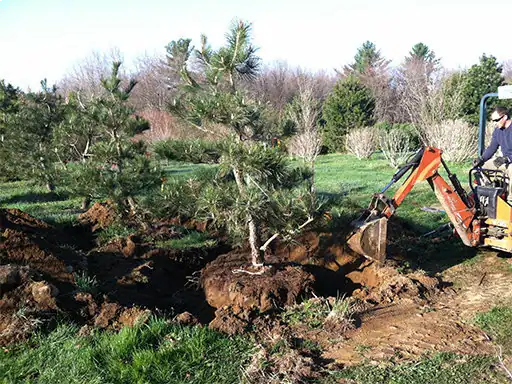
Use a sharp spade to cut a clean circle around the tree. Try to avoid tearing roots. Clean cuts are easier for the tree to recover from than ragged damage. Then undercut the root ball gradually from several sides until it can be lifted with as much soil intact as possible.
Lift the Tree Correctly
Do not pull the tree out by the trunk. That can damage the connection between the trunk and the root system. Instead, slide burlap or a tarp beneath the root ball and lift from underneath.
Even a fairly small pine can become heavy once the soil is attached. For trees taller than about 3 feet, it helps to have another person and some form of support ready during transport.
Plant at the Right Depth
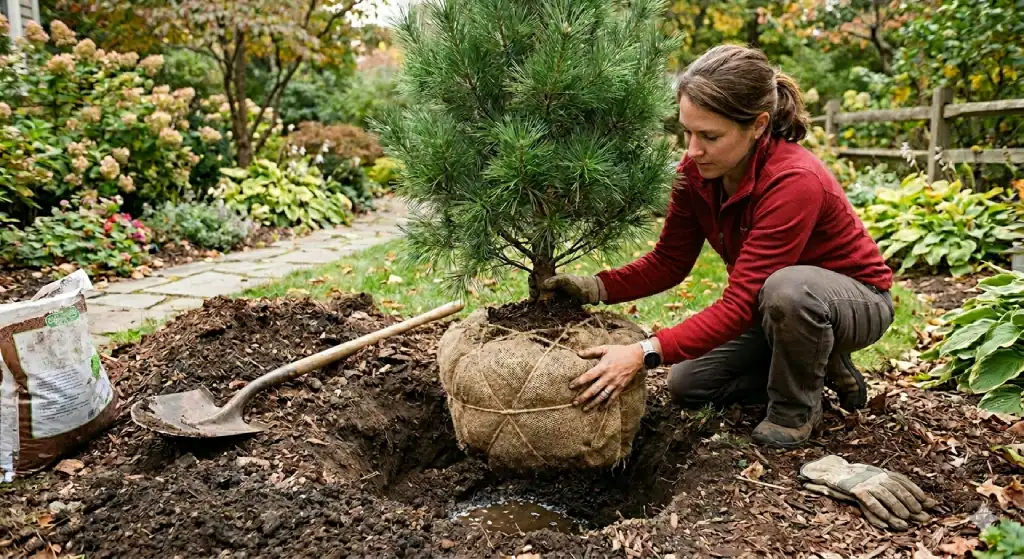
The planting hole should be wider than the root ball, usually two to three times as wide, but no deeper. Planting too deep is one of the most common and damaging mistakes.
The trunk flare, where the base of the trunk begins to widen into the roots, should sit at or slightly above the final soil line. If that flare is buried, moisture and decay issues become much more likely.
Backfill with Native Soil
Use the soil that came from the site rather than filling the hole with heavily amended soil. When the backfill is too different from the surrounding ground, roots may be slower to grow outward into the native soil.
Backfill in stages, pressing lightly to remove large air pockets. Then water thoroughly to help settle the soil around the root ball. A shallow watering ring around the planting area can help direct irrigation where it is needed most during establishment.

Post Transplant Care Matters as Much as the Move
Getting the pine into the ground is only the first stage. The real test comes in the months and years after transplanting. Good aftercare often determines whether the tree survives, stalls, or begins growing normally again. This is where patience matters most.
Watering in the First Three Years
The first year is the most important. During dry periods, the pine will often need deep watering once or twice a week, depending on soil type and weather. A good rule is to water new trees every 7 to 14 days when rainfall is lacking, using enough water to soak the root zone deeply. The goal is to moisten the root zone thoroughly, not to keep the surface wet all the time.
In the second year, watering can often become less frequent, but it should still be deep and consistent when rainfall is limited. By the third year, a pine that has established well can usually handle more normal conditions.
Mulch the Right Way
Mulch helps conserve moisture, moderate soil temperature, and reduce grass and weed competition. A layer about 2 to 3 inches deep spread in a broad ring around the tree is usually ideal.
Keep mulch away from the trunk. When it is piled directly against the bark, it traps moisture where it should not be and can lead to decay or pest problems. This is one of the most common planting mistakes, and one of the easiest to avoid.
When Staking Helps
Not every transplanted pine needs staking. If the root ball is stable and the tree stands upright, natural movement is often better because it helps the trunk develop strength.
If the site is windy or the tree is unstable, staking may help for a limited period. Use soft ties and allow slight movement rather than holding the trunk rigid. In most cases, stakes should be removed after one growing season.
DIY or Professional Help
One of the smartest decisions in this process is knowing whether the job is really manageable. Some pines are realistic for a careful homeowner. Others are better left to professionals. Being realistic at this stage can save a lot of effort and disappointment later.
Trees That Are More Realistic for DIY
Small pines under about 4 to 5 feet tall with relatively narrow trunks are often realistic candidates for a homeowner transplant. These trees usually have root balls that can be handled without severe root damage or excessive strain.
If access is easy and the new location is ready, moving a smaller pine can be a manageable project with careful work and good aftercare.
Trees That Become Risky Quickly
Once a pine reaches about 6 feet in height, or the trunk diameter moves into the 2 to 3 inch range, the difficulty increases quickly. The root ball becomes heavier, the tree is harder to stabilize, and more of the root system is likely to be lost.
Mature pines are especially difficult because their roots often extend well beyond what can realistically be captured in a transplant. In those situations, even a careful move may not give the tree strong odds of survival.
When It Makes Sense to Call an Arborist
If the pine is large, the site is difficult, access is tight, or you are unsure whether the tree is a good transplant candidate, it is wise to consult a certified arborist. A professional can help evaluate the tree, recommend root pruning, and assess whether the new location is actually suitable.
That kind of advice can save time, labor, and the tree itself.
Common Mistakes That Kill Transplanted Pines
Even a well-planned move can fail if a few major errors slip in. These are the most common ones to avoid, and they are worth paying attention to before you start.
Moving the Tree in Hot Weather
Heat creates immediate stress on a root system that has already been reduced. Moisture loss rises fast, and the tree may not be able to keep up.
Making the Root Ball Too Small
If too many roots are left behind, the pine may not be able to support itself after transplanting. This is one of the main reasons larger pines fail.
Planting Too Deep
A buried trunk flare can lead to bark damage, poor root function, and long term decline.
Watering Too Much or Too Little
Both extremes are harmful. The goal is steady moisture deep in the root zone, not constant saturation and not prolonged dryness.
Skipping Root Pruning
When the transplant is planned ahead of time, root pruning can improve the odds in a meaningful way, especially for trees that are beyond the very small size range.
Fertilizing Too Soon
Right after transplanting, the tree needs to rebuild roots, not push aggressive new top growth. Fertilizing too early can undermine that recovery process, even if a broader tree-fertilization plan may make sense later.
What to Watch for After the Move
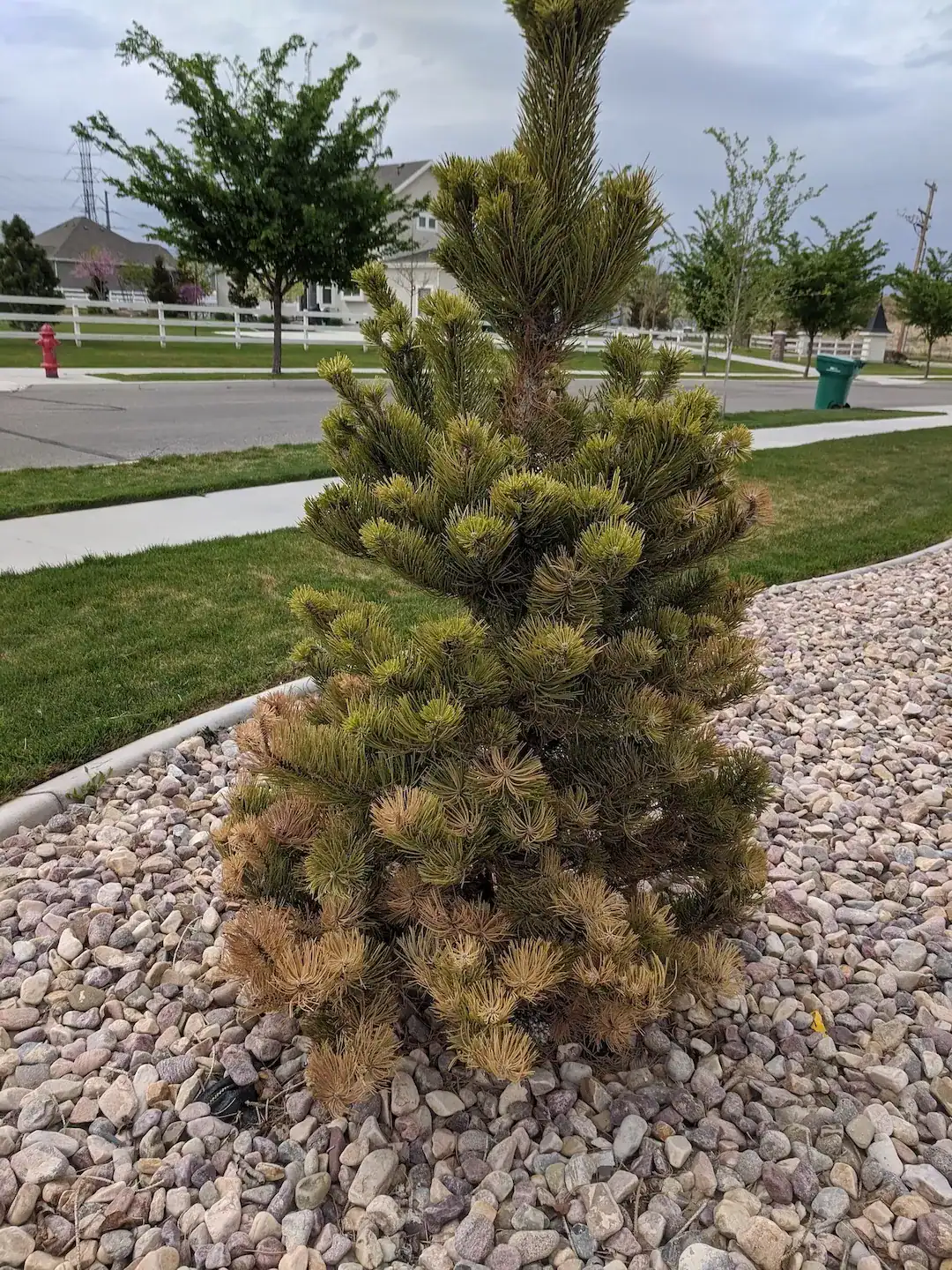
It helps to know what normal recovery may look like. A transplanted pine may show some needle yellowing, slow growth, or a generally stressed appearance during the first season. That does not always mean the move has failed.
What matters more is the pattern over time. Is the tree holding most of its needles? Is new growth appearing when it should? Do symptoms seem stable, or are they spreading week by week? Watching the overall trend is usually more useful than reacting to every minor change.
Recovery is often slow. Some pines need one to two full growing seasons before they begin to look clearly established again. Patience is part of the process.
Final Thoughts
Transplanting a pine tree is possible, but it is not something to do casually. The best candidates are usually smaller, healthy trees that are moved at the right time with careful preparation behind the move. If you focus on timing, root ball size, planting depth, and consistent aftercare, you give the tree a much better chance to settle into its new location.
If the pine is large, the site is difficult, or the tree already seems stressed, it is worth getting professional guidance before you begin. Sometimes the best decision is to make sure the move is realistic from the start.
FAQs About Transplanting Pine Trees
Can pine trees survive being moved in summer
They can, but the risk is much higher. Spring and fall are usually safer because heat and active growth place more stress on the tree.
How long does transplant shock last
Many pines show stress for one to two growing seasons. Recovery depends on size, timing, watering, and site conditions.
Can I transplant a pine tree from the woods
Yes, but smaller trees are the best candidates. Wild trees are often harder to move because their roots have not been prepared.
Should I fertilize right after transplanting
No. It is usually better to let the tree focus on root recovery during the first growing season.
Get a Free Tree Assessment — No Obligation
Tell us about your tree. One of our ISA Certified Arborists will review your situation and get back to you within 24 hours.