
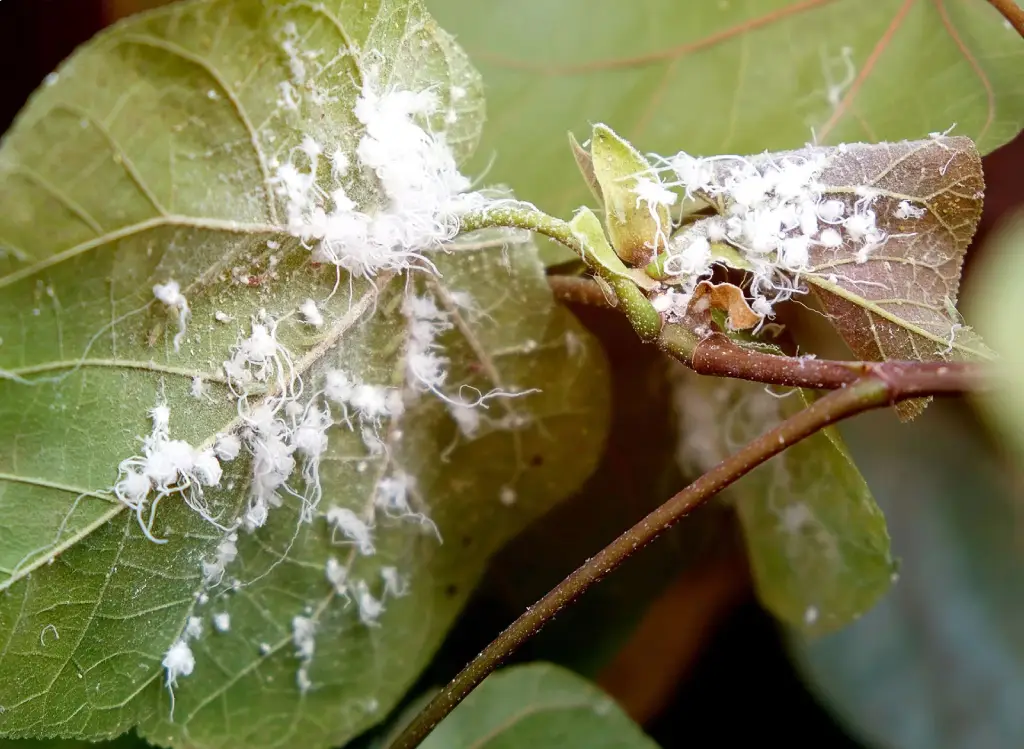
You stepped outside, or looked over a houseplant, and noticed something strange, white fuzz on the leaves, stems, bark, or soil. It is the kind of thing that can make you wonder whether you are looking at a disease, an insect problem, or a sign that something is off in the way the plant is growing.
White fuzz on plants usually points to a short list of causes, and once you know which one you are dealing with, the next step becomes much clearer.
This guide walks you through what white fuzz usually means, how to tell the difference between the most common causes, and what to do next for both plants and trees, especially when broader tree health care may be needed.
Quick Answer: What Is the White Fuzz on Plants and Trees?
If you have ever looked at a leaf or branch and asked yourself what is the white fuzz on my plants, you are not alone. In most cases, it comes from one of three things: powdery mildew, mealybugs or woolly aphids, or harmless surface mold caused by excess moisture. They may look similar at first glance, but they behave differently and need different solutions.
Powdery mildew usually looks like a dry, dusty coating sitting on the leaf surface. Mealybugs and woolly aphids show up as soft, cottony clusters, often around stems, joints, bark, or branch crotches. Surface mold tends to stay near the soil line or on top of potting mix and usually points to too much moisture or poor airflow. Once you identify which one you are seeing, treatment is usually straightforward.
Not sure if your tree needs professional attention?
A Plus Tree’s ISA Certified Arborists serve homeowners across the West Coast. A free assessment takes 15 minutes and gives you a clear answer.
The Main Culprits in Detail: Fungi, Pests, and Mold
Not all white fuzz means the same thing. A closer look at texture, location, and plant type usually tells you a lot.
Powdery Mildew: A Common Fungal Culprit
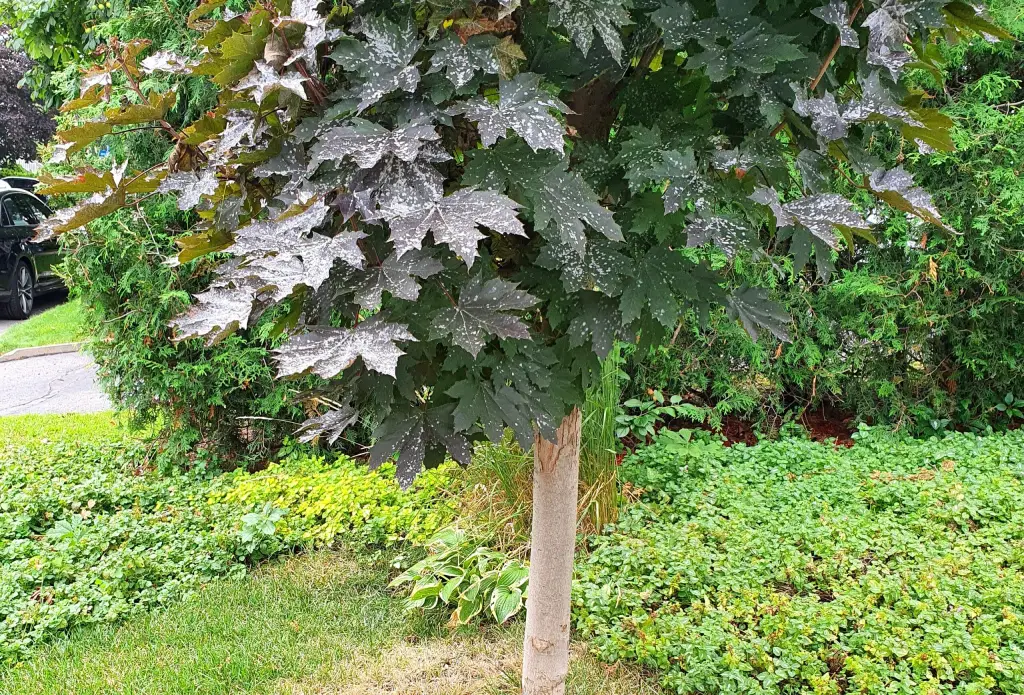
Powdery mildew is a fungal disease that shows up as a white or pale gray coating on leaves, stems, and sometimes flower buds. A helpful way to picture it is like a dusting of flour sitting on the plant surface. Unlike many fungal problems, it often shows up in dry weather when airflow is poor and foliage stays crowded.
It spreads through airborne spores and can affect a wide range of plants, including roses, squash, lilacs, and ornamental shrubs. If you are trying to compare symptoms on flowering ornamentals, this guide to common diseases of crepe myrtle trees can help add context.
The good news is that it rarely kills an established plant on its own. It can weaken the plant over time, reduce photosynthesis, and make the plant look tired and stressed if the problem keeps spreading.
Mealybugs: The Common Houseplant and Shrub Pest
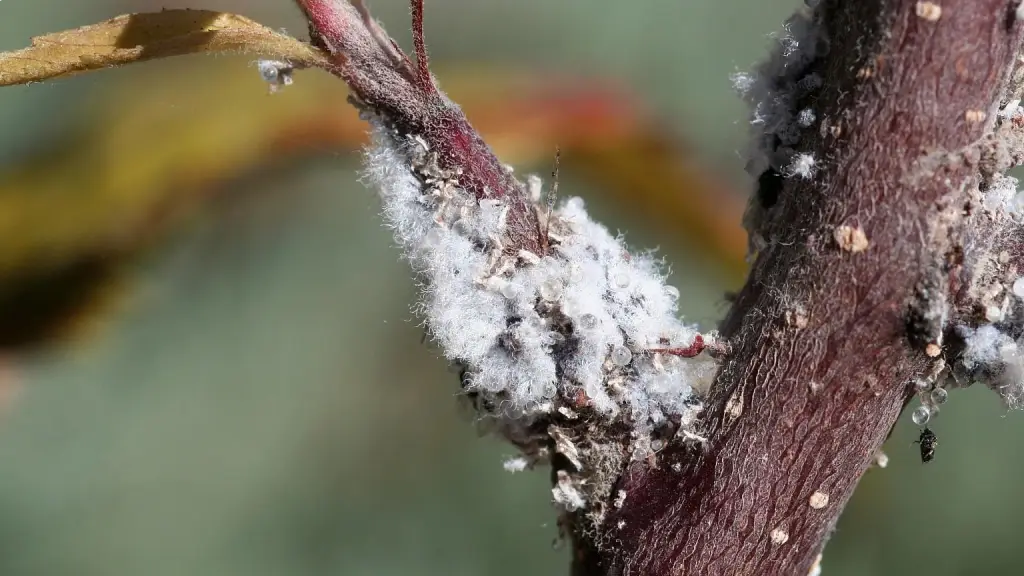
Mealybugs are small, soft-bodied insects that cover themselves with a white, waxy material. They often gather where leaves meet stems or in other protected spots, which is why they can look like little bits of cotton tucked into the plant. They are especially common on houseplants, succulents, and some outdoor shrubs.
These insects feed by piercing plant tissue and pulling out sap. When populations build, you may start seeing yellowing leaves, weak new growth, and a sticky film called honeydew. That sticky residue can then lead to sooty mold, which creates another layer of stress for the plant.
Woolly Aphids: The “Fuzzy” Pest Specific to Trees
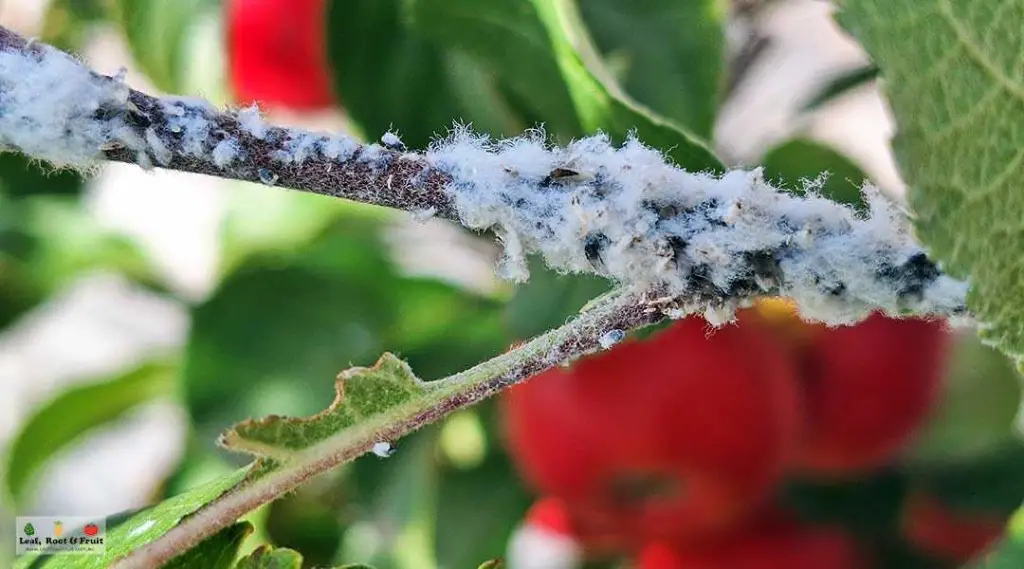
Woolly aphids are a type of sap-feeding insect that produces a white, wool-like covering from waxy fibers. On trees, they often collect on small branches, pruning cuts, bark cracks, or near the base of the trunk. From a distance, a branch can look like it has patches of white lint or frost stuck to it.
They are common on trees such as apple, elm, and related species. Like mealybugs, they feed on sap and leave behind honeydew. A light infestation may be more unsightly than serious, but repeated heavy populations can reduce vigor and create ongoing stress, especially on trees already dealing with tree pests and disease issues.
Soil Mold and Environmental Causes
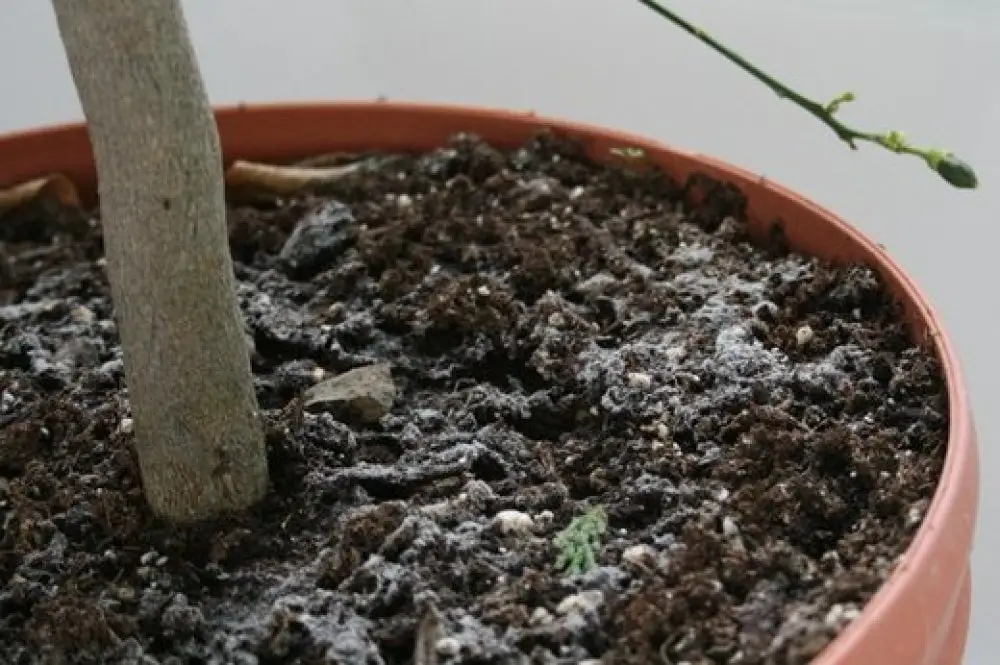
White fuzzy growth on top of potting soil or near the base of outdoor plants is often saprophytic mold. That sounds technical, but all it really means is a mold feeding on decaying organic material rather than attacking the plant itself. It tends to show up when soil stays too wet, drainage is poor, or airflow is limited.
If you notice fuzzy white growth right at soil level, especially in a container, it is often a sign that the growing conditions need to be adjusted. In most cases, the mold itself is not the main problem. It is more like a signal that the soil is staying damp longer than it should.
Is the White Stuff Harmful? When to Worry
In many cases, a small amount of white fuzz is manageable and not an emergency. Still, there are times when it deserves a closer look. Pay more attention when:
- the white growth is spreading quickly across multiple plants
- leaves are curling, yellowing, or dropping in noticeable numbers
- the fuzz is showing up on a large tree, especially on bark or near the base
- the plant or tree is already stressed by drought, poor soil, root damage, or past decline
A good practical rule is this, if the white fuzz is staying small and the plant otherwise looks healthy, you usually have time to identify it and respond calmly. If the plant is declining at the same time, the issue matters more.
How to Identify the Source of White Fuzz
Correct identification matters more than rushing into treatment. A few minutes of close observation can save you from spraying the wrong product or missing a bigger issue.
Leaf, Stem, and Soil Clues: Where Is It Growing?
Location is one of your best clues. White fuzz spread across the top or underside of leaves, especially with a dry, dusty look, usually points to powdery mildew. White cottony buildup in stem joints, along bark, or at branch unions is more likely an insect problem such as mealybugs or woolly aphids. White growth that stays on top of soil or hugs the base of the stem usually points to mold caused by excess moisture.
Run a finger across it if you can do so safely. Powdery mildew tends to smear lightly but still feels dry. Mealybugs feel waxy or sticky. Surface mold often feels soft and damp and may have a faint earthy or musty smell.
Tree vs. Houseplant Symptoms (Knowing the Difference)
On houseplants, white fuzz usually turns out to be mealybugs or powdery mildew. On outdoor trees, white fuzzy buildup is more often tied to woolly aphids, scale-related insect activity, or certain fungal problems on bark and branches.
Trees are also different because problems can be easy to miss until they have spread farther than you realized. It is worth stepping back and looking at the whole canopy, the trunk, and the base of the tree instead of focusing on one small patch. If the issue is widespread or keeps coming back, it is usually time for a closer assessment, and ArborPlus real-time tracking may be worth a closer look.
Visual Differences Between Mold, Mildew, and Insects
Here is what this looks like in real life:
- Powdery mildew: flat, powdery, dry coating on leaf surfaces or tender stems
- Mealybugs or woolly aphids: soft, cottony clumps, often tucked into joints, bark cracks, or branch unions
- Soil mold: fluffy growth on the soil surface or right at the base of the plant, usually linked to damp conditions
If you use a magnifying glass, insects may become much easier to spot. That one small step can clear up a lot of uncertainty.
Comparison Table: Powdery Mildew vs. Mealybugs vs. Woolly Aphids
| Feature | Powdery Mildew | Mealybugs | Woolly Aphids |
| Texture | Dry, dusty coating | Soft, cottony wax | Dense, wool-like fibers |
| Location | Leaves, stems, buds | Stem joints, undersides, indoor foliage | Bark, branches, trunk base |
| Spreads by | Airborne spores | Contact, movement, plant-to-plant transfer | Wind, crawling, ants |
| Common hosts | Shrubs, roses, vegetables | Houseplants, succulents, shrubs | Apple, elm, alder, related trees |
| Treatment | Fungicide, airflow, pruning | Alcohol swab, neem oil, soap | Neem oil, soap, arborist care if severe |
How to Get Rid of White Fuzz on Plants and Trees
Treatment depends on the cause, which is why it is worth identifying the problem first.
Treating Powdery Mildew Safely
For light to moderate powdery mildew, several home treatments can help slow the spread. Neem oil, potassium bicarbonate products, and some baking soda mixtures are commonly used, depending on the plant and how far the problem has spread. Coverage matters, especially on the undersides of leaves and in dense growth where spores can linger.
It also helps to remove badly affected leaves and throw them away rather than composting them. Improve airflow where you can, and avoid wetting the foliage late in the day. There is no magic spray that fixes poor growing conditions, so the long-term solution usually involves better spacing, better pruning, or better airflow, especially when you follow sound pruning dos and don’ts.
Managing Mealybugs and Aphids: Indoor and Outdoor Solutions
For mealybugs on houseplants, start small. Wipe visible insects away with a cotton swab dipped in rubbing alcohol. If the infestation is more widespread, use insecticidal soap or diluted neem oil and make sure you reach hidden spots where insects tend to cluster. Repeat treatments every several days as needed, because one pass usually does not catch everything.
For woolly aphids on small branches, a strong stream of water may knock colonies loose. Neem oil and insecticidal soap can help on reachable growth. Beneficial insects such as ladybugs and lacewings often help naturally outdoors. On mature trees, heavy infestations are harder to manage from the ground, and that is usually where professional treatment makes more sense.
Improving Soil Health: Biochar, Mulch, and Drainage
If white fuzzy growth keeps showing up on the soil or right at the base of the plant, the bigger issue is often drainage or watering habits. In containers, that may mean letting the top inch or two of soil dry before watering again. In the landscape, it may mean improving drainage, reducing constant surface moisture, or pulling back anything that is trapping damp material around the stem.
Mulch can help regulate moisture and soil temperature, but it should be used correctly and kept back from direct contact with trunks and stems. Biochar and other soil-building amendments may support healthier soil structure in some settings, but steady watering habits and drainage usually matter more than any one product.
Integrated Pest Management (IPM): Sustainable Solutions
Integrated Pest Management, or IPM, is simply a steady, practical way to deal with pests without jumping straight to the strongest treatment. The idea is to monitor plants regularly, correct the growing conditions that encourage problems, use the least aggressive treatment that will work, and reserve stronger action for situations that really need it.
That approach usually leads to better long-term results than reacting with repeated sprays every time something shows up. In plain terms, it is about fixing the reason the problem keeps returning, instead of only treating the symptom you see today.
Tips to Prevent White Stuff on Plants and Trees
Most white fuzz problems become much less likely when plants and trees are getting the basics right.
Canopy Thinning and Structural Pruning for Airflow
One of the best ways to reduce fungal pressure on trees and large shrubs is to improve airflow through the canopy. When branches are overcrowded, moisture lingers longer and foliage stays more vulnerable. Structural pruning can remove crossing branches, improve spacing, and help the canopy dry more evenly.
This is one of those areas where timing and technique matter. A good pruning cut helps. A poor one can create a different problem. On mature trees, it is worth having a certified arborist guide that work.
Deep Watering and Humidity Control
Shallow, frequent watering keeps the surface damp and encourages exactly the kind of conditions mold and mildew like. Deep watering usually works better because it encourages roots to grow downward and gives the surface a chance to dry out between waterings.
For indoor plants, spacing matters too. When a lot of plants are grouped tightly together in still air, white fuzz problems become more likely. Better airflow, moderate humidity, and a little breathing room often make a noticeable difference.
Sanitation: Removing Fallen Debris and Leaves
Dead leaves, fallen plant material, and old debris can hold fungal spores and pests longer than many people realize. Cleaning up that material reduces the amount of trouble waiting around for the next season.
For outdoor trees, that may mean clearing leaf litter from beneath the canopy. For indoor plants, it means removing yellowing or dead leaves before they sit on the soil surface and stay damp.
Choosing Disease-Resistant Tree Varieties
When you are planting something new, resistant varieties can save a lot of trouble later. Some apples, crabapples, lilacs, roses, and other ornamentals are bred to resist powdery mildew and other common issues more effectively. And sometimes, simply selecting a resistant variety is one of the clearest ways to reduce future mildew problems.
That does not make them problem-proof, though it does shift the odds in your favor. If you are not sure what performs best in your area, local arborist guidance is often worth getting before you plant.
When to Call a Certified Arborist
Some situations are small enough to manage on your own. Others deserve a professional eye.
Signs You Are Dealing with a Serious Tree Fungus
If white or pale growth appears directly on the bark of a large tree, especially alongside cracking, dead wood, sunken areas, or canopy dieback, the issue may be more serious than surface mildew. Some fungal problems develop beneath the bark or within the wood and can affect the tree’s health and stability over time.
Other red flags include mushroom-like growth near the base, loose bark with white material underneath, or clear decline in the upper canopy. Those are signs not to ignore.
Safety First: Why You Should Not DIY Tall Trees
Work on tall trees carries real risk. Even when the visible problem looks minor, climbing ladders, cutting branches, or trying to spray high sections of the canopy can create a much bigger hazard than the original issue.
A certified arborist has the training, equipment, and judgment to assess what is really happening and handle the work safely. If the affected area is above what you can reach from the ground, that is usually a good place to stop.
Get a Free Assessment and Professional Diagnosis
If you are still not totally sure what you are looking at, or the problem is spreading faster than your treatments can keep up with, professional diagnosis is the safest next step. A trained arborist can tell the difference between a surface issue, an insect problem, and something more serious or structural.
A Plus Tree offers free assessments for homeowners concerned about tree health. In many cases, catching the issue early is what keeps it from turning into a larger and more expensive problem later.
Know What You Are Looking At and Act Fast
White fuzz on plants and trees usually comes down to powdery mildew, mealybugs, woolly aphids, or excess-moisture mold. They may look similar from a distance, but the location, texture, and plant type usually tell the story. The most important step is identifying the cause before you treat it.
For many plants, better airflow, improved watering habits, and targeted treatment are enough to solve the problem. For mature trees, especially when bark or canopy symptoms are involved, it is smarter to bring in a certified arborist early. Small problems are easier to deal with when you catch them sooner.
FAQs About White Fuzzy Stuff on Plants
What Is the Fuzzy White Stuff on My Plants?
It is usually powdery mildew, mealybugs, woolly aphids, or surface mold. The best clue is where it appears and whether it looks powdery, cottony, or damp.
How Do I Get Rid of White Fuzzy Mold on Plants?
Remove affected material, improve airflow and drainage, and adjust watering habits. If needed, use neem oil or another appropriate treatment based on the actual cause.
What Causes White Fuzzy Stuff on Plant Stems?
White fuzz on stems is often caused by mealybugs, woolly aphids, or powdery mildew. The exact cause depends on whether it feels waxy, fluffy, or dry.
Is White Fuzz on Leaves Always Powdery Mildew?
No. White fuzz on leaves can also come from insects or other issues. Check whether it looks like a flat coating or clustered cottony buildup.
How Do I Know if White Fuzz Is Caused by Bugs or Fungus?
Bug-related fuzz usually forms cottony clusters in joints or bark cracks. Fungal growth tends to look flatter and more evenly spread across leaf surfaces.
Can White Mold Spread From One Plant to Another?
Yes. Some fungal issues spread through spores, and insects can move between nearby plants. Early cleanup, isolation, and better growing conditions help limit spread.
Get a Free Tree Assessment — No Obligation
Tell us about your tree. One of our ISA Certified Arborists will review your situation and get back to you within 24 hours.