
Quick Answer: When Is the Best Time to Plant Trees?
Quick Answer
However, the answer isn’t always simple. Timing depends on where you live, what you’re planting, and how the nursery stock was grown. In the Pacific Northwest, the best time of year to plant trees is generally fall, but spring and winter can be the right time to plant depending on the situation.
Not sure if your tree needs professional attention?
A Plus Tree’s ISA Certified Arborists serve homeowners across the West Coast. A free assessment takes 15 minutes and gives you a clear answer.
The Best Time to Plant Trees, Season by Season
Timing a tree planting isn’t complicated, but it does require more than checking the calendar. Season, species, stock type, and location all matter. Here’s how each season stacks up.
Why Fall Is Often the Best Time to Plant Trees
Roots don’t care what the calendar says. As long as soil temperatures stay above about 40°F, they keep growing. In most parts of California and the Pacific Northwest this means well into November or December.
While the air cools and the tree goes dormant above ground, the root system is doing its most important work. It’s not competing with leaf-out or fruit production. All available energy goes underground. By the time spring arrives, a fall-planted tree already has months of root development behind it. That head start shows up in growth, drought tolerance, and overall resilience for years afterward.
Pest and disease pressure also drops sharply in fall. Most insects have completed their seasonal cycles. Soil pathogens slow down. A fall-planted tree gets to establish without the same challenges a spring-planted tree faces.
When Spring Is the Better Choice
Spring isn’t a bad time to plant — it’s just the second-best option for most species in our service region. However, for some trees it’s the right call.
Species with fleshy, sensitive root systems do better going into warm soil than cold. Magnolias, dogwoods, tulip trees, and some oaks are classic examples. These trees establish more reliably when planted in spring, after the ground has warmed and before summer heat arrives. The same logic applies to any tree being planted at the edge of its cold tolerance zone.
Bare-root fruit trees are another spring planting staple. Most are sold bare-root and dormant between January and March. Planting them while the tree isn’t actively growing gives the root system time to settle before leaf-out begins.
Can You Plant Trees in Summer or Winter?
Summer is the hardest season to get right, because heat and water demand peak at when new root systems are least prepared to handle it. Even with daily irrigation, transplant shock hits harder and survival rates drop. If you’re planting a container-grown tree in July, commit to deep watering every few days and apply mulch immediately. It’s possible to successfully establish a tree in the summer, but expect more work and more risk.
Winter planting is surprisingly viable in mild climates. In the Bay Area, coastal Southern California, and much of western Oregon and Washington, soil rarely freezes. Trees planted in December or January can keep pushing roots through the season. In colder inland areas, once the ground freezes, root growth stops and a freshly planted tree has no way to establish until spring.
Seasonal Planting Comparison
| Season | Root Establishment | Water Demand | Pest/Disease Risk | Best For |
|---|---|---|---|---|
| Fall | Excellent | Low | Low | Most deciduous trees, natives |
| Winter | Good (mild climates) | Very low | Very low | Container trees in CA/PNW |
| Spring | Good | Moderate | Moderate | Fleshy-root species, fruit trees |
| Summer | Poor | High | High | Avoid if possible |
Best Time to Plant Trees by Species and Nursery Stock
Not all trees want the same thing, and how a tree was grown is just as important as when you plant it. Species biology and stock type both shape the timing window.
Best Time to Plant Evergreen Trees
Evergreens are the trickiest to time. Unlike deciduous trees, they don’t fully go dormant. They keep transpiring water through their needles all winter long. If the ground freezes before roots establish, the tree can’t replace the moisture it loses, and you get brown, dead foliage by spring.
The best time to plant evergreen trees in California and the Pacific Northwest is early fall, ideally September through October, before soil temperatures drop. This gives roots several weeks of warm-soil growth before winter arrives. Spring is the safer backup in colder zones. Avoid planting evergreens in late fall or winter unless you’re in a truly mild coastal climate.
Best Time to Plant Fruit Trees
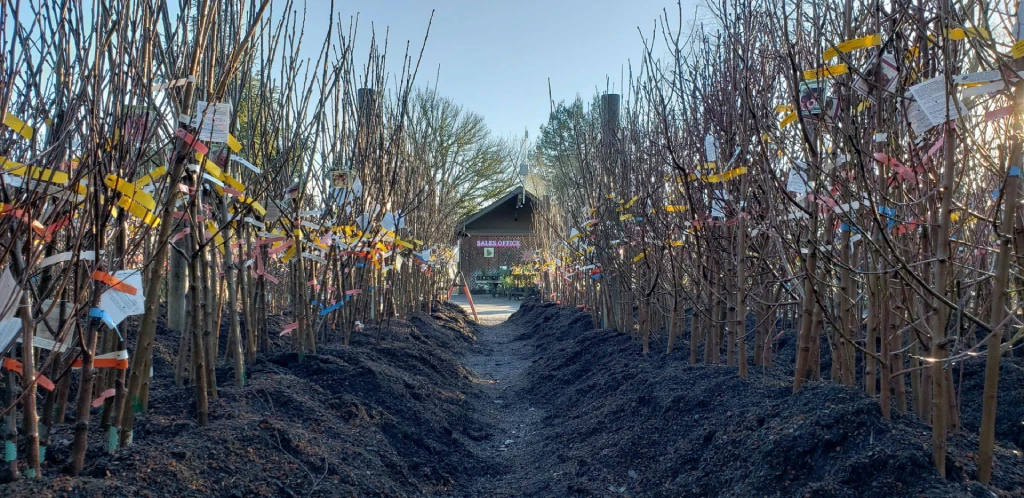
Most fruit trees are sold bare-root during winter dormancy, and that’s a feature, not a limitation. The best time to plant fruit trees is late winter through early spring, roughly January through March in California and February through April further north. Bare-root stock planted while dormant establishes quickly once soil warms.
Container-grown fruit trees give you more flexibility, and fall planting works well for most stone fruits, apples, and pears in California’s mild winters. Citrus is the exception — it is best to plant citrus in the spring, once frost risk has passed.
Best Time to Plant Deciduous Shade Trees
This is where fall really shines. Maples, oaks, sycamores, elms, honey locusts, lindens, and most other deciduous shade trees handle fall planting well. They’re naturally dropping leaves, water demand is minimal, and they quickly establish roots. In California and the Pacific Northwest, October through December is a strong window for these species.
Worth noting: valley oaks and some California natives with deep taproots sometimes prefer spring. Blue oaks are drought-adapted and establish readily from fall planting.
Bare-Root vs. Container-Grown vs. Balled-and-Burlapped Trees
How a tree was grown affects when it should be planted.
Bare-root trees are dug while dormant, stored without soil, and sold only during winter months. They’re lightweight, inexpensive, and establish quickly, but they must be planted right away. The window is narrow, leaving no flexibility on timing.
Container-grown trees can be planted almost any time of year, though fall and spring are the best options. They’re more forgiving because the root system stays intact. Check for circling roots before planting and straighten or score any that are wrapping around the edge of the root ball.
Balled-and-burlapped (B&B) trees are dug with a soil ball and wrapped. They lose a significant portion of roots during digging, so timing and aftercare are more important. Fall and early spring give them the best chance to recover.
Why Timing Depends on Conditions, Not Just the Calendar
Months are a rough guide, but what actually drives root growth is what’s happening below the surface.
Soil Temperature and Root Growth
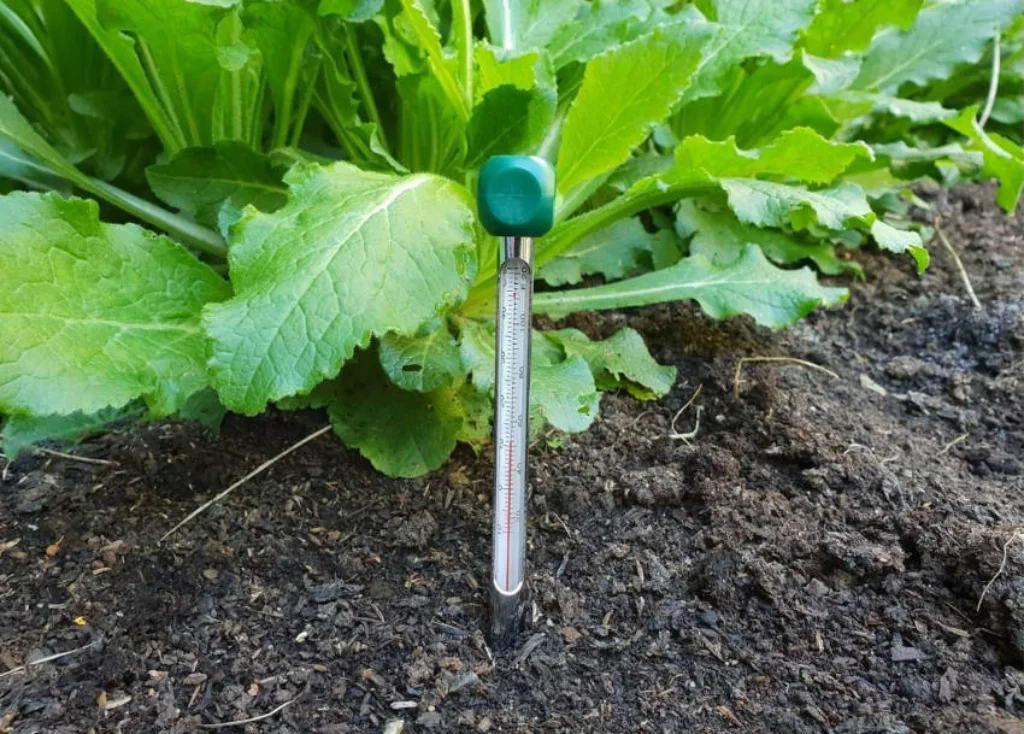
The most important factor in tree establishment isn’t the month; Instead, it’s soil temperature. Roots grow when soil stays above 40°F. Below that threshold, growth is limited. Above 55°F, root activity increases significantly.
Air temperature and soil temperature don’t move in sync. Soil holds heat longer than air in fall and stays cooler longer in spring. A day in early October might feel chilly, but soil six inches down is still warm enough for active root growth. That’s exactly why fall planting works so well in our region.
A cheap soil thermometer takes the guesswork out. If you’re unsure whether the ground is ready, check it before you dig.
Rainfall, Irrigation, and Moisture
Water access matters just as much as temperature. A new tree’s root system can’t pull moisture from soil it hasn’t reached yet, which is why deep watering is so important after planting. Surface watering alone often doesn’t reach where roots are actually establishing themselves.
Fall planting in California and the Pacific Northwest has a built-in advantage, because rainfall picks up right when establishment demand peaks. That natural irrigation is one of the main reasons fall-planted trees often outperform spring-planted ones in our region.
Why Local Climate Beats the Calendar
Generic planting advice written for the Midwest or the East Coast often doesn’t apply in the Pacific Northwest. Our climate is fundamentally different, as freeze-thaw cycles, summer drought stress, and the timing of the rainy season all create conditions where fall and winter planting are frequently the better choice, even when national advice might say otherwise. This is also why USDA hardiness zones only tell part of the story.
When to Plant Trees Based on Where You Live
Where you live can significantly change tree-planting strategy. A planting window that works in Portland can fail in Sacramento, and advice written for other regions of the country rarely applies in the Pacific Northwest.
USDA Hardiness Zones vs. Sunset Climate Zones
Most of the country uses USDA Hardiness Zones to guide planting decisions. Those zones matter for figuring out which species will survive your winters, but they don’t capture summer heat, humidity, rainfall patterns, or the length of your growing season.
In California especially, the Sunset Climate Zone system is more useful. The Sunset System divides the state into over two dozen zones based on rainfall, temperature swings, humidity, and growing season length. A Bay Area garden and a Central Valley garden might share a USDA zone but have completely different planting windows. When choosing trees and timing in California, Sunset zones give you a much more accurate picture.
Best Time to Plant Trees in California
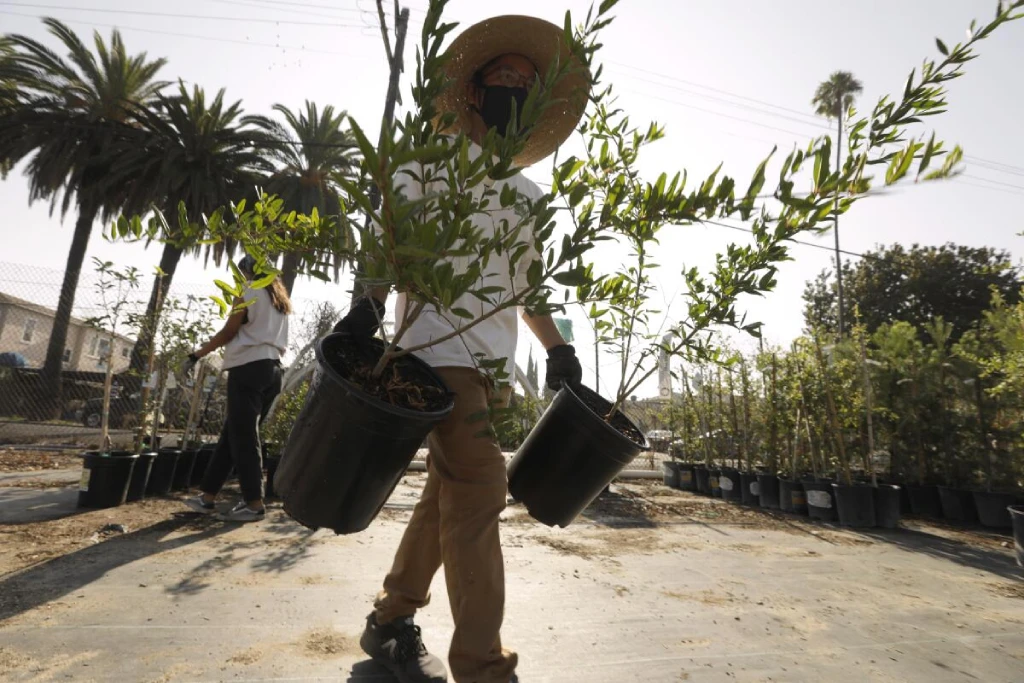
California is not one planting climate. Coastal regions have mild, wet winters, while inland valleys face colder nights and much hotter summers. Across most of the state, fall and winter are the best planting seasons because trees have time to establish roots before summer heat arrives.
Why Winter Is Often the Best Planting Season in California
In much of California, asking when is the best time to plant trees leads to a counterintuitive answer: winter. From roughly October through February, soil temperatures stay mild, rains arrive, and trees face minimal heat stress. There’s no hard freeze to interrupt root growth and no brutal summer waiting around the corner. It’s essentially fall planting conditions stretched over four or five months.
This is the window most California native trees prefer. It also aligns with how the Sacramento Tree Foundation and UC Cooperative Extension generally structure their planting guidance.
Planting Trees During Drought Years
During dry years, timing alone isn’t enough. A tree planted in October during a low-rainfall winter still needs supplemental irrigation. In drought conditions, tree fertilization and consistent deep watering are especially important for helping newly planted trees build enough root mass to survive the following summer.
Bay Area
The Bay Area has one of the most forgiving planting climates in the country. Soil rarely freezes, fog keeps temperatures moderate, and the rainy season reliably runs from November through March. The best time to plant trees in California’s Bay Area is broadly September through February, with October through December being the sweet spot for most species.
Fall and early winter planting allows Bay Area trees several months of root growth before the summer dry season begins.
North Bay and Wine Country
The North Bay and Sonoma/Napa regions run slightly warmer and drier than coastal areas. Fall planting from October through December works well for most species. Some interior North Bay valleys see occasional hard frosts, so check local conditions before planting frost-sensitive species after November.
Central Valley
The Central Valley gets hotter in summer and cooler in winter than coastal California. Summer heat is severe enough that a spring-planted tree can face real stress by June without adequate root mass. Fall planting from late September through November takes advantage of moderate soil temperatures and gives roots four or five months of establishment time before the next heat season arrives.
Avoid planting in the valley from June through August. Soil temperatures exceed the range where root growth is efficient, and irrigation demand on a new tree during peak summer is both expensive and labor-intensive.
Southern California
Southern California’s mild winters make November through March the primary planting window. Summer planting is rarely advisable. The combination of heat, Santa Ana wind events, and low humidity creates difficult establishment conditions for new trees. Fall planting lines up with the wet season arriving in November and December.
Citrus and avocado are exceptions. Plant those in spring, after frost risk has passed.
California Planting Calendar
| Region | Primary Window | Secondary Window | Avoid |
|---|---|---|---|
| Bay Area | Oct – Feb | Sep, Mar | Jun – Aug |
| North Bay / Wine Country | Oct – Dec | Sep, Jan – Feb | Jun – Aug |
| Central Valley | Late Sep – Nov | Feb – Mar | Jun – Aug |
| Southern California | Nov – Mar | Oct, Apr | Jun – Sep |
Best Time to Plant Trees in the Pacific Northwest
The Pacific Northwest isn’t one climate. Western Oregon and Washington get mild, wet winters that make fall and winter planting viable for months at a stretch. East of the Cascades, cold winters change the calculation entirely. Region matters here more than almost anywhere else in our service area.
Seattle and Western Washington
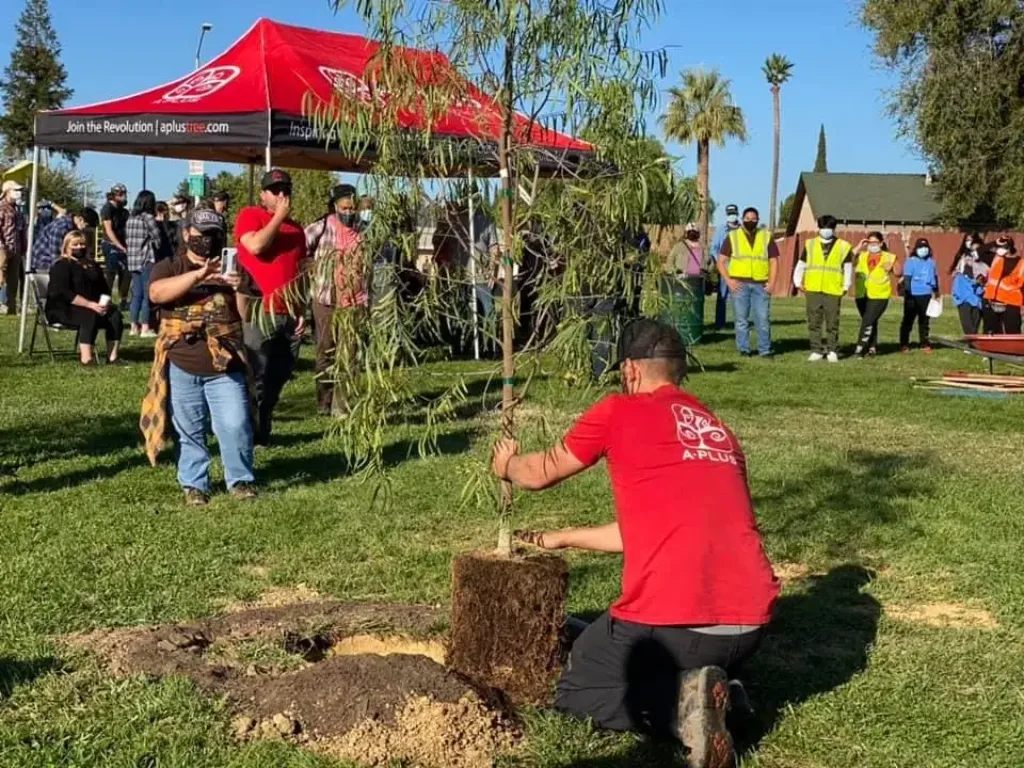
Western Washington is bare-root country. Mild, wet winters mean trees planted from October through February keep growing roots straight through the season. There’s no extended freeze to interrupt establishment, and rainfall is largely reliable throughout.
For container-grown trees, October through March works well. When to plant trees in the Seattle area comes down to a simple rule: anytime the ground isn’t waterlogged or frozen, which covers most of fall and winter.
East of the Cascades, conditions change. Spokane and the eastern Washington inland areas get cold winters that limit the fall window. Spring, from late March through May, is the safer choice there.
Portland and Western Oregon
Portland and the Willamette Valley follow similar patterns to western Washington. Fall and winter planting from October through February aligns with the rainy season and mild soil temperatures. Spring planting is reliable too, but fall-planted trees typically show stronger first-year growth.
Pacific Northwest Planting Calendar
| Region | Primary Window | Secondary Window | Notes |
|---|---|---|---|
| Western Washington (Seattle) | Oct – Feb | Mar | Bare root available Dec – Feb |
| Eastern Washington | Mar – May | Oct (early) | Cold winters limit fall window |
| Western Oregon (Portland/Willamette) | Oct – Feb | Mar – Apr | Rainy season aligns with planting |
| Eastern Oregon | Apr – May | Oct (early) | Similar to eastern WA |
Planting and Aftercare Essentials for Strong Root Establishment
Getting the timing right doesn’t guarantee success. How you plant and what you do in the weeks after determines whether that timing actually pays off.
Prepare the Site and Plant at the Correct Depth
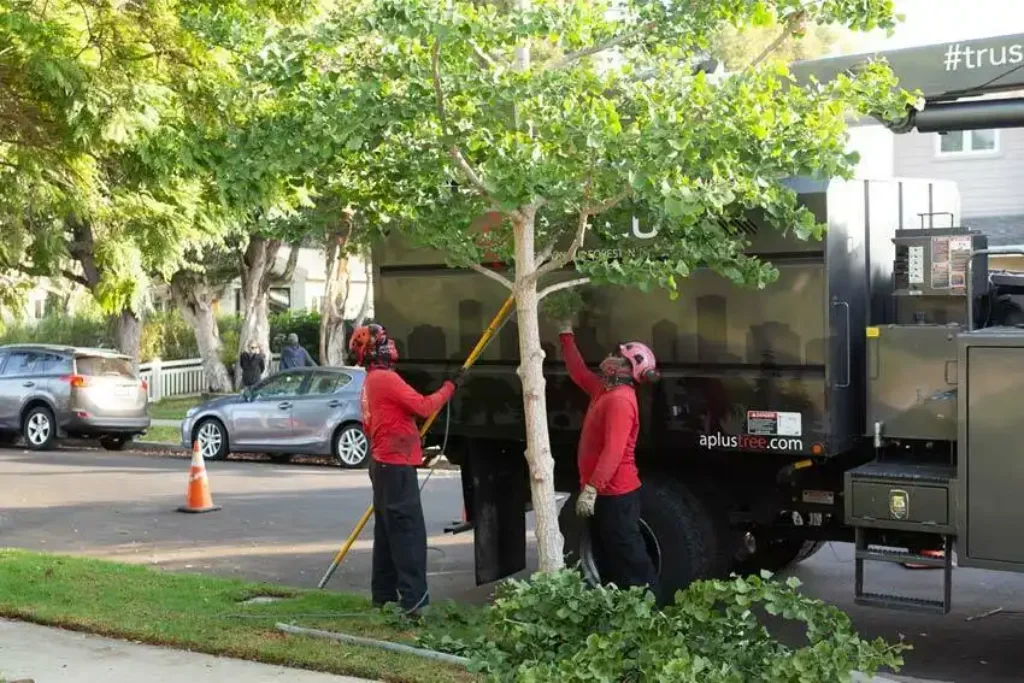
Dig wide, not deep. A planting hole should be two to three times wider than the root ball and no deeper than the root ball’s height. The most common mistake our arborists see is a tree planted too deep, causing root suffocation, water pooling at the base, and tree decline.
The root flare, where the trunk widens at the base, should sit at or just above grade. If you can’t see it after planting, the tree is probably too deep. If necessary, scrape away the top of the root ball to find it.
Before finalizing your site selection, arborist consulting can confirm that the species and location are right for your soil, drainage, and available space. The wrong tree in the wrong spot is a problem that compounds over decades.
Water and Mulch During the First Year
The first growing season is the most critical. New trees need consistent moisture while roots expand into surrounding soil. Tree health care starts at planting and runs through that entire first year. Deep, infrequent watering encourages roots to grow outward and downward rather than staying close to the surface.
Apply two to three inches of organic mulch over the root zone, keeping it a few inches back from the trunk. Mulch helps to retain moisture, moderate temperature, and suppress competing weeds.
Common Tree Planting Mistakes to Avoid
A few common mistakes can undermine even a well-timed planting.
- Staking too tightly. Trees need some movement to develop trunk strength. If staking is necessary, leave slack and remove stakes after one season.
- Adding amendments to the backfill. Enriched backfill can discourage roots from spreading beyond the planting hole. Use native soil.
- Ignoring the root ball. Check container trees for circling roots before planting. Score or tease them outward if the root ball is compacted.
- Planting before a heat wave. Even in fall, a 90°F week can stress a new tree. If a heat event is coming, wait it out.
Before you put a shovel in the ground, it’s also worth reviewing our list of 5 tree species you shouldn’t plant. Some of the most commonly purchased trees are also the most problematic in the long run.
Get Expert Help Choosing the Right Tree and Planting Time
Timing is one piece of the puzzle. Species selection, site conditions, soil health, and long-term care all matter just as much. Getting those right from the start makes a real difference in how a tree performs over the next fifty years.
A Plus Tree’s ISA Certified Arborists serve California, Oregon, and Washington with expert guidance on everything from species selection to post-planting care. If you’re planning a new tree and want to get it right, contact us at 866-815-2525 or [email protected].
Frequently Asked Questions
Is October Too Late to Plant Trees?
No. October falls within the ideal window for most of California and the Pacific Northwest. Soil is still warm, and trees have several months of mild-weather establishment ahead before summer heat returns.
How Long Before the First Frost Should You Plant a Tree?
Aim for at least six weeks before the ground freezes. Air frosts happen well before soil temperatures drop, so give roots time to establish while the soil is still above 40°F.
Can You Plant a Tree When the Ground Is Wet or Frozen?
Not when the ground is frozen. Slightly wet soil is fine and normal for fall planting in rainy climates. Avoid waterlogged or saturated conditions.
Should You Delay Tree Planting Before a Heat Wave?
Yes, if you can. A newly planted tree in its first week of a heat event faces unnecessary stress. Wait it out and plant when temperatures settle.
How Soon After Buying a Tree Should You Plant It?
Bare-root stock should go in the ground within a day or two. Container-grown trees are more forgiving but ideally within one to two weeks. Keep roots shaded and moist in the meantime.
Get a Free Tree Assessment — No Obligation
Tell us about your tree. One of our ISA Certified Arborists will review your situation and get back to you within 24 hours.