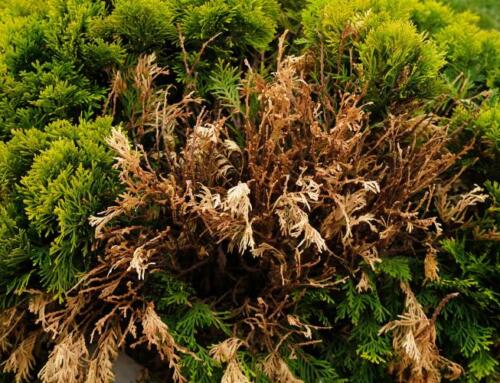

If you’ve noticed strange crusty bumps on your plant stems, sticky residue on the leaves beneath, or a tree that seems to be declining without any clear reason, scale insects could be to blame. They are one of the more frustrating pests homeowners and property managers run into, partly because they are easy to miss until the infestation is already established.
Scale is usually manageable when you catch it early and understand what you are dealing with especially with the right support from a professional tree pest and disease service when the problem starts to spread.
This guide will walk you through how to identify scale insects, what you can reasonably handle yourself, when professional treatment makes more sense, and how to reduce the chances of the problem coming back.
Quick Answer: What Are Scale Insects and What Should You Do First?
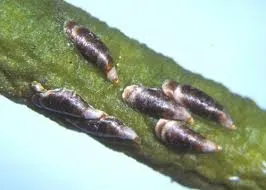
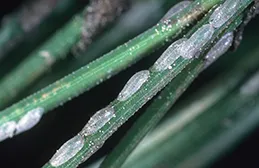
Scale insects are small sap-sucking pests that attach themselves to stems, branches, twigs, and leaves. They often look like tiny raised bumps, waxy patches, or crusty specks that do not rub off easily. Over time, they weaken plants by feeding on internal fluids, which can lead to yellowing foliage, sticky honeydew, branch dieback, and overall decline.
If you suspect scale, start with a close inspection of stems, branch joints, leaf undersides, and new growth. Light infestations on small plants can sometimes be managed with manual removal or horticultural oils. If you are seeing scale across large parts of the canopy, sticky residue beneath the plant, or dieback starting at the tips, it is usually smart to get a professional opinion sooner rather than later.
A good practical rule is this, the sooner you confirm that scale is the problem, the easier it is to choose the right treatment and avoid wasting time on the wrong fix.
How to Identify Scale Insects: Types, Signs, and Life Cycle
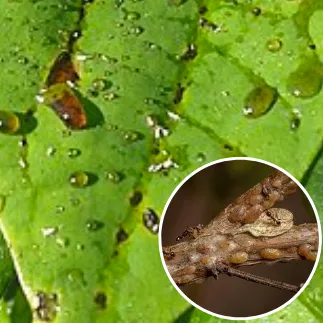
Before you treat scale, it helps to know what type you are dealing with and where it is in its life cycle. That affects how well different treatments will work and when they have the best chance of success.
Soft Scale vs. Armored Scale: Why It Matters
Not all scale insects respond to treatment in the same way.
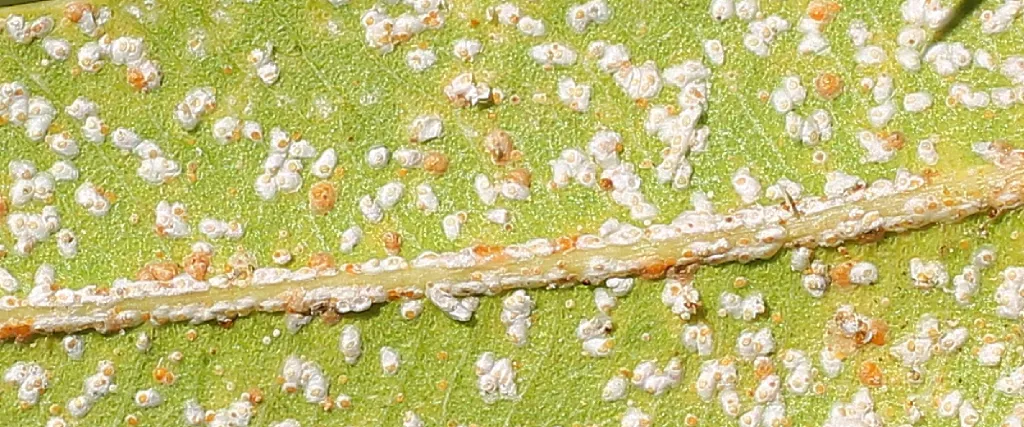
Soft scale insects produce a waxy coating that stays attached to their body. They usually remain a little more exposed, tend to produce honeydew, and are often easier to control with contact treatments if you catch them at the right time. Common examples include brown soft scale and cottony cushion scale.
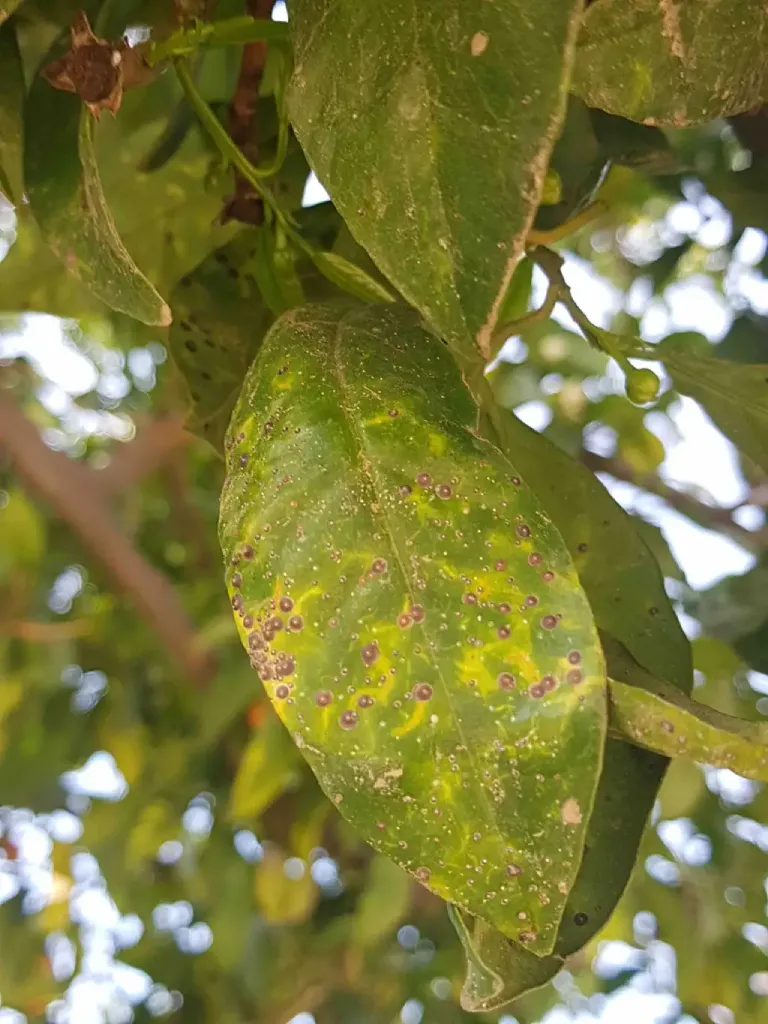
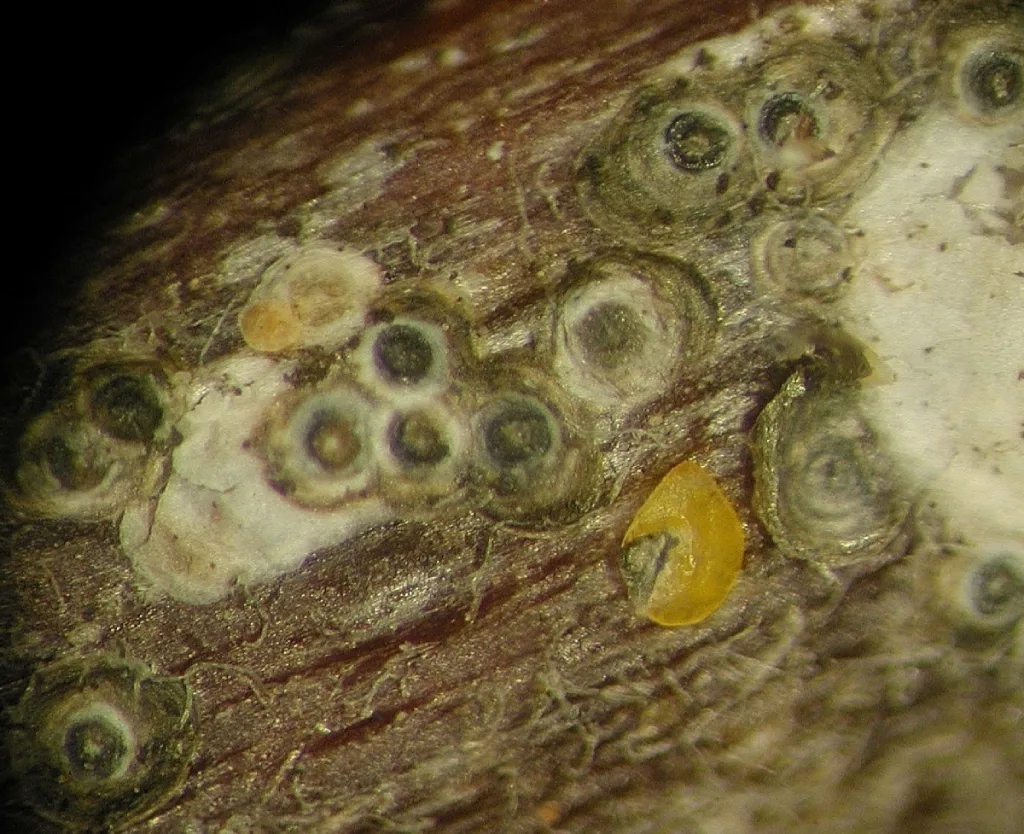
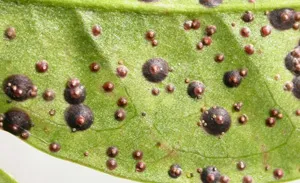
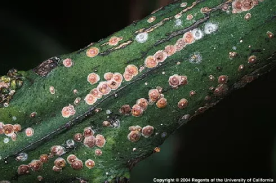
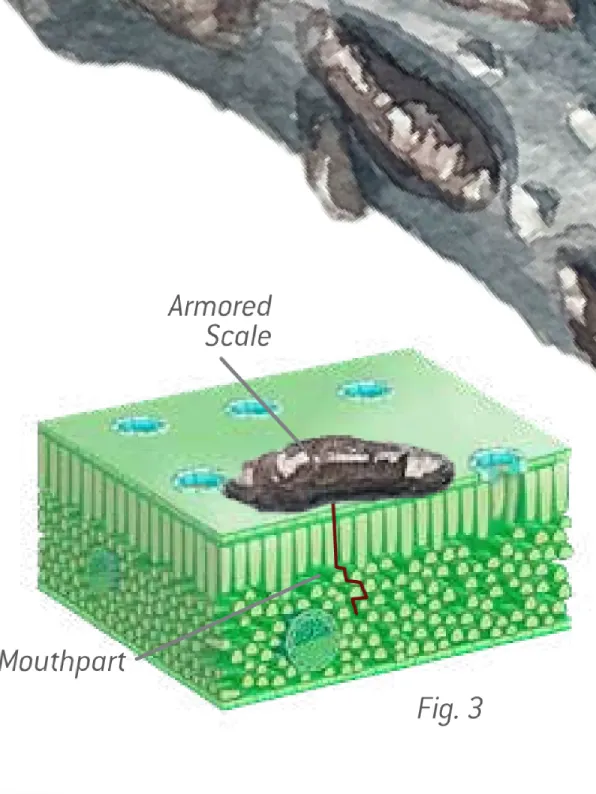
Armored scale insects are different. They form a hard outer shell that sits over the insect almost like a tiny shield. They do not produce honeydew, tend to be smaller and flatter, and are much harder to control with surface sprays because the treatment may never reach the insect underneath. California red scale and San Jose scale are common examples.
This distinction matters in real life. A homeowner may spray neem oil on armored scale and see very little change because the shell blocks the treatment from reaching the insect underneath. A helpful way to picture it is this, soft scale is more exposed, armored scale is better protected, and that changes what a DIY treatment can realistically accomplish.
The Life Cycle: Catching the Crawlers
Understanding the scale life cycle is one of the most important parts of successful treatment.
The crawler stage is the brief period after eggs hatch when the insects are small, mobile, and not yet protected by a hard coating. This is when contact treatments are most effective, and the Pacific Northwest Pest Management Handbooks note that the crawler stage is the most susceptible to chemical control. Once the crawlers settle, begin feeding, and develop their waxy or armored covering, many treatments become far less effective.
For many species, crawler activity begins in spring, though the exact timing depends on the climate, weather, and species involved, often alongside other common spring tree pests like aphids and scale insects.That is why timing matters so much. Applying a product on the wrong day may do very little, while a treatment during crawler emergence can make a real difference.
A good monitoring habit is to inspect the same stems, leaf clusters, and branch joints every 7 to 10 days during the active season. Look for patterns over time. Are new bumps appearing along tender growth? Is sticky residue getting worse? Is the problem spreading into the inner canopy or staying isolated? Those details help you decide whether the infestation is growing, stabilizing, or responding to treatment.
Early Signs of Infestation
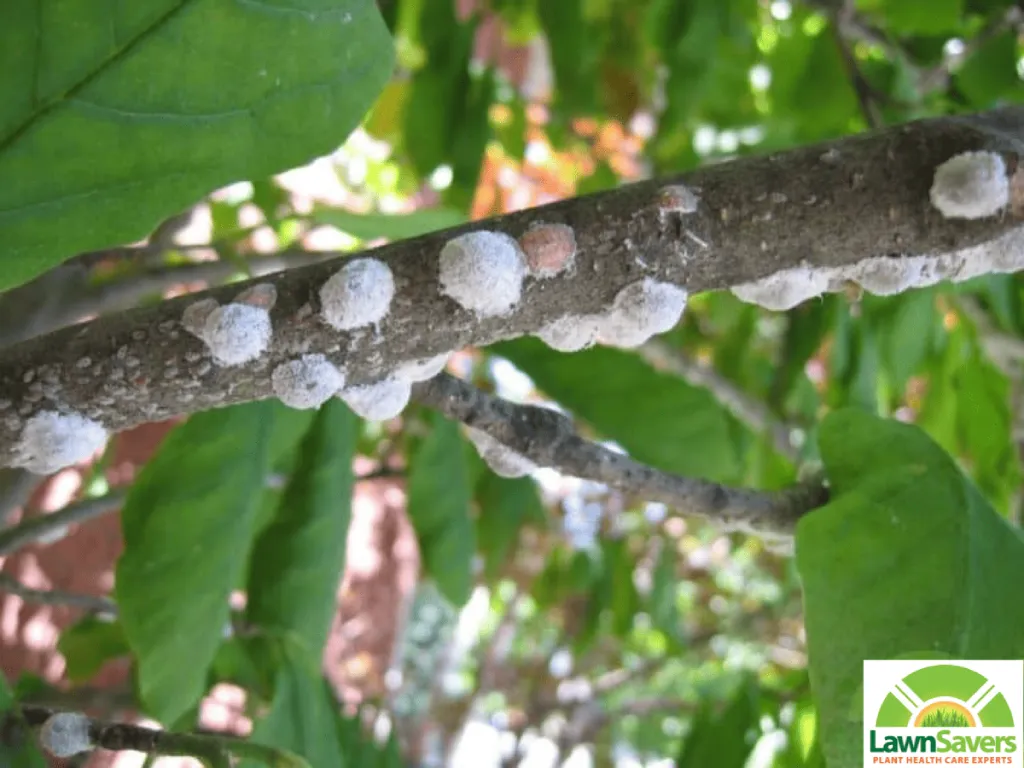
Because scale insects are small and slow-moving, they often go unnoticed until the population has already grown. These early signs are worth watching for:
- Bumpy or crusty patches on stems and branches that do not rub off easily
- Yellowing, curling, or drooping leaves on an otherwise healthy plant
- Sticky honeydew on leaves, patio furniture, benches, or the ground beneath the plant
- Black, powdery sooty mold growing on top of honeydew, which may require a closer look at how to treat black fungus on trees if it starts to spread across leaves and branches
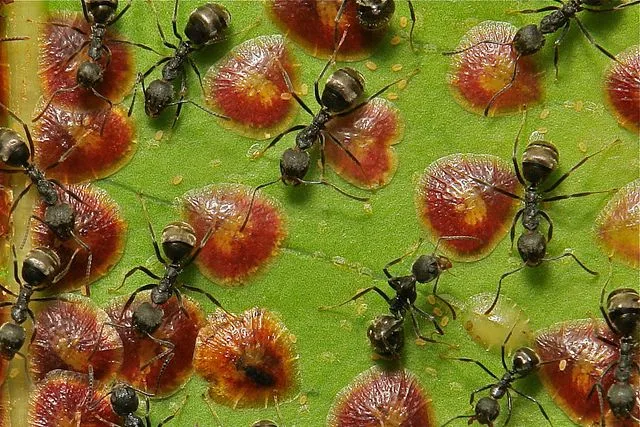
- Ants moving up and down the trunk or stems
- Branch dieback beginning at the tips and moving inward
- Small clusters in branch joints, leaf axils, twig crotches, or on leaf undersides
If you notice any of these, take a closer look at the stems and the undersides of leaves. Sometimes lightly running a fingernail across a suspected patch helps. If it feels fixed in place and does not come away like dirt or debris, scale becomes much more likely.
DIY Scale Removal for Houseplants and Small Shrubs
For small plants and contained infestations, there is a reasonable amount you can do yourself. The key is being thorough and realistic. Scale rarely disappears after one quick pass, especially if you miss eggs, crawlers, or hidden clusters.
Manual Removal
For light infestations on houseplants or small ornamental shrubs, manual removal is a good starting point. It takes patience, but it can make a real difference.
Use a soft toothbrush, a cotton swab dipped in rubbing alcohol, or a damp cloth to work along stems and leaves. Move section by section instead of only treating the most obvious spots. Pay special attention to leaf axils, branch joints, the undersides of leaves, and other tight areas where scale tends to hide.
It also helps to inspect the plant in good natural light. Scale often gathers where the leaf meets the stem or along inner growth that is easy to overlook.
After manual removal, monitor the plant closely over the next few weeks. Scale can reestablish from eggs or crawlers you did not see the first time, so plan to repeat the process every 7 to 10 days for at least a month. That follow-up is often the difference between partial improvement and real control.
Pruning Heavily Infested Branches
If certain branches are densely covered and manual cleaning is not practical, pruning is often the more effective option. Removing infested material reduces the pest load and can improve airflow at the same time.
Use clean, sharp pruning shears, and disinfect the blades between cuts, especially when moving from a heavily infested branch to a healthier one. Dispose of the material in a sealed bag or well away from other plants. Do not toss it into a compost pile where insects could survive and spread.
A good practical rule is this, if more than a third of the canopy appears heavily infested, stop before cutting too aggressively and consider consulting an arborist first. Removing too much at once can create more stress than the plant can handle, especially when it is already weakened.
Pruning can help quickly reduce the visible population, but it is not always the whole solution. You still need to monitor the remaining plant to see whether new scale appears elsewhere.
Natural Home Remedies
Several home remedies can be useful for lighter infestations, especially during the crawler stage.
Horticultural oil or neem oil
These work by coating and suffocating the insects. Apply thoroughly to stems, twigs, branch joints, and leaf undersides. Use them during cooler parts of the day, and avoid applications when temperatures are above 90°F or when the plant is drought-stressed.
Insecticidal soap
This works best on soft-bodied crawlers. It breaks down the insect’s outer layer on contact, but it has no residual effect, so repeated applications are usually needed.
Rubbing alcohol solution
A 1:1 dilution of 70% isopropyl alcohol and water can dissolve the waxy coating of soft scale when applied carefully with a cloth or cotton swab. This is most practical for small plants and isolated problem areas.
None of these are magic fixes, and they do not work equally well on every type of scale. They are most effective when coverage is complete and follow-up checks are built into the process. Missing the inner canopy, the back side of stems, or the leaf undersides is one of the most common reasons a treatment falls short.
If you have treated two or three times and still see new scale settling in, that usually means the timing is off, the infestation is more advanced than it looked, or the scale type is better protected than you thought.
When to Call a Certified Arborist
There are situations where a homeowner can reasonably manage scale and situations where trying to do so simply wastes time and risks more damage. Knowing the difference matters.
Signs Your Infestation Is Beyond DIY
It is time to call a certified arborist when:
- The infestation covers a large portion of the tree or multiple plants on the property
- You are seeing significant dieback, sparse canopy, or leaf drop
- The tree is too large to treat thoroughly from the ground
- Repeated over-the-counter treatments are not reducing the population
- You are not fully sure whether the issue is scale or something else
An ISA-certified arborist can identify the species, evaluate the severity, and recommend a treatment plan based on the plant, site conditions, and time of year. At that point, professional help gives you a better chance of choosing the right response before the tree loses more ground.
Why Spraying Tall Trees Usually Falls Short
A common homeowner response to any pest problem in a large tree is to reach for a hose-end sprayer or a spray bottle. For scale on tall trees, that approach has real limits.
Contact treatments only work when they reach the insects. That means full coverage of the canopy, including inner branches and the undersides of leaves. On a tree taller than about 15 feet, that level of coverage is usually unrealistic from the ground. You may hit the outer foliage while missing the sheltered areas where scale is still feeding.
Incomplete coverage weakens the results. It often leaves enough of the population behind for the infestation to continue building. The tree may look a little better for a short time while the core problem remains active.
Professional equipment and application methods make a meaningful difference here. The main issue is whether the treatment has a real chance to reach the infestation thoroughly enough to work.
The Risk of Treating the Wrong Pest
Scale is sometimes confused with other plant problems. Galls, lichen, fungal cankers, sap deposits, and even some insect egg masses can look similar at a glance.
Applying scale treatments to the wrong problem wastes time, costs money, and can add stress to an already struggling plant. If you are not fully confident in the diagnosis, that is a strong reason to get a professional evaluation before committing to a treatment plan.
Professional Treatments for Large Trees and Landscapes
When DIY methods are not enough, professional treatment options offer better coverage, more precise timing, and access to tools not available at a hardware store.
Systemic Soil Drenches and Trunk Injections
When scale infestations are severe or widespread, systemic insecticides are often the most effective option. Unlike contact sprays, which only affect what they physically touch, systemic treatments are absorbed by the tree and transported through its vascular system. That means the treatment can reach insects feeding high in the canopy or in places homeowners cannot access.
Two common delivery methods are:
Soil drenches: The product is applied around the root zone and taken up through the roots. This can be effective for many scale species, but success depends on timing, soil moisture, plant uptake, and the active ingredient used.
Trunk injections: The product is injected directly into the tree’s vascular system. This method can be faster-acting, more targeted, and less disruptive to the surrounding soil when used appropriately.
These treatments are not right for every situation, and choosing the wrong product or timing can lead to poor results or unwanted effects on beneficial insects. This work is best handled by a qualified professional.
Integrated Pest Management: The Sustainable Approach
At A Plus Tree, scale issues are best approached through Integrated Pest Management, or IPM. That means chemical control is one tool in the plan, not the automatic first step.
IPM looks at the full picture: the pest species, the health of the tree, stress factors, the time of year, the surrounding environment, and the likely effect of treatment on beneficial insects and soil life. The goal is to solve the problem using the least invasive method that will still work.
For scale, an IPM plan might include targeted pruning, close monitoring during crawler activity, improving watering practices, supporting soil health, and using systemic products only when the infestation is severe enough to justify them.
This often produces better long-term results than repeated broad spraying. It is also better for the overall health of the landscape.
The Role of Beneficial Insects
Biological control is an often-overlooked part of scale management. Lady beetles, lacewings, and certain parasitic wasps are natural predators of scale.
When broad-spectrum insecticides are used repeatedly and without good timing, they can reduce those beneficial populations along with the pest. That can create a situation where scale returns faster because its natural checks have been removed.
A thoughtful IPM approach takes this into account. In some cases, the best long-term strategy includes preserving beneficial insect activity instead of wiping out everything at once.
Prevention and Monitoring: The ArborPlus Approach
The most cost-effective way to handle scale is to prevent heavy infestations from becoming established in the first place. That means regular observation, good care practices, and a system for tracking changes over time.
Routine Inspections and Inventory Management
The most reliable way to catch scale early is regular inspection. At A Plus Tree, ArborPlus tree inventory and monitoring gives property managers and homeowners a structured way to track the condition of trees over time, log changes in health, and keep records of treatments.
For homeowners managing their own property, the same mindset still helps even without software. A simple seasonal walkthrough can make a real difference. Focus on stems, branch joints, soft new growth, and leaf undersides from late winter through spring, when crawler emergence is more likely for many species. Then continue checking every few weeks through the growing season to see whether symptoms are spreading, stabilizing, or fading after treatment.
Early detection usually means lighter infestations, simpler treatment, and healthier plants over time.
Proper Watering and Fertilization
A healthy plant is more resilient to pest pressure than a stressed one. This is easy to overlook when people focus only on the insect itself.
Scale often takes hold more easily on plants weakened by drought stress, excess nitrogen fertilizer, or poor soil conditions. Trees pushed into soft, lush growth are often more attractive to sap-sucking pests.
Maintaining deep, infrequent watering, sometimes supported by professional deep root watering services, and using targeted tree fertilization treatments thoughtfully can go a long way toward reducing vulnerability. This is another place where there is no miracle product. Good basic care does not prevent scale in every case, but it does give plants a better chance to tolerate pressure and recover once the infestation is reduced.
Quarantine Protocols for New Plants
One of the most common ways scale enters a landscape or home is on new plant material. A single infested nursery plant can introduce the pest to healthy shrubs, fruit trees, or houseplants much faster than most people realize.
Before bringing in a new plant:
- Inspect stems, leaf axils, branch joints, and leaf undersides carefully
- Keep the plant isolated for 2 to 3 weeks
- Check it again before placing it near existing plants
This simple habit costs very little and can prevent a much larger pest problem later.
A Clearer Plan for Getting Scale Under Control
Scale insects are frustrating because they are easy to overlook at first and harder to manage once they are fully established. The key is understanding what you are seeing, acting early, and staying consistent with follow-up.
For small plants and lighter infestations, careful manual removal, selective pruning, and well-timed natural treatments may be enough. For larger trees, repeated infestations, or cases where dieback is already spreading, a more targeted professional approach is often the safer and more effective path.
The most important takeaway is that scale control usually depends on timing, observation, and choosing the right response at the right stage. If you are unsure what you are seeing, or the infestation seems to be moving faster than you can manage, expert guidance can help protect the long-term health of your plants and trees.
FAQs About Scale Insect Treatment
Can I Save a Tree With Severe Scale Damage?
In many cases, yes. Recovery depends on how much dieback has already occurred, the tree species, and how quickly the right treatment begins.
Is Scale Harmful to Humans or Pets?
Scale insects are not directly harmful to people or pets. The main concern is plant health, though some treatment products still need to be used carefully.
Why Does Scale Keep Coming Back?
Scale usually comes back because eggs or crawlers were missed, treatments did not reach hidden areas, or plant stress is still making the plant more vulnerable.