
If you have ever noticed your sidewalk buckling near a mature oak, spotted a crack forming along a fence line, or received a surprise plumbing bill that turned out to involve roots, you have already encountered the hidden world beneath your yard. Most homeowners never think much about what is happening underground until something goes wrong. That is understandable. Tree roots are invisible, slow-moving, and easy to forget.
But understanding how far tree roots spread is one of the most practical things a property owner can know. Root systems shape everything from your drainage patterns and foundation health to the long-term survival of the trees themselves. Whether you are planning a new planting, managing a mature landscape, or trying to figure out why your pipes keep clogging, this guide will help you make sense of it and help you decide when arborist consulting makes sense.
In this guide we will cover the science behind root growth, realistic spread distances by species, how to calculate the root zone around your own trees, what happens when roots meet infrastructure, and how to protect root health over time.
By the end, you will have a clear, grounded picture of what is happening beneath the surface and what to do about it.
The Science of Root Growth: What Determines the Reach?
Tree roots do not grow according to a blueprint. They grow in response to conditions. Understanding what drives that response is the first step toward predicting how a root system will behave in your yard or on your property.
A helpful way to picture it is to think of tree roots as a slow, underground search team. They are constantly probing the soil for the resources a tree needs to survive: oxygen, water, and nutrients. Wherever those resources are abundant, roots follow. Wherever conditions are hostile, they stop or redirect.
If you want a broader primer on how root architecture differs by form and function, this overview of types of tree root systems is a helpful companion.
Soil Composition, Compaction, and the “Urban Jungle”
The texture and density of your soil have a bigger influence on root spread than most people realize. In loose, loamy soil with good organic content, roots can spread quickly and penetrate deeply. In compacted, clay-heavy, or rocky soil, that same tree will struggle to push roots far from the trunk at all.
Urban environments create a particular challenge. Sidewalks, driveways, gravel beds, and compacted fill soil form a kind of underground maze that redirects root growth in unpredictable directions. Roots will move toward the most accessible soil, often traveling along soil seams, irrigation lines, or cracks in pavement where conditions are slightly more favorable.
This is why urban trees frequently develop surface roots and why root-related pavement damage is so common in cities and suburban neighborhoods.
Soil compaction also reduces the oxygen available in the root zone. Since roots need oxygen to function, heavily compacted urban soil can effectively push root systems to stay shallow and spread laterally rather than growing down where oxygen levels drop, which is consistent with how UF/IFAS explains soil compaction in the urban landscape.
Water Availability: Why Roots “Hunt” for Moisture
Water is the primary driver of root direction. Roots grow toward moisture gradients in the soil, a behavior called hydrotropism. This means that a tree planted near a leaking irrigation pipe, a drainage swale, or a sewer line will often direct significant root growth toward that water source, even if it means traveling much farther than the tree would normally grow under dry conditions. That is also why deep root watering can play such an important role in encouraging healthier root behavior over time.
This is not the tree being aggressive or destructive. It is simply doing what roots are designed to do. A tree under drought stress will extend its root system farther in search of water than the same species planted in a well-irrigated location.
In real-life terms, this means a mature willow planted near a dry hillside may develop root growth two to three times as extensive as a willow planted near a creek or pond with reliable moisture nearby.
Property owners in areas with dry summers or seasonal drought cycles, which describes much of California and the Pacific Northwest, should factor this in when evaluating trees planted near pipes, foundations, or retaining walls.
Opportunistic Growth vs. Genetic Limits
Each tree species has a genetic profile that shapes its root architecture. Oaks, for example, are genetically inclined toward deep, wide-spreading lateral root systems. Palms are genetically programmed for compact, fibrous growth that stays close to the trunk. No amount of soil or moisture manipulation will fully override those tendencies.
Environmental conditions can still push a root system well beyond or well short of what genetics might suggest. A tree growing in ideal soil with consistent water may reach the outer limits of its genetic potential. A tree growing in compacted, poorly drained, or nutrient-poor soil may develop a much smaller root system than its species normally produces.
The practical takeaway is that you cannot assume a tree’s root spread based on species alone. You have to consider the specific conditions of your site.
Not sure if your tree needs professional attention?
A Plus Tree’s ISA Certified Arborists serve homeowners across the West Coast. A free assessment takes 15 minutes and gives you a clear answer.
Root Spread Distances by Tree Type (Quick Table)
The distances below reflect typical lateral root spread under average North American conditions. Actual spread will vary based on soil quality, water availability, tree age, and site conditions.
| Tree Type | Typical Lateral Root Spread | Root Depth Profile |
| Oak | 1.5 to 3x canopy radius / often 50 to 100+ ft | Moderate to deep / some structural roots to 6+ ft |
| Maple | 25 to 50 ft lateral / can exceed canopy width | Shallow / most roots in top 12 to 18 inches |
| Pine | 35 to 75 ft lateral depending on species | Taproot in youth / mostly lateral with age |
| Willow | 100 ft or more / highly aggressive | Shallow and wide / strongly water-seeking |
| Palm | Typically within 36 inches of trunk | Shallow / fibrous and compact |
These are starting points, not firm boundaries. Use the formulas in the section below to calculate more precise estimates for your specific trees.
Deep Dive: Root Profiles for Common North American Species
General tables are a useful starting point. Here is a closer look at how the root systems of five common species actually behave in the landscape.
Oak Trees: Wide, Anchored, and Persistent
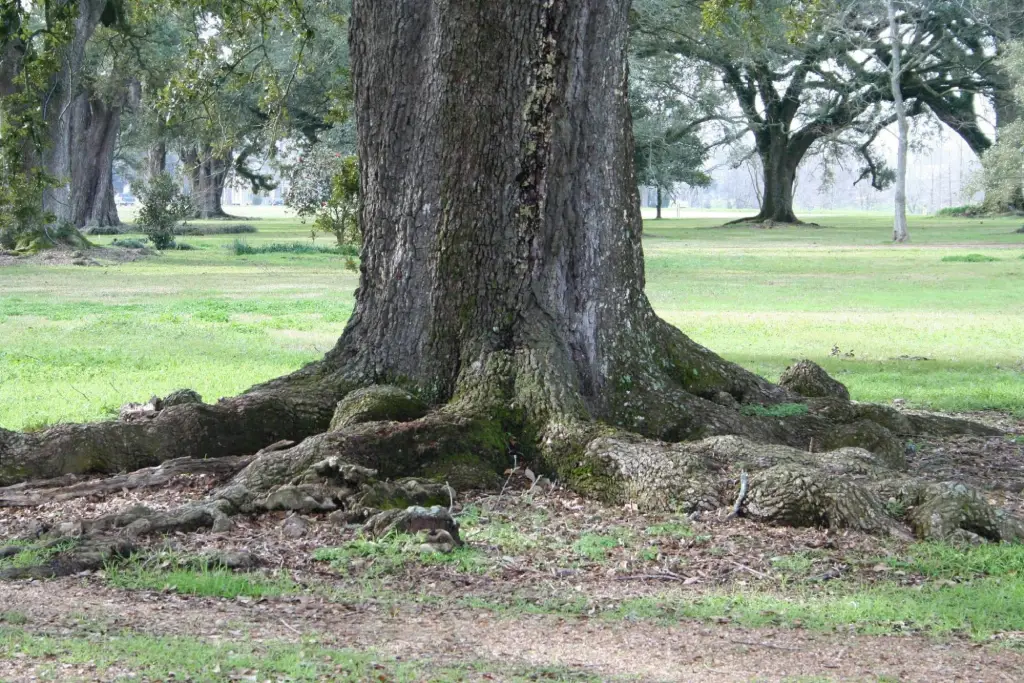
Oak trees are among the most structurally complex root systems in North American landscapes. A mature oak typically develops a network of large, woody lateral roots that radiate outward from the trunk, often extending well beyond the canopy edge. For many oak species, lateral roots travel one and a half to three times the canopy’s radius, meaning a large oak with a 40-foot canopy spread may have roots extending 60 to 120 feet from the trunk in favorable soil.
And how far do oak tree roots spread? The answer depends heavily on species and site. Valley oaks, native to California, are known for exceptionally wide root systems that can stretch 100 feet or more in deep, porous soils. Blue oaks growing in rocky foothill soils may develop much more compact systems by comparison.
What makes oak roots especially significant for property owners is their persistence. Oak roots are long-lived, grow thick and woody over time, and do not stop simply because they encounter a hard surface. They will grow around, under, or through obstacles. This is part of what makes mature oaks such structurally stable trees, and also what makes them a consideration when they grow near foundations, retaining walls, or paved surfaces.
Maple Trees: Shallow, Aggressive, and Competitive
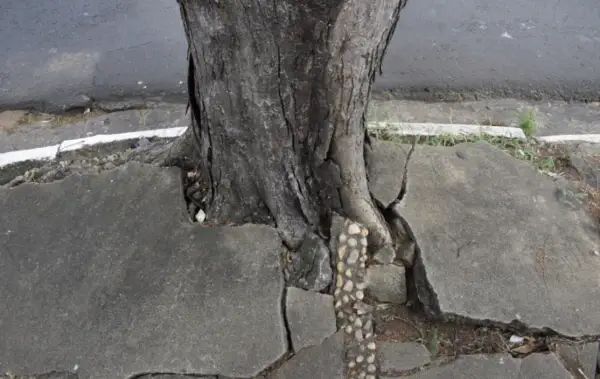
Maple trees are a common source of surface root problems, and the reason is straightforward: their root systems tend to be shallow and wide-spreading. Most maple roots concentrate in the top 12 to 18 inches of soil, which puts them in direct competition with lawns, garden beds, and irrigation systems.
How far do maple tree roots spread? Established maples commonly extend their roots 25 to 50 feet from the trunk, and in moist or loosely textured soils, that spread can go farther. Silver maples in particular are well-known for aggressive root behavior, frequently invading sewer lines, lifting pavement, and outcompeting nearby plants for surface moisture.
Because maple roots are shallow, they are also more vulnerable to soil compaction, construction disturbance, and drought. If you are managing a maple near a driveway or building foundation, regular monitoring is worthwhile. Surface roots that are exposed and causing tripping hazards or infrastructure contact deserve a professional evaluation before the situation becomes more serious.
Pine Trees: Balancing Deep Taproots with Lateral Stability
Pine root architecture shifts throughout the tree’s life. Young pines develop a prominent taproot that anchors the tree and draws water from deeper in the soil profile. As the tree matures, the taproot often becomes less dominant and the lateral root system takes over as the primary structural and absorptive network.
How far do pine tree roots spread? Mature pines typically develop lateral roots extending 35 to 75 feet from the trunk, depending on species and soil conditions. Ponderosa pines in sandy, dry soils are well-documented for extensive lateral spread. Species like eastern white pine in the Northeast tend to develop somewhat more compact systems in heavier soils.
The dual-layer root architecture of pines makes them reasonably wind-resistant in most conditions, and their lateral roots can travel significant distances at moderate depths as well. Property owners with pines growing near older clay or concrete pipes should have a professional inspection if any drainage irregularities appear.
Willow Trees: The Wide-Ranging Water Seekers
Willows have a well-deserved reputation for aggressive root behavior, and the explanation is straightforward: they are water-seeking specialists. Their root systems are fast-growing, shallow, and almost single-mindedly focused on finding moisture. Willows planted near water sources can develop root networks that extend 100 feet or more from the trunk.
How far do willow tree roots spread? In moist conditions near streams, ponds, or irrigation sources, willow roots can travel two to three times the tree’s height in lateral spread. A 30-foot weeping willow planted near a slow-draining lawn area could develop a root system 60 to 100 feet wide within a decade.
This makes willows a poor choice for planting near septic systems, sewer lines, underground irrigation infrastructure, or any buried pipes carrying water. Their roots are drawn toward those systems with remarkable efficiency. For property owners who already have a mature willow near infrastructure, a GIS-assisted root assessment (covered in the infrastructure section below) can map the situation before it becomes an emergency.
Palm Trees: Compact, Fibrous, and Specialized Systems
Palms are a genuine outlier in this discussion. Unlike broadleaf trees or conifers, palms do not develop a traditional woody lateral root system. Instead, they produce a continuous mat of thin, fibrous roots that emerges from the base of the trunk, called the root initiation zone, and stays relatively close to the tree.
How far do palm tree roots spread? Palm roots are fibrous and concentrated near the base of the trunk. While the densest root activity typically occurs within a few feet of the trunk, individual roots can extend farther in favorable, irrigated conditions. However, because they are thin and fibrous rather than thick and woody, palms generally present a much lower risk to foundations, pipes, and pavement than most other tree species.
The practical implication for property owners is that palms are generally much lower risk near foundations, pipes, and pavement than other species. Their limited spread does make them sensitive to soil disturbance close to the trunk. Construction, trenching, or deep tilling near a palm’s root zone can cause significant stress even if the work happens only a few feet away.
Calculating Spread: Formulas for Property Owners
Knowing typical ranges by species is a starting point. For more precise planning, particularly when deciding where to plant a new tree or assessing an existing tree’s relationship to a structure, a few standard formulas can help.
The Drip Line Myth: Why Roots Extend Beyond the Canopy
A common assumption is that a tree’s roots stop roughly at the edge of its canopy, sometimes called the drip line. This feels intuitive because the canopy and root system seem like they should mirror each other. ISA research on root spread shows that root spread often extends well beyond the canopy edge in many species.
For mature trees in good soil, lateral roots commonly reach one and a half to three times the canopy radius. A tree with a 30-foot canopy radius may have roots traveling 45 to 90 feet from the trunk. The drip line is a useful benchmark for irrigation (it approximates the outer edge of the feeder root zone), not a firm boundary for root spread.
Critical Root Zone (CRZ) and Trunk Diameter-to-Radius Ratios
The Critical Root Zone is a concept used by arborists to define the minimum soil area around a tree that must be protected for the tree to survive. The most widely used formula is 1.5 feet of radius for every inch of trunk diameter measured at 4.5 feet above the ground (called DBH, or diameter at breast height).
Here is what this looks like in real life: a tree with a 10-inch trunk diameter would have a Critical Root Zone with a radius of 15 feet. A tree with a 20-inch trunk would require a 30-foot radius. Any construction, grading, trenching, or soil compaction inside that zone can cause serious and sometimes irreversible damage to the root system.
The CRZ is the minimum protection radius. Roots frequently extend well beyond this boundary. The formula helps define what must be protected, not where all the roots are.
Common Misconceptions About Root Boundaries
Beyond the drip line myth, a few other misconceptions come up regularly. One is that cutting surface roots near a tree will stop root spread. In practice, roots often respond to cutting by branching more aggressively in adjacent soil.
Another common misunderstanding is that roots follow a predictable pattern in all directions. Roots concentrate where conditions are most favorable, meaning one side of a tree may have far more root activity than the other based on soil moisture, compaction, or nearby infrastructure.
A third misunderstanding is that small or young trees have root systems proportional to their visible size. Even a relatively young tree, six to eight inches in trunk diameter, can have roots extending 10 to 15 feet from the trunk. Root systems develop faster than the visible canopy suggests.
Vertical Growth: How Deep Do Tree Roots Really Go?
Horizontal spread gets a lot of attention. Depth deserves equal consideration, especially when evaluating foundation risk or underground utility conflicts.
Taproots vs. Lateral Roots: Myths and Realities
The taproot is probably the most misunderstood element of tree root anatomy. Many people picture a tree’s root system as a deep, carrot-shaped structure that mirrors the canopy above. That image holds reasonably well for seedlings in some species. For most mature trees, the architecture shifts considerably.
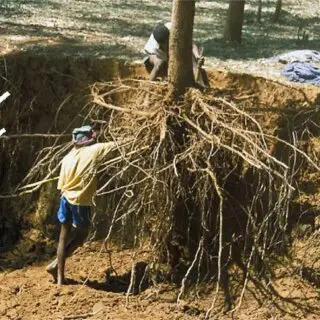
In the vast majority of mature trees, lateral roots, meaning horizontal roots that fan out from the trunk in the upper layers of soil, provide most of the structural support and water uptake. The taproot, if it developed at all, is often shallow or absent by the time a tree reaches full maturity. What looks like a deep, anchoring root from the outside is usually a large lateral root that dips slightly below the surface.
Why 90% of Roots Live in the Top 24 Inches of Soil
Tree roots are concentrated near the surface because that is where the conditions they need are concentrated. Oxygen, organic matter, microbial activity, and moisture are all most abundant in the upper soil layers. Research in forest ecology and urban arboriculture consistently shows that 90% or more of a tree’s root biomass lives within the top 24 inches of soil. Many roots are far shallower, sitting in the top 6 to 12 inches.
This shallow distribution is why soil compaction is so damaging to trees. Compressing the top layer of soil reduces oxygen availability right where roots are trying to function. It is also why mulching around the base of a tree makes such a meaningful difference. A 3- to 4-inch layer of mulch over the root zone regulates temperature, retains moisture, and protects the soil structure that roots depend on.
Environmental Barriers to Vertical Depth
Even in species capable of deep root growth, vertical penetration is frequently blocked by physical barriers. Hardpan layers, clay lenses, bedrock, water tables, and compacted subsoil all function as ceilings below which roots cannot easily travel. Urban environments add additional barriers in the form of building foundations, utility vaults, and compacted fill soil placed during construction.
When roots encounter a downward barrier, they redirect laterally. This is one reason urban trees often develop extensive surface roots even in species that would naturally grow deeper in natural forest soil. The soil profile beneath a city street or parking lot is frequently inhospitable below 12 to 18 inches, and roots adapt accordingly.
When Roots Meet Infrastructure: Risks and Management
Root systems and built infrastructure are often in direct conflict, and the conflict tends to develop slowly before becoming an expensive problem. Understanding common patterns of tree root damage helps you act before a small issue becomes a major one.
Identifying Invasive Roots and Structural Risks to Foundations
Tree roots do not break through intact concrete or masonry on their own. What typically happens is that roots find existing voids, cracks, or weak points and grow into them. As the root thickens over time, it can widen those existing cracks and cause progressive structural displacement.
The risk to foundations depends on several factors: tree species, distance from the foundation, soil moisture, and the type and age of the foundation itself. Trees growing within 10 to 15 feet of an older foundation, particularly shallow-rooted species like silver maple or large surface-feeding species like willow, warrant closer monitoring. Signs to watch for include new or widening cracks in foundation walls, sticking doors or windows, and uneven floors.
A professional arborist evaluation paired with a structural assessment is the appropriate response if you notice these symptoms near a mature tree.
Managing Roots Near Sidewalks and Pipes
Pavement uplift and pipe intrusion are the two most common infrastructure conflicts caused by tree roots. For sidewalks, the most effective long-term solutions involve root barriers installed during new paving projects, or paving materials that flex around roots rather than cracking under them. Grinding surface roots without addressing the underlying root system rarely solves the problem and can stress or destabilize the tree.
For pipes, the situation is more nuanced. Roots do not actively seek pipes. They will exploit any small crack or joint in a pipe system that allows moisture to escape, and older clay or concrete pipes are particularly vulnerable.
Once roots enter a pipe, they grow rapidly inside where water is abundant. Regular camera inspections of sewer lines near mature willows, maples, or oaks are a practical preventive step for property owners in older neighborhoods.
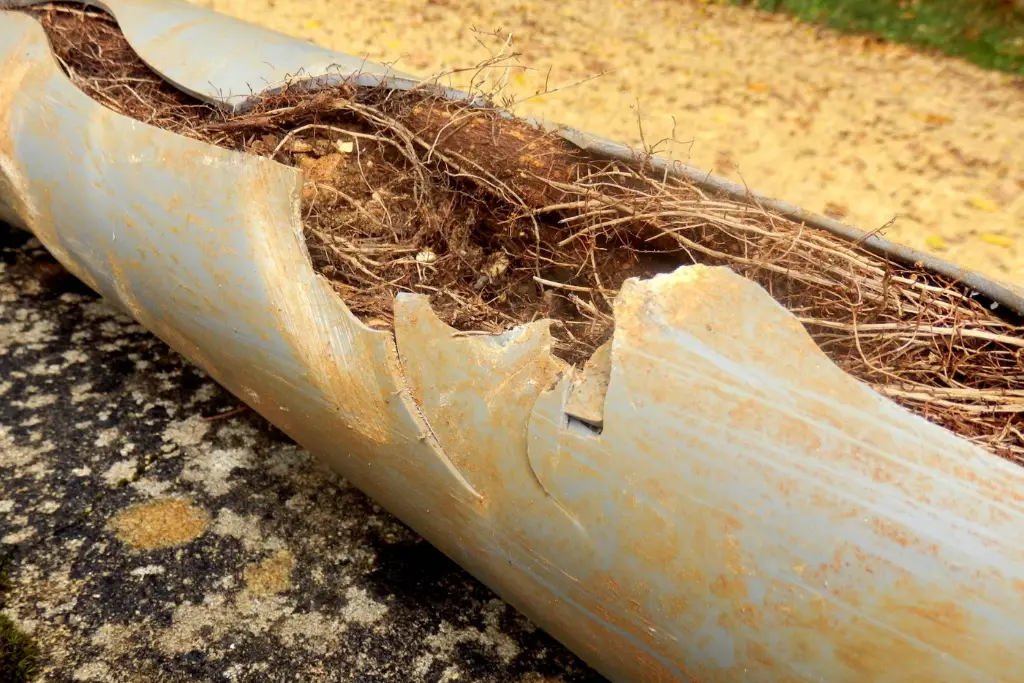
Root pruning near pipes should only be done by a qualified arborist who can assess how much of the root system is involved. Removing too much of a structural root can compromise the tree’s stability, and the consequences of a fallen tree are far more serious than a blocked drain.
Advanced Diagnostics: GIS-Based Root Mapping and ArborPlus
For commercial properties, HOA communities, or any site where tree root conflicts need to be understood at a detailed level, modern diagnostic tools have changed what is possible. GIS-based root mapping overlays tree location data with utility infrastructure, soil type information, and drainage patterns to model where root systems are most likely to be developing and where risk is concentrated.
Our ArborPlus platform incorporates this kind of tree inventory and management data, giving property managers and building owners a clear view of every tree on their site: species, size, root zone projections, maintenance history, and risk assessments in one accessible system. For large properties with significant tree canopy, this kind of data transforms root management from reactive guessing into proactive planning.
Proactive Care: How to Manage and Protect Urban Roots
Root problems are almost always easier to prevent than to fix. Thoughtful planting decisions, proper soil management, and consistent monitoring are the foundation of a healthy urban tree program.
Professional Planting Distance Guidelines for New Trees
The distance between a new tree and any nearby structure should be planned based on the tree’s mature size, not its size at planting. A sapling that fits comfortably three feet from a building today may have a root system pressing against the foundation within 15 years, which is why species selection matters if you want to avoid damage to your foundation.
General guidance from arborists and urban forestry programs recommends a minimum of 10 feet between small ornamental trees and structures. Medium trees (30 to 50 feet at maturity) should be planted at least 15 to 20 feet from buildings, foundations, and underground utilities. Large canopy trees, including most oaks and elms, benefit from a minimum of 20 to 30 feet of clearance from structures, and more in species known for aggressive root growth.
These distances also apply horizontally from buried utilities. Always verify utility locations before planting.
Deep Root Watering and Fertilization for Sustainable Growth
One of the most effective tools for encouraging healthy, well-directed root development is deep root watering. By delivering water and nutrients directly to the root zone below the surface, deep root treatments support root development at appropriate depths rather than encouraging roots to stay near the surface in search of moisture.
In urban environments where summer irrigation tends to wet only the top few inches of soil, trees learn to keep roots shallow because that is where water is available. Deep root watering changes that equation, encouraging downward growth and reducing the surface root behavior that conflicts with pavement and infrastructure.
Deep root fertilization works on the same principle, delivering nutrients to the root zone where uptake is most efficient. For trees growing in compacted or nutrient-depleted urban soil, targeted tree fertilization can meaningfully improve health and long-term stability.
Protecting Root Health During Construction Projects
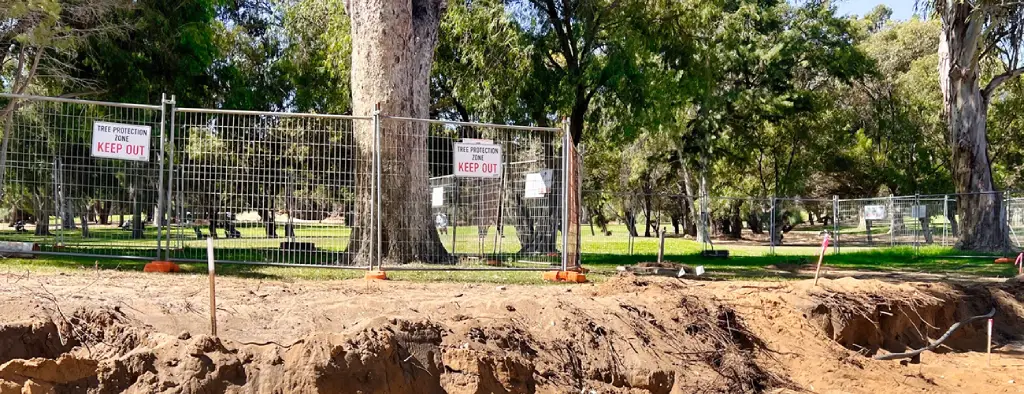
Construction is one of the most common causes of delayed tree decline in urban environments. Soil compaction from equipment traffic, grade changes that alter drainage, and trenching that severs lateral roots can all cause significant root damage that may not show up in the canopy for one to three years. By the time symptoms appear in the canopy, root damage has typically been progressing for years.
Before any construction project that involves work near established trees, an arborist should establish a Tree Protection Zone (TPZ) around each significant tree. This zone, typically based on the Critical Root Zone formula, should be marked clearly and enforced throughout the project. No equipment traffic, material storage, or soil disturbance should occur inside the TPZ.
If trenching is unavoidable near a tree’s root zone, tunneling or boring under roots is far less damaging than cutting across them. Any roots that must be cut should be pruned cleanly with a sharp tool rather than torn by machinery.
The Role of Biochar and Mulch in Urban Soil Vitality
Two soil amendments stand out for their value in urban root health: biochar and organic mulch. Biochar, a carbon-rich material produced from organic matter, improves soil structure, increases water retention, and supports the microbial communities that tree roots depend on. In compacted urban soils, biochar amendments can meaningfully improve the conditions available to root systems and reduce the need for supplemental irrigation over time.
Organic mulch applied in a 3- to 4-inch layer over the root zone offers similar benefits: it retains moisture, moderates soil temperature, reduces compaction from foot traffic, and gradually adds organic matter to the soil as it breaks down. TCIA mulch guidelines also support keeping mulch at roughly 2 to 4 inches deep and away from the trunk so moisture does not build up against the bark.
Both amendments are part of A Plus Tree’s AfterPlus product line, developed specifically for the soil conditions common in California and the Pacific Northwest.
Expert Root Assessments with A Plus Tree
Root problems do not announce themselves loudly. They develop quietly beneath the surface until a sidewalk lifts, a pipe fails, or a tree begins to decline. By that point, the options are often more limited and more expensive than they would have been with earlier attention.
Our certified arborists provide thorough root assessments for residential, commercial, and HOA properties across California, the Pacific Northwest, and surrounding regions. Using ArborPlus, we document each tree’s species, trunk diameter, canopy spread, and site conditions to develop a root zone profile that helps you understand what is happening underground before it becomes a structural or safety concern.
Whether you are planning a construction project near established trees, evaluating a property purchase, troubleshooting drainage or foundation issues, or building a long-term tree management plan, A Plus Tree can provide the professional assessment and data you need to make confident decisions.
Reach out to request a proposal or a complimentary urban forest assessment. We are glad to walk the property with you and give you a clear picture of what your trees need.
FAQs About Tree Root Spread
Do Tree Roots Keep Growing After a Tree Is Cut Down?
Yes. Roots retain stored energy after a tree is cut and can push up sprouts for one to several growing seasons. Structural roots may remain in the soil for years.
How Do You Stop Tree Roots From Spreading Into Pipes?
Prevention is most reliable. Plant appropriate species at safe distances and maintain older pipes well. For existing intrusion, a professional can perform root pruning combined with pipe repair.
What Is the 10-20-30 Rule for Tree Planting?
It is a biodiversity guideline recommending that no single tree species exceed 10% of an urban forest, no genus 20%, and no family 30%, to reduce widespread loss risk.
Can You Trim Tree Roots Without Killing the Tree?
In many cases, yes. Root pruning done outside the Critical Root Zone by a qualified arborist is generally safe. Severing large structural roots close to the trunk risks tree instability.
Get a Free Tree Assessment — No Obligation
Tell us about your tree. One of our ISA Certified Arborists will review your situation and get back to you within 24 hours.