
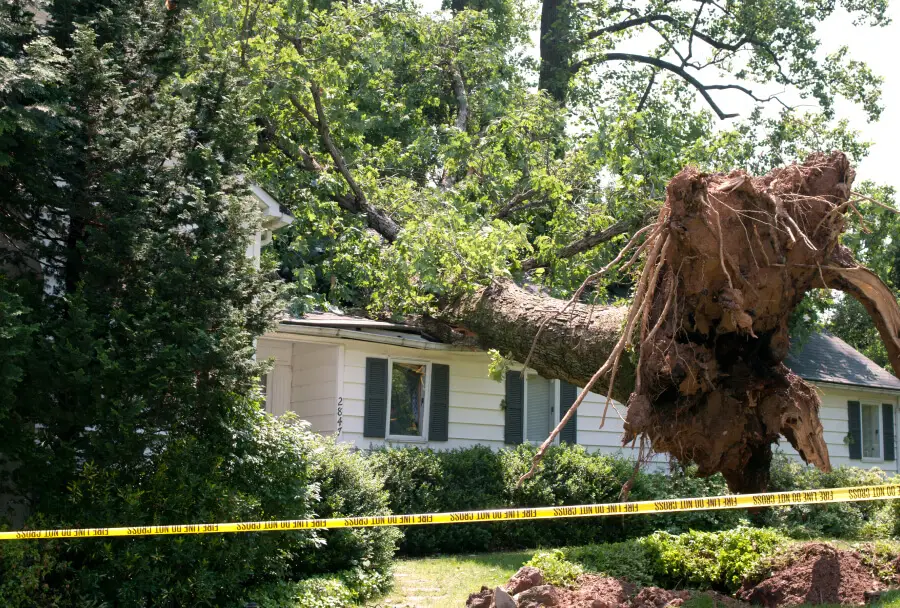
A tree rotting at the base is not something to ignore, but it does not always mean the tree is beyond saving. Because decay affects the lower trunk and root system, it can weaken the tree’s stability long before the damage looks dramatic from a distance. Signs like mushrooms at the base, soft bark, a hollow sound, soil heaving, or a developing lean are all reasons to take a closer look.
Quick Answer: Base rot can be serious because it affects the part of the tree responsible for support and structural strength. Some trees can be monitored or treated when decay is caught early, but visible fungal growth, spongy bark, or movement at the base means the tree should be evaluated promptly by an ISA Certified Arborist.
If you have noticed a strange odor near the trunk, mushrooms around the roots, or bark that feels soft near the ground, your concern is reasonable. This guide explains what causes base rot, which warning signs matter most, how professionals assess the damage, and when removal becomes the safer option.
What Causes a Tree to Rot at the Base?
Decay at the base of a tree rarely appears overnight. It is usually the result of a process that has been building for months or years, often beginning with a single vulnerability that opened the door to fungal invasion, moisture damage, or both. Understanding the underlying cause is the first step toward knowing whether treatment is realistic and what kind of intervention makes sense.
Common Fungal Pathogens and “Butt Rot”

The term “butt rot” is an informal but widely used arboricultural term referring to decay that originates in the lower trunk and root system. It is caused by wood-decay fungi, which break down the structural cells of the tree from the inside out.
Several fungal species are known to cause butt rot in landscape trees. Ganoderma species are among the most common culprits in urban settings. Armillaria mellea, sometimes called honey fungus, attacks the roots and lower trunk and can spread through the soil to neighboring trees. Phellinus and Inonotus species are also frequently responsible, particularly in oaks and other hardwoods.
Think of it like this: the heartwood and sapwood of a tree function similarly to the structural beams of a building. When decay fungi colonize that material, they begin digesting the cellulose and lignin that give the wood its strength. What looks like a solid trunk from the outside may already be hollow or severely weakened within.
Environmental Stress: Poor Drainage and Soil Compaction
Trees are surprisingly susceptible to the conditions around their roots, and two of the most common environmental stressors that contribute to base rot are poor drainage and compacted soil.
When water consistently pools near the root zone, the roots are deprived of the oxygen they need to stay healthy. Weakened, oxygen-starved roots are far more vulnerable to fungal colonization than healthy ones. Soil compaction reduces pore space and aeration, which further limits both drainage and gas exchange.
In urban and suburban landscapes, soil compaction is extremely common around driveways, sidewalks, and lawns that receive regular foot traffic or heavy equipment. A palm tree rotting at the base in a commercial planter, for example, is often dealing with compacted growing medium that traps moisture around the root flare rather than allowing it to drain away.
Mechanical Injury: The Hidden Danger of “Mower Blight”
One of the most preventable causes of rotten tree trunk conditions is repeated mechanical injury, often caused by lawn mowers and string trimmers. The term “mower blight” describes the cumulative damage that results when mowing equipment repeatedly strikes the base of a tree.
Each strike creates a small wound in the bark. On its own, any one of those wounds is minor. But bark serves as a tree’s primary defense against pathogen entry. When that protective layer is repeatedly compromised, fungi can penetrate directly into the cambium layer (the thin living layer beneath the bark responsible for growth) and begin the process of decay.
In practical terms, this is why knowing how to handle damaged bark matters before a small injury turns into a larger structural problem.
Here is what this looks like in real life: a homeowner with a large shade oak has mowed around its base every two weeks for several years. The bark at the root flare shows a ring of scarred, discolored tissue. Within a few seasons, a Ganoderma conk (a shelf-like fungal growth) appears. The decay inside may already be significant by the time it becomes visible on the surface.
Secondary Pests: When Insects Follow the Rot
Bark beetles, wood borers, and carpenter ants do not typically cause initial tree rot, but they are strongly attracted to trees that are already stressed or decaying. Once a tree’s defenses are down, these insects can accelerate the deterioration significantly.
Beetles and borers create tunnels through the wood as they feed and reproduce, disrupting the vascular tissues that carry water and nutrients through the tree. Carpenter ants excavate galleries in soft or decayed wood, which can substantially increase the volume of decay already present. In many cases, a heavy insect infestation is a signal that decay has progressed further than the visible surface suggests.
Not sure if your tree needs professional attention?
A Plus Tree’s ISA Certified Arborists serve homeowners across the West Coast. A free assessment takes 15 minutes and gives you a clear answer.
Early Warning Signs of Base Rot
Catching trunk rot early gives you more options and more time to make a sound decision. The challenge is that many of the most significant warning signs appear at or below ground level, in places that are easy to overlook during a routine walk around the yard. Knowing what to look for changes that.
Visual Clues: Conks, Mushrooms, and Bark Seepage

Fungal fruiting bodies are among the most telling surface signs of internal decay. Conks, which are the hard, shelf-like structures produced by Ganoderma and related species, typically appear at or near the base of the trunk. They are usually brown or reddish-brown on the upper surface and cream or white underneath.
Mushrooms clustered at the root flare or emerging from the soil near the trunk base are another strong indicator, particularly species like honey mushrooms (Armillaria) that form dense clusters in fall. If you are unsure what you are seeing, a fungus identification guide can help you distinguish common growth patterns before symptoms are assessed professionally.
Bark seepage, sometimes called slime flux or bacterial wetwood, presents as dark, often foul-smelling liquid weeping from cracks in the bark. While not always linked directly to fungal decay, it indicates internal tissue damage and can signal that rot is present.
Discoloration of the bark itself is also worth noting. Bark that appears water-soaked, sunken, or significantly darker than the surrounding tissue, particularly in a localized area near the base, may indicate an active canker or area of decay beneath the surface.
Structural Shifts: Leaning, Soil Heaving, and Root Upheaval

A sudden or progressive lean in a tree that previously stood straight is a significant warning sign, especially when paired with other symptoms of base rot. Lean caused by root and basal decay is particularly dangerous because the structural failure can occur with little additional warning. It also overlaps with the broader mechanics behind why trees fall when anchorage and root stability begin to fail.
Soil heaving, where the ground around the base of the tree appears raised or disturbed on one side, often indicates that roots on that side have failed and the tree is beginning to tip. Root upheaval, where surface roots appear cracked or lifted, can signal that the root plate is compromised.
These structural changes should always be assessed by an ISA Certified Arborist. They are not symptoms to monitor at a distance or revisit in a few months. A tree showing lean and soil movement represents a potential safety hazard that warrants prompt professional evaluation.
Tactical Signs: Hollow Sounds and Spongy Wood
Two of the most useful field-level indicators of internal decay require nothing more than your hands and a rubber mallet or similar object. When you tap the base of a healthy tree, the sound produced is a solid, dense thud. A tree with significant internal decay will produce a hollow or resonant sound, similar to tapping on a drum. This test is not diagnostic on its own, but it provides a meaningful signal that warrants closer inspection.
Similarly, pressing firmly against the bark at the base of the tree can reveal spongy or soft tissue beneath. Healthy bark over solid wood feels firm and resistant. Bark over decayed or waterlogged wood has a noticeably different texture, sometimes yielding slightly under pressure.
If you combine a hollow sound with soft bark texture, visible fungal fruiting bodies, or any structural change in the tree, that convergence of signs calls for professional assessment without delay.
Visual Reference Guide: Symptoms of Tree Trunk Rot
| Symptom | What It May Indicate | Urgency Level |
| Conks or shelf fungi at the base | Active wood decay fungus | High |
| Mushrooms clustered near root flare | Root or butt rot pathogen | High |
| Dark, weeping bark seepage | Internal tissue damage | Moderate to High |
| Hollow sound when tapped | Significant internal cavitation | High |
| Spongy or soft bark at base | Active decay beneath bark | High |
| Lean that has developed or worsened | Structural root failure possible | Urgent |
| Soil heaving on one side | Root plate compromised | Urgent |
| Cracks or splits in bark near base | Mechanical or decay-related damage | Moderate |
| Discolored, sunken bark patches | Canker or fungal lesion | Moderate |
The Risks of Ignoring Tree Base Rot
It is understandable to want to wait and see with a large, established tree. Removing a mature tree from your landscape is a significant decision, both emotionally and financially. But base rot that is left unaddressed does not stabilize. It progresses, and the risks it carries grow alongside it.
Safety Hazards: Understanding the “Fall Zone”
A tree’s fall zone (sometimes called the target zone in risk assessments) is the area that would be impacted if the tree were to fail. For most large trees, arborists typically consider a preliminary safety zone of up to 1.5 times the height of the tree, especially when evaluating potential lean or basal weakness.
Basal decay directly undermines the tree’s ability to remain anchored. A tree with severe root or butt rot can fail suddenly, without warning, even in calm weather. Branch failures tend to follow storms or high wind events. Root failures operate differently: they can occur on still, clear days when the decay simply reaches a structural tipping point.
Arborists refer to this weather-driven version as windthrow, though the underlying cause is always the compromised root system, not the wind alone.
This is the core safety argument for early detection and professional evaluation. Guidance on managing tree hazards and risk follows the same principle: a tree that looks largely intact from the outside may already have lost a significant percentage of its structural integrity at the base.
Liability and Insurance: Why Early Detection Matters
Property owners in most jurisdictions carry a legal duty of care with respect to trees on their land. If you are aware of a hazardous condition and do not act on it, and that tree subsequently damages a neighboring structure or injures a person, liability exposure can be significant.
Documentation of tree health inspections, arborist reports, and any actions taken (or formally recommended) can be critically important in these situations. An ISA Certified Arborist report that either confirms a tree is healthy or recommends specific action protects you in ways that informal observation cannot.
Many homeowners insurance policies also have provisions related to known hazards. Reporting a tree condition to your insurer and your arborist, and acting on professional recommendations, is the clearest path to staying protected.
The Impact on Property Value and Urban Canopy Health
Healthy, established trees are documented contributors to property value. Research on urban-tree benefits and property-value effects has found that proximity to urban vegetation can increase property values while also supporting broader neighborhood benefits. Trees in visible decline or with unaddressed structural problems erode that value incrementally.
Beyond individual property values, the urban tree canopy provides shade, stormwater absorption, air quality benefits, and cooling effects that benefit entire neighborhoods. When an established tree fails because decay was not identified or addressed early, that environmental value is lost along with it. Early intervention, when treatment is possible, preserves something that took decades to grow.
Advanced Diagnostics: Can the Tree Be Saved?
The visible signs of base rot tell part of the story. But truly understanding how much of the tree’s structure is compromised, and whether intervention is realistic, often requires tools and techniques that go beyond visual inspection.
Sonic Tomography and Resistograph Testing
Sonic tomography is a non-invasive diagnostic technique that uses sound waves to create a two-dimensional map of the internal condition of the trunk. Small sensors are placed around the circumference of the trunk, and sound pulses are transmitted between them. Decayed or hollow wood slows the transmission of sound, while solid wood allows it to travel faster. The resulting image gives an arborist a clear picture of where decay is located and how far it has progressed.
A resistograph is a complementary tool that involves inserting a thin, needle-like probe into the wood to measure resistance as it moves through the material. Sound wood resists the probe. Decayed or hollow material offers significantly less resistance. Together, these two tools give arborists far more reliable information than visual inspection alone can provide.
A helpful way to picture it is this: sonic tomography is to a tree what a CT scan is to a patient. It reveals internal structure without surgery, allowing the professional to make a far more informed recommendation about next steps.
Tracking Tree Health with ArborPlus
At A Plus Tree, we use ArborPlus, our proprietary tree management platform, to track the health history of individual trees over time. This means that when a tree shows signs of base rot, our arborists can review its full documented history, including past inspection notes, treatment records, and health trends, before making a recommendation.
For property managers, HOAs, and commercial clients overseeing multiple trees, this kind of longitudinal data is particularly valuable. A tree that has been gradually declining over three seasons tells a different story than one that shows sudden symptoms. ArborPlus gives our team the context to make more accurate assessments and our clients the documentation they need for informed decision-making.
The ISA Certified Arborist Advantage
An ISA (International Society of Arboriculture) Certified Arborist has completed rigorous training in tree biology, diagnosis, risk assessment, and care. When it comes to evaluating a tree rotting at the base, this credentialing matters significantly.
The ISA Tree Risk Assessment Qualification (TRAQ) specifically prepares arborists to evaluate the likelihood and consequences of tree failure using a structured, evidence-based methodology. A TRAQ-certified arborist does not estimate risk based on intuition. They apply a defined framework that accounts for the species, site conditions, defect type, presence of targets, and failure potential.
This structured approach produces an arborist report that is defensible, documented, and actionable, which is exactly what homeowners and property managers need when making high-stakes decisions about tree removal or retention.
Treatment vs. Removal: Making the Decision
The question most homeowners want answered quickly is whether the tree can be saved. The honest answer is that it depends on the species, the extent of the decay, the structural condition of the remaining wood, and the tree’s overall health. There is no universal threshold, but there are clear principles that guide the decision.
When Mitigation is Possible: Soil Aeration and Fungicides
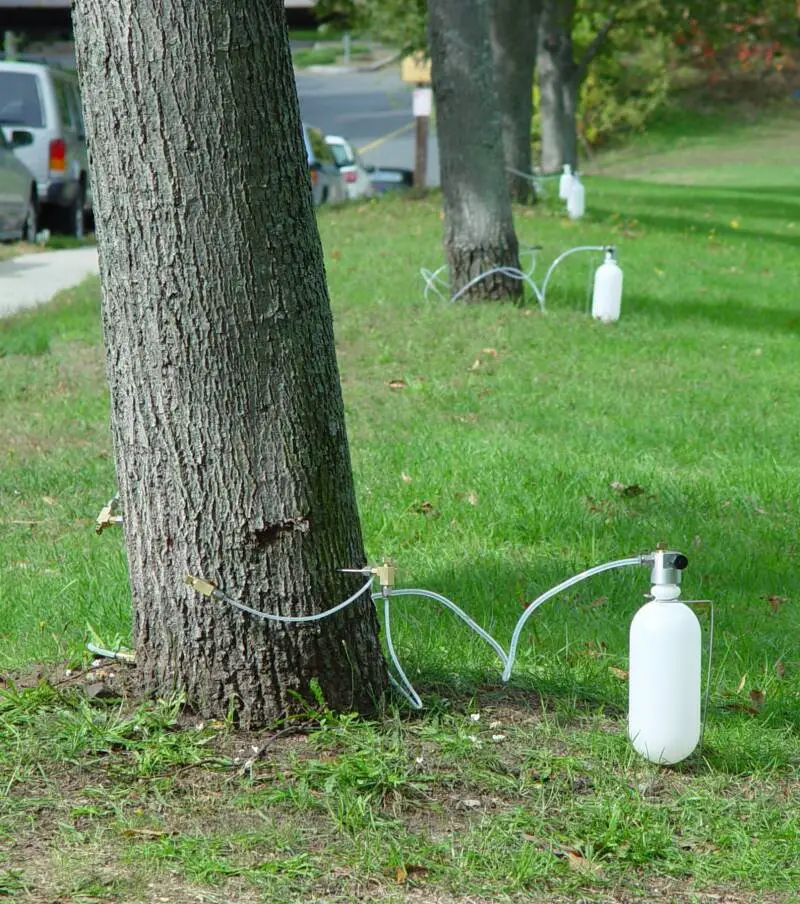
When base rot is detected early and the structural integrity of the trunk is still largely intact, several interventions may help slow or stabilize the condition.
Soil aeration around the root zone can improve drainage and oxygen availability, reducing the moisture stress that creates favorable conditions for decay fungi. This is often done using compressed air tools (a process called air spading or air excavation) that break up compacted soil without damaging roots.
Fungicide applications may be appropriate in certain cases, particularly for root diseases caused by Phytophthora or Armillaria in early stages. However, it is important to understand that fungicides cannot reverse decay that has already occurred. They can, in some circumstances, slow the spread of active infection into healthy tissue. They are not a cure, and they are not appropriate for all decay situations.
The goal of mitigation is to preserve a structurally sound tree for as long as it remains safe. It is not a path to eliminating decay that has already progressed significantly.
Signs a Tree Must Be Removed
There are situations where tree removal is the responsible, necessary choice. A tree should be seriously considered for removal when any of the following apply:
- The structural root plate is significantly compromised, meaning the tree lacks the anchorage needed to remain standing safely
- Decay occupies more than approximately 30 to 40 percent of the basal cross-section (a common guideline referenced by arborists, though it varies by species, site conditions, and remaining sound wood)
- The tree shows a progressive lean that has developed or worsened in recent months
- Multiple structural defects are present simultaneously, such as trunk rot combined with crown dieback and root damage
- The tree is positioned within the fall zone of a structure, a public walkway, or an occupied area
When an ISA Certified Arborist recommends removal, that recommendation is based on risk assessment, not aesthetics. External appearances can be misleading: the outer bark and crown of a tree may look largely intact even when the structural material at the base has been severely compromised by decay.
Repurposing Rotted Wood into Biochar and Mulch
Tree removal does not have to mean waste. At A Plus Tree, we encourage clients to consider environmentally responsible options for the material that comes down.
Rotted wood that has not been treated with pesticides or other chemicals can often be chipped into mulch and returned to the landscape. This closes a biological loop, returning organic material to the soil. Wood that is too degraded for mulching may be suitable for conversion into biochar, a carbon-rich material produced through pyrolysis (heating in low-oxygen conditions) that improves soil structure and water retention when incorporated into planting areas.
Repurposing removed tree material supports the kind of sustainable landscape stewardship that benefits properties and communities over the long term.
Comparison Table: Treat vs. Remove Decision Factors
| Factor | Treat | Remove |
| Decay extent | Less than ~30% of basal cross-section | More than 30 to 40% of basal cross-section |
| Structural lean | Absent or stable | Present or progressive |
| Soil/root plate condition | Largely intact | Compromised or heaving |
| Fungal fruiting bodies | Early-stage, limited | Extensive, recurrent |
| Species resilience | High (oaks, many hardwoods) | Low (palms, shallow-rooted species) |
| Target proximity | Tree not over structure or pedestrian area | Within fall zone of structure or walkway |
| Overall crown health | Largely healthy | Significant dieback or decline |
How to Prevent Trunk Rot
The most effective approach to trunk rot is prevention. Many of the conditions that lead to a rotten tree trunk are the result of avoidable practices, and correcting them becomes much simpler once you know what to look for.
Prevention also applies to trees that are currently healthy. Annual inspections, good cultural practices, and attention to the root zone can dramatically reduce the likelihood that a healthy tree develops base rot over time.
Proper Mulching: Avoiding the “Mulch Volcano”

Mulch is one of the most beneficial things you can apply to a tree’s root zone. Applied correctly, it moderates soil temperature, retains moisture, reduces competition from grass and weeds, and protects surface roots from mechanical damage. Applied incorrectly, it becomes a direct contributing factor to trunk rot. That is why proper mulching practices matter so much when you are trying to keep the root flare dry and healthy.
The “mulch volcano” is the practice of piling mulch deeply against the base of the trunk, often in a cone shape. The appearance is tidy, and the intention is usually good. The problem is that it creates a persistently moist environment against the bark, which encourages the growth of decay organisms and, in some cases, can cause the bark to break down entirely.
The correct approach is to apply 2 to 4 inches of mulch in a wide ring around the tree, extending out to the drip line when possible, and keeping it pulled back at least 3 to 6 inches from the root flare (the point where the trunk widens and meets the soil). The root flare should be visible, not buried.
Irrigation Management: Keeping the Root Flare Dry
Overwatering and poor irrigation placement are two of the most common contributors to palm tree rotting at the base and to trunk rot across a wide range of species. Drip emitters and sprinkler heads positioned directly against the trunk direct water to exactly the wrong place.
A good practical rule is to water wide and deep rather than close and shallow. Irrigation should be positioned at the outer edge of the root zone, which typically extends to the drip line of the canopy, encouraging roots to grow outward and downward into stable soil. The area directly adjacent to the root flare should remain as dry as the natural precipitation allows.
For lawns with in-ground irrigation systems, check regularly that sprinkler heads have not shifted to spray directly against tree trunks. This is one of the most overlooked sources of chronic trunk moisture in residential landscapes.
Soil Health: Deep Root Fertilization and Aeration
Compacted, nutrient-depleted soil produces stressed trees, and stressed trees are significantly more vulnerable to decay fungi and secondary pests. Deep root fertilization is a targeted approach in which nutrients and sometimes beneficial microorganisms are injected directly into the root zone under pressure, bypassing the compacted surface layer.
Combined with periodic soil aeration, this approach can meaningfully improve a tree’s ability to take up water and nutrients, resist pathogen entry, and recover from environmental stress.
These services are particularly valuable for trees growing in urban hardscape environments, near parking lots and pavement, or in soils that have been disturbed by construction. An arborist can assess whether your trees are candidates based on soil conditions and the health of the root zone.
Pro Tips for Preventing Trunk Rot in Urban Environments
Keep the root flare visible. If the area where the trunk meets the soil is buried under mulch, soil, or sod, correct it. Uncover the root flare carefully and keep it exposed.
Establish a mow-free zone. Place a ring of mulch around the base of each tree extending at least 2 to 3 feet from the trunk. This eliminates the need to mow or trim near the bark entirely.
Check irrigation positioning seasonally. Irrigation systems shift over time. Audit emitter and sprinkler placement at the start of each season to confirm nothing is aimed at tree trunks.
Inspect after construction activity. Any grading, excavation, or heavy equipment operation near a tree can compact soil and damage roots in ways that are not immediately visible. Schedule an arborist inspection after significant construction in the vicinity of established trees.
Document what you observe. Take dated photos of the base of significant trees each spring. Over time, photographic records make it far easier to identify changes that warrant professional attention.
Seasonal Tree Health Checklist
Tree care is not a single annual task. The conditions affecting your trees change through the year, and effective monitoring means checking in at each season for the specific issues that season brings. Developing a consistent seasonal routine is one of the most practical things a homeowner or property manager can do to protect their trees over the long term.
Spring: Inspection for New Fungal Growth
Spring is the primary season for fungal activity as soil temperatures rise and moisture is plentiful. This is the best time to walk your property and inspect the base of every significant tree for new fungal growth.
Look for fresh conks, newly emerged mushrooms, or any areas of bark that appear water-soaked or discolored. Also check the root flare to confirm it is visible and that winter mulch has not migrated against the trunk. Spring is an excellent time to pull mulch back if it has crept inward during the wet season.
Note any trees that show unusual leafing-out patterns, such as sparse foliage, delayed budbreak, or dieback in portions of the canopy. These crown symptoms can indicate root problems that connect to base rot.
Summer: Drought Stress and Deep Watering
Summer drought places significant stress on trees, and stressed trees are more vulnerable to both fungal infection and secondary pest infestations. Supplemental watering during extended dry periods is one of the most meaningful interventions available to homeowners.
Deep watering is significantly more effective than frequent, shallow irrigation. Water slowly at the drip line for a long enough period to wet the soil to a depth of 12 to 18 inches. This encourages deep root development and ensures the outer root zone, where most fine roots are located, receives adequate moisture.
Check the soil moisture before watering by pushing a long screwdriver or soil probe into the ground. If it slides in easily, the soil has sufficient moisture. If it meets hard resistance in the top several inches, deep watering is needed.
Fall: Cleanup and Fungal Spore Management
Fall is the season when many decay fungi produce fruiting bodies and release spores. Removing fallen leaves and debris from the root zone of trees with known fungal issues can reduce the spore load in the immediate environment, though it does not eliminate established infections.
This is also a good time to assess any structural changes that may have developed over the growing season and to schedule an arborist inspection before winter if anything has changed. Fall is an ideal season for remedial pruning of dead or structurally compromised branches, as trees are entering dormancy and wound compartmentalization begins with spring growth.
If a tree with known base rot is on your property, fall is a good time to revisit the removal-versus-retention decision with your arborist, particularly before winter storms increase the loading on a structurally compromised root system.
Winter: Dormant Pruning and Storm Prep
Dormant pruning during winter reduces the spread of certain diseases, minimizes stress on the tree, and allows arborists to see the branch structure clearly without foliage. For trees with existing trunk rot, winter is an important time to assess whether any additional structural reinforcement, such as cabling or bracing for remaining sound limbs, is appropriate.
Storm preparation is equally important. A tree with compromised basal integrity is far more likely to fail during high wind events or under snow and ice loading. If a tree has been flagged as structurally questionable, ensure it has been formally assessed before winter storm season begins. Proactive removal is far safer and typically less costly than emergency removal after a failure.
Maintenance Checklist for Long-Term Tree Longevity
Spring
- Inspect the base of all significant trees for new fungal fruiting bodies
- Confirm root flare is visible and mulch is pulled back from the trunk
- Check for bark discoloration, seepage, or soft spots at the base
- Note any crown symptoms (sparse foliage, dieback) that may indicate root issues
Summer
- Deep-water trees during drought periods, targeting the drip line
- Monitor for bark beetle activity or increased insect presence on stressed trees
- Check irrigation positioning to confirm emitters are not aimed at trunks
- Revisit any trees flagged in spring for changes in symptoms
Fall
- Remove fallen debris and fruiting bodies from the root zones of affected trees
- Schedule an arborist inspection for any trees showing new or worsening symptoms
- Consider remedial pruning of dead or compromised branches
- Reassess removal candidates before winter storm season
Winter
- Schedule dormant pruning for trees that benefit from it
- Review storm readiness for any trees with known structural concerns
- Confirm emergency contact information for your tree care provider is current
- Document the current condition of significant trees with photographs

FAQs About Tree Base Rot
How to Stop a Tree From Rotting at the Base?
Address moisture sources near the trunk, correct mulching practices, and eliminate mechanical injury. For active decay, consult an ISA Certified Arborist to assess treatment options and structural risk.
Can a Tree Recover From Root Rot?
Recovery depends on how much decay has progressed. Trees with early-stage rot and otherwise good health can sometimes be stabilized, though existing decay cannot be reversed.
What Does a Tree With Root Rot Look Like?
Signs include mushrooms or conks near the base, soft or discolored bark, leaf thinning, crown dieback, and sometimes a lean that develops without an obvious cause like a storm.
Why Is My Tree Rotting From the Inside Out?
Wood-decay fungi digest cellulose and lignin from the inside out, beginning at the infection point. The outer bark often stays intact while decay advances well ahead of visible surface signs.
How Much Does a Professional Tree Health Assessment Cost?
Assessment costs vary by region, tree size, and scope. Basic inspections typically range from no cost to a few hundred dollars, with advanced diagnostic tools like sonic tomography adding to the total.
If you are seeing signs of a tree rotting at the base on your property, the most useful next step is a professional evaluation. Our ISA Certified Arborists at A Plus Tree assess trunk rot, root conditions, and structural risk using proven diagnostic methods, and we give you a clear, honest picture of what your options are. Reach out to schedule an assessment whenever you are ready.
Get a Free Tree Assessment — No Obligation
Tell us about your tree. One of our ISA Certified Arborists will review your situation and get back to you within 24 hours.