
Your peach tree has leafed out, and the newest leaves look red, puffy, and twisted. It makes sense to reach for a sprayer, but fungicide applied now will not reverse peach leaf curl. Knowing how to treat peach leaf curl involves two decisions: supporting your tree this season and preventing infection before next spring.
If you are unsure what is behind the curled leaves, a tree pest and disease assessment can confirm the cause.
Can You Treat Peach Leaf Curl Once Symptoms Appear?
No. Once curled, reddened leaves appear, the infection is already inside the leaf tissue, and no fungicide can cure it. Think of a fungicide like sunscreen. It protects when it goes on before exposure, and it does nothing for a burn you already have.
Your priority right now is helping the tree through the season. The next real opportunity for peach leaf curl treatment comes during dormancy, after the leaves fall.
Not sure if your tree needs professional attention?
A Plus Tree’s ISA Certified Arborists serve homeowners across the West Coast. A free assessment takes 15 minutes and gives you a clear answer.
How to Tell if Your Peach Tree Has Leaf Curl
Peach leaf curl disease is caused by the fungus Taphrina deformans and mainly affects peach and nectarine trees. Two quick checks can help you decide whether the symptoms fit peach leaf curl before you choose a treatment.
Look for Thickened, Puckered Leaves on New Growth
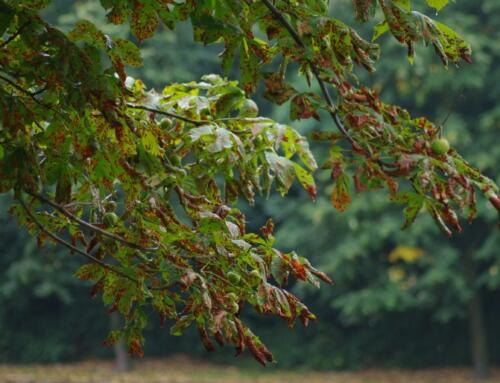
Peach leaf curl shows up on young spring leaves, usually about two weeks after they emerge. Parts of the leaf thicken and pucker into raised, blister-like areas, and the whole leaf may curl or twist out of shape. An affected leaf often feels thicker and stiffer than a healthy one, a texture Washington State University’s peach leaf curl fact sheet describes as crisp and crinkled.
Color is a less reliable clue. Affected tissue may start out reddish or yellowish, then turn grayish white as a velvety layer of fungal spores forms on the surface. Because color varies with the variety and the stage of infection, focus on texture and shape first. Infected shoots may also look swollen and stunted.
Check for Aphids Before Assuming It’s Leaf Curl
Peach tree leaves curling can have several causes, including insect feeding, herbicide drift, and environmental stress. Aphids are a common lookalike. Turn over a few curled leaves and check the undersides and nearby shoot tips for clusters of tiny, soft-bodied insects or a sticky, shiny coating called honeydew.
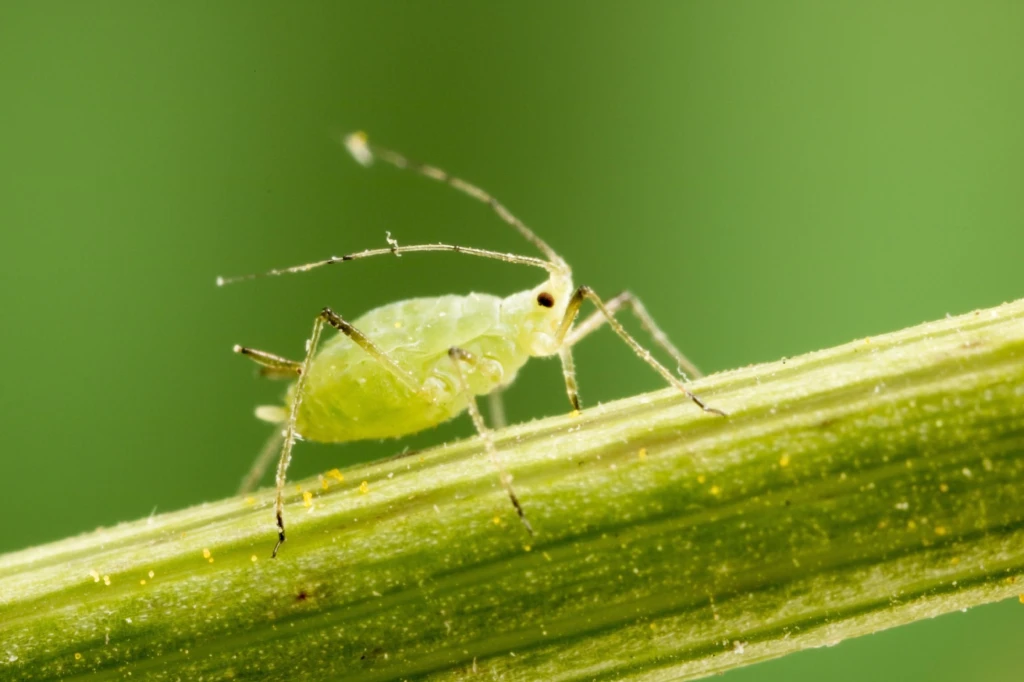
If you find them, read our guide on how to identify and manage aphids on trees before planning any fungicide program.
What to Do if Your Peach Tree Already Has Leaf Curl
Once you confirm peach leaf curl, the goal for this season shifts to reducing stress on the tree, tracking its recovery, and knowing when to ask for help.
Support the Tree Through the Growing Season
How much support your tree needs depends on how many leaves are affected and how much fruit it is carrying. A tree with a handful of curled leaves usually needs nothing beyond good routine care. For a heavily affected tree, UMass Extension’s peach leaf curl guidance centers on reducing stress, and these steps help:
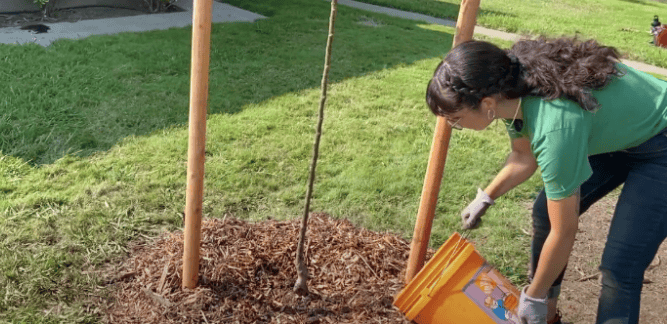
- Water deeply during dry spells. Check the soil several inches down and water when it feels dry, so drought stress does not add to the strain of regrowing leaves.
- Thin the fruit. Removing some young fruit reduces the demand on a tree that has fewer working leaves.
- Skip the fungicide for now. A spray at this stage adds cost and chemical exposure without helping infected leaves.
Watch for Healthy New Leaves and Signs of Decline
Infected leaves usually drop within a few weeks, and once the weather turns warm and dry, a second set of healthy-looking leaves often grows in. During prolonged cool, wet weather, replacement leaves may also become infected, particularly in wetter Pacific Northwest locations.
A tree may look greener after replacement leaves emerge while still producing less growth and a lighter crop. Early leaf loss weakens the tree, and Ohio State’s peach leaf curl fact sheet notes that weakened trees produce fewer fruit the following season. Repeated heavy leaf loss can lead to decline.
When to Call an ISA Certified Arborist
Monitor the tree as new leaves grow in, and call an ISA Certified Arborist if the symptoms are unclear, leaf loss is extensive or recurring, or you notice dieback, sparse new growth, or oozing trunk wounds. An assessment can help identify contributing problems and guide your tree’s ongoing care.
How to Prevent Peach Leaf Curl Next Season
The fungus spends the winter as spores on the tree’s twigs, bark, and buds. When rain splashes those spores onto opening leaves in spring, a new infection begins.
When to Spray After Leaf Drop and Before Bud Break
Leaf fall is your cue to check the local spray schedule. UC IPM’s peach leaf curl guidance generally recommends treatment after leaf fall. Recommendations differ by region, so check local extension guidance and the product label before choosing your application date.
What to Do at Each Stage
| Stage | What you see | What to do |
| Visible symptoms (spring) | Red, thickened, puckered leaves | Skip fungicide. Water during dry spells and thin fruit on heavily affected trees. |
| Leaf fall | Leaves are dropping | Check the locally recommended leaf-fall stage and apply a labeled preventive treatment as directed. |
| Late dormancy | Buds remain closed or are beginning to swell | Check whether another application is recommended locally and still permitted by the product label. |
Application schedules vary by region, rainfall, and product. The Pacific Northwest Plant Disease Management Handbook recommends starting at about 50 percent leaf fall in western Oregon and gives different schedules for Washington and lower-rainfall areas.
How to Choose and Apply a Fungicide for Peach Leaf Curl
Before you buy, check that the product:
- lists peach leaf curl on its label
- is approved for use on edible peach trees
- is sold for home garden use in your state
Copper-based fungicides are one preventive option, but effectiveness varies with the formulation and local conditions. Choose a product recommended locally and follow its label for mixing, coverage, protective equipment, and weather restrictions. Add horticultural oil only when the relevant labels permit the combination. Cover the twigs, branches, and buds thoroughly while avoiding excessive runoff.
Help Your Peach Tree Recover and Plan Ahead
Support your peach tree through the growing season with appropriate watering, fruit thinning where needed, and regular checks on new growth. Before the next infection window, review local extension guidance and the product label to plan preventive treatment.
Frequently Asked Questions About Peach Leaf Curl
Can You Treat Peach Leaf Curl Naturally?
Not reliably on a tree that already has symptoms. Watering and fruit thinning support the tree but do not stop infection. For future planting, choose a locally recommended resistant variety. Resistance varies by region, and young resistant trees may still benefit from preventive treatment during establishment.
Should You Remove Leaves With Peach Leaf Curl?
There is no need to pick affected leaves off the tree. Removing them has not been shown to improve control, and they usually drop on their own. Raking up fallen leaves is reasonable routine cleanup.
Can Peach Leaf Curl Affect the Fruit?
Yes, although direct fruit infection is uncommon. Affected fruit may show reddish, wrinkled, or warty areas that later turn corky and crack. More often, heavy leaf loss weakens the tree and reduces the crop that year and the next.
Do You Need to Spray for Peach Leaf Curl Every Year?
It depends. Susceptible varieties with a history of leaf curl usually benefit from a yearly dormant spray, especially where springs are cool and wet. An absence of past symptoms does not establish resistance. Base the schedule on cultivar susceptibility, disease history, local conditions, and the product label.
Get a Free Tree Assessment — No Obligation
Tell us about your tree. One of our ISA Certified Arborists will review your situation and get back to you within 24 hours.