
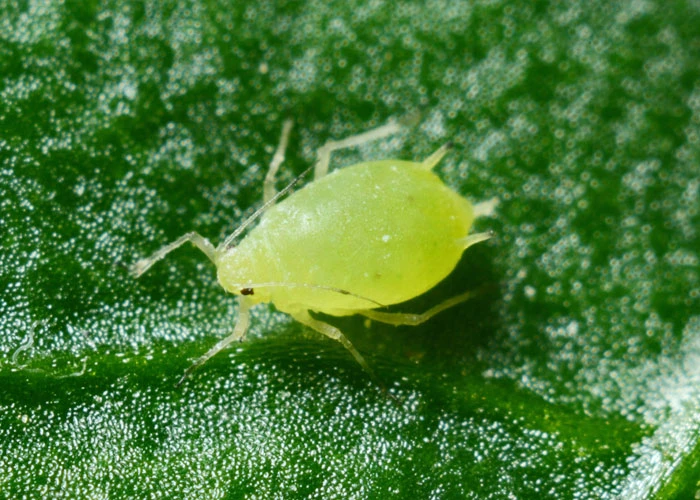
If you’ve noticed your trees or shrubs looking a little worse for wear lately, leaves curling at the edges, a sticky film on the branches, or clusters of tiny insects gathering on new growth, you’re probably dealing with aphids. It is a frustrating thing to discover, especially on a tree or shrub you have spent years caring for.
In most cases, aphids can be brought under control without harming the surrounding landscape. With the right approach, most infestations can be brought under control without harming your trees, your shrubs, or the surrounding environment.
This guide will walk you through how to identify aphids, the safest and most effective ways to get rid of them naturally, when chemical treatments make sense, and when to bring in tree pest and disease specialists for a larger canopy problem.
What Are Aphids and Why They’re a Problem
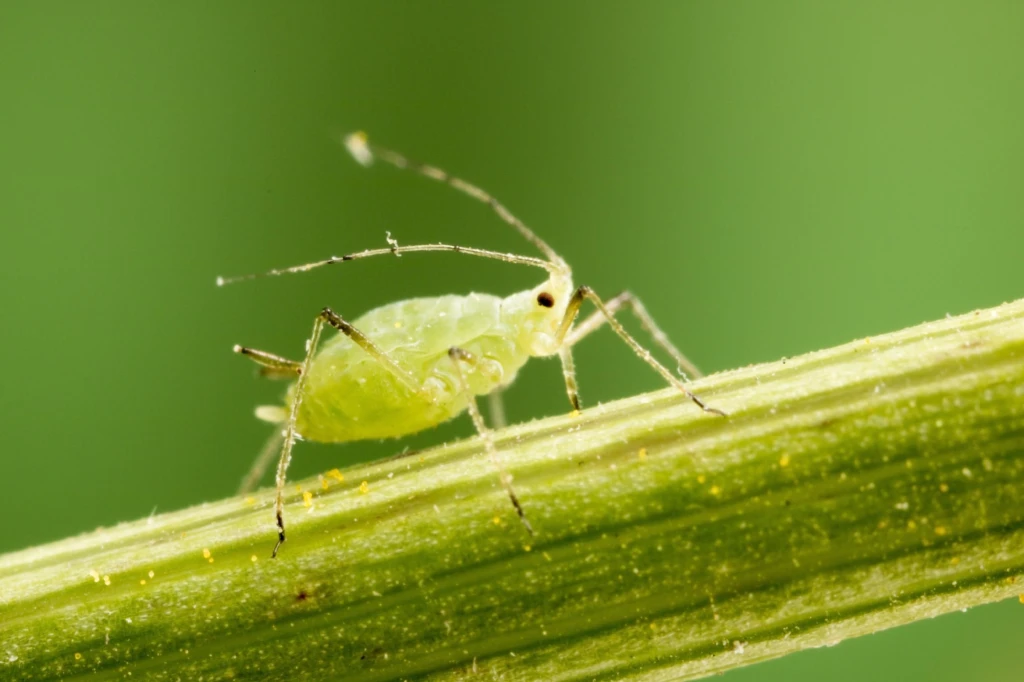
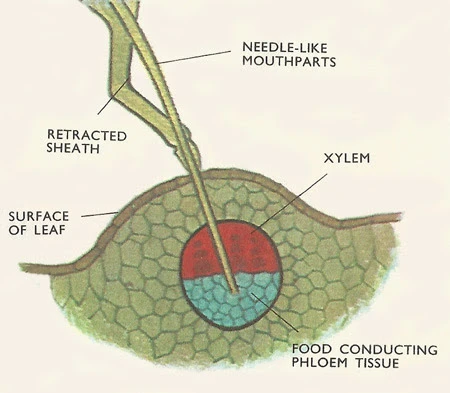
Aphids are small, soft-bodied insects that feed by piercing plant tissue and extracting sap. They tend to cluster in large numbers on new growth, the undersides of leaves, and along tender stems. Most species are roughly the size of a sesame seed, which makes individual insects easy to miss until the colony is already well established.
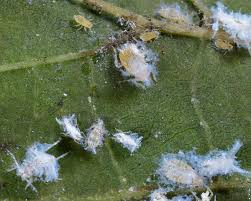
There are hundreds of aphid species, and they come in a range of colors including green, yellow, black, brown, and woolly white. Some species target specific trees, while others are more generalist feeders. Either way, the damage happens in the same basic way. They drain the plant’s resources while creating additional problems through the residue they leave behind.
How to Identify Aphids on Trees and Shrubs
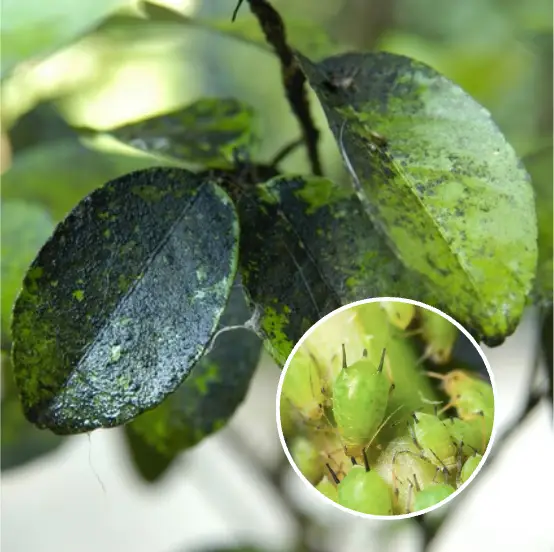
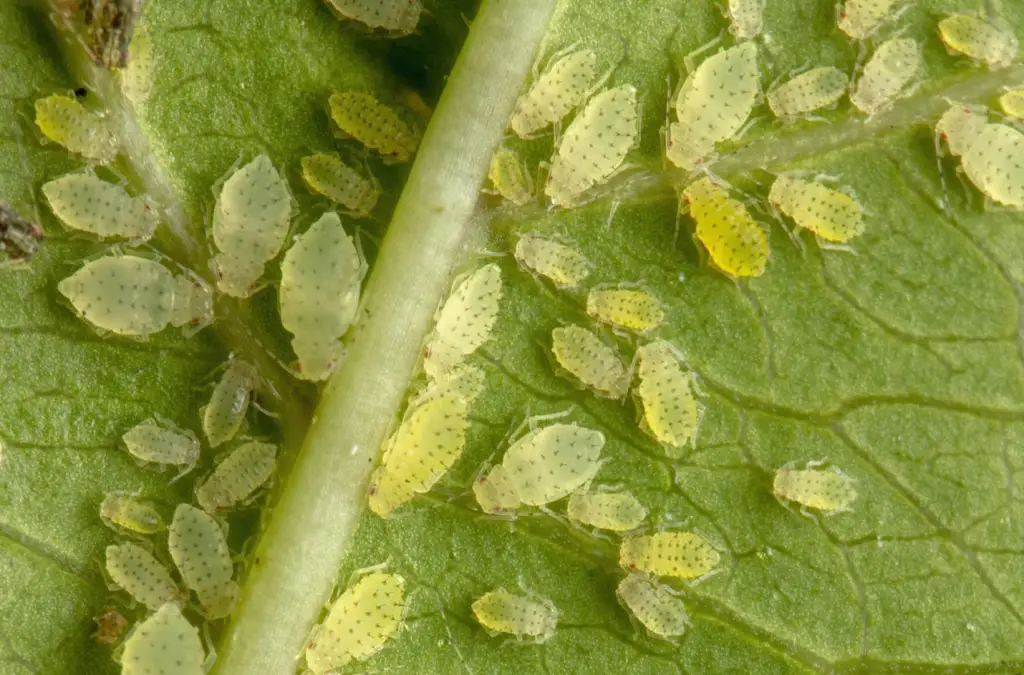
The most reliable sign of an aphid infestation is direct visual inspection. Look closely at the undersides of leaves, particularly on new growth at the tips of branches. You will often see clusters of tiny, pear-shaped insects, sometimes moving slowly, sometimes nearly motionless. On shrubs, they tend to concentrate around buds and stems.
Other signs to look for include:
- leaves that are curling, puckering, or distorted, especially on young growth
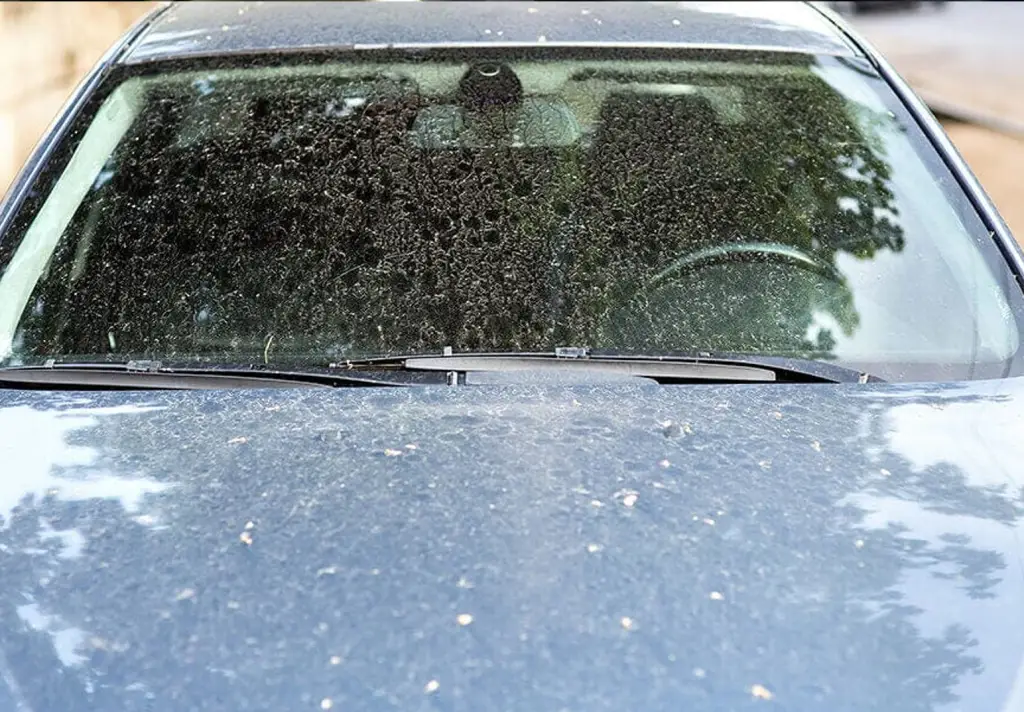
- a shiny, sticky residue on leaves, branches, or surfaces beneath the tree
- yellowing or wilting foliage that cannot be explained by drought or nutrient issues
- ants traveling actively up and down the trunk, which often signals that aphids are present and producing honeydew
- a grayish or blackish coating on leaves, which is usually sooty mold
If you are unsure whether you are looking at aphids or another insect, check for cornicles, the two small tube-like projections at the rear of the abdomen. They are a defining characteristic of aphids and are not found on most other common garden pests.
Risks to Trees and Property: Sooty Mold and Honeydew
Aphids excrete a sugary liquid called honeydew as they feed. This residue coats leaves and branches, and it quickly becomes a growth medium for sooty mold, a black fungal coating that reduces a plant’s ability to photosynthesize. On a small shrub, that may be mostly cosmetic. On a large tree, it can compound stress over time, especially if the tree is already dealing with drought, disease, or poor soil conditions. It also helps to separate aphid damage from broader decline issues, such as the signs of Dutch elm disease, when symptoms appear across an entire canopy rather than only on tender new growth.
Honeydew also attracts ants, which actively farm aphid colonies for access to the sugary residue. These ants will drive off beneficial insects, like ladybugs and parasitic wasps, that would otherwise help control the aphid population naturally. A good practical rule is to treat the ants as part of the aphid problem, not as a separate issue.
Not sure if your tree needs professional attention?
A Plus Tree’s ISA Certified Arborists serve homeowners across the West Coast. A free assessment takes 15 minutes and gives you a clear answer.
Natural Ways to Get Rid of Aphids
For most homeowners dealing with aphids on shrubs or smaller ornamental trees, natural control methods are the right place to start. They are effective, safer for pollinators and beneficial insects, and much gentler on the tree itself.
Water Spray and Manual Removal
One of the simplest and most underestimated methods is a strong stream of water from a garden hose. Directing a firm spray at aphid colonies, especially on the undersides of leaves, dislodges the insects and disrupts the colony. Aphids that fall to the ground typically cannot find their way back to the plant.
This works best on shrubs and low-canopy trees where you can reach all the infested areas. Repeat the process every few days for two to three weeks to knock back new hatchlings before they can establish. It will not eliminate every aphid, but it can significantly reduce population pressure and may be enough on its own for mild infestations.
Manual removal by hand or with a soft brush is another option for smaller plants. It is time-consuming, but it can work well when the infestation is still localized.
Natural Predators: Ladybugs, Lacewings, and Wasps
A healthy garden ecosystem will take care of many aphid problems on its own. Ladybugs, lacewing larvae, parasitic wasps, and hoverfly larvae are all strong aphid predators. A single ladybug can consume dozens of aphids in a day.
If your garden has a low predator population, you can purchase beneficial insects from reputable suppliers and introduce them to your landscape. Ladybugs are the most commonly available. For best results, release them at dusk near infested plants, after watering the area so they have a reason to stay.
The important thing to remember is that beneficial insects work best when the landscape supports them. If ants are left in place, or if the yard lacks plant diversity, introduced predators may disperse without providing much lasting control.
That is also why early monitoring matters, especially when spring tree pests like aphids, scales, and more begin building populations before the canopy fully leafs out. This guidance on beneficial insects also notes that food and shelter are what help these predators stick around and keep aphid numbers down.
Companion Planting and Repellent Plants
Certain plants naturally deter aphids or attract the insects that prey on them. Incorporating these into your landscape is a long-term, preventive way to manage aphids more sustainably.
Plants that may help repel aphids include catnip, garlic, chives, marigolds, and fennel. Plants that attract beneficial predators include dill, yarrow, sweet alyssum, and flowering herbs like cilantro and parsley allowed to bolt.
A helpful way to think about companion planting is that it does not act like a fast treatment. It works more like habitat management. Over time, it helps create a more balanced environment where aphid populations are less likely to surge out of control.
Soapy Water, Neem Oil, and Organic Sprays
When water sprays and natural predators are not keeping up with the infestation, a few established organic treatments can help without causing unnecessary harm to your trees or the wider environment.
Insecticidal soap works by disrupting the cell membranes of soft-bodied insects on contact. Dilute a pure liquid castile soap, not dish soap with added degreasers or fragrances, at roughly one to two teaspoons per quart of water. Spray directly onto aphid clusters, making sure to coat the undersides of leaves. Reapply every five to seven days, consistent with Clemson’s insecticidal soap guidance.
Avoid applying soaps or oils in full sun or during hot weather, as this can increase the risk of leaf scorch.
Neem oil, derived from the seeds of the neem tree, is one of the most effective and widely recommended organic sprays for aphid control. It works both as a contact treatment and as a growth disruptor, interfering with the aphids’ ability to feed and reproduce. Mix with water and a small amount of liquid soap as an emulsifier, and apply in the early morning or late evening to reduce pollinator exposure.
Pyrethrin-based sprays made from chrysanthemum extracts are another option for heavier infestations. They break down quickly in the environment but are still strongest when used carefully and according to label directions.
Does Vinegar Kill Aphids?
Vinegar can kill aphids on contact, but it also comes with a real downside. It can damage or kill plant tissue, especially tender leaves and new growth. Diluted vinegar is less effective, while stronger concentrations increase the risk of plant injury.
We generally do not recommend vinegar as a reliable aphid treatment. In most cases, insecticidal soap or neem oil gives you a safer and more predictable result.
What Do Aphids Hate the Most?
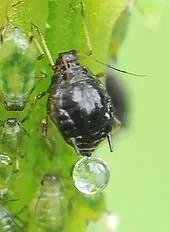
Aphids are strongly deterred by a few things: strong-smelling plants like garlic and catnip, reflective mulches that disorient them, and the presence of natural predators. Among spray treatments, neem oil is especially useful because it both deters feeding and disrupts reproduction.
A healthy, well-maintained tree is also naturally more resistant. Aphids are much more likely to build heavy populations on stressed or weakened plants than on vigorous ones.
Tree-Safe Chemical Treatments
In most cases, natural methods are enough for aphid control. But for persistent or severe infestations, especially on specimen trees where visible decline is developing, more targeted chemical treatments may be warranted.
The key is choosing products that are effective without causing unnecessary harm to the tree, the soil, or beneficial insect populations.
When to Use Insecticidal Soaps or Oils
Insecticidal soaps and horticultural oils are the most tree-friendly chemical options available. They work on contact, break down quickly, and leave little to no harmful residue. They are appropriate when natural methods have not produced results after several weeks, or when the infestation is widespread enough that physical removal alone is no longer practical.
Use these treatments during cooler parts of the day and avoid application when temperatures exceed 90°F, since heat increases the risk of phytotoxicity. A good practical rule is to test a small section of foliage first and wait 48 hours before treating the entire plant.
Choosing Aphid Sprays Safe for Mature Trees
For mature trees, product selection matters. Broad-spectrum chemical insecticides, including many pyrethroid-based products, can kill aphids but also wipe out the beneficial insects that provide longer-term biological control. That may actually make the problem worse over time.
If you need something stronger than insecticidal soap or neem oil, look for targeted aphid treatments with active ingredients like pyrethrin or spinosad. Avoid neonicotinoids on flowering or fruiting trees unless a certified arborist specifically recommends them, since EPA pollinator protection measures for neonicotinoids reflect ongoing concern about bee exposure around blooming plants.
Application Tips to Avoid Leaf or Bark Damage
Proper application technique matters just as much as product choice. A few basic principles help reduce the chance of plant damage:
- always dilute to the recommended concentration
- cover all leaf surfaces, especially undersides, where aphids cluster
- avoid spraying directly onto bark when using oils or soaps
- do not spray during bloom periods if pollinators are active in the canopy
- keep a simple record of what you applied and when
A good treatment plan is not just about what you spray. It is also about timing, coverage, and consistency.
What to Do When DIY Aphid Control Fails
Most aphid problems on shrubs and small ornamental trees respond well to the methods above. Large, established trees are different, and that is usually where DIY control starts to lose effectiveness.
Why DIY Methods Fail on Large and Tall Trees
The main challenge with large trees is coverage. Aphids on a 40- or 60-foot tree are not clustered at eye level. They are often in the upper canopy and far beyond the reach of a garden hose or handheld sprayer. Without thorough coverage of affected foliage, even a good product will not do much.
There is also the issue of canopy volume. A large tree may have thousands of square feet of leaf surface. Treating that effectively and safely requires professional-grade equipment and the training to use it correctly.
This is where scale really matters. A homeowner may be able to manage aphids on a shrub or small ornamental tree. A tall canopy is a different situation altogether.
Signs It’s Time to Call a Certified Arborist
Consider reaching out to a professional when:
- the infestation has persisted through multiple rounds of DIY treatment
- you are seeing significant dieback, canopy thinning, or branch decline
- the tree is large, and you cannot access the affected areas safely
- sooty mold has spread extensively across the canopy
- you are unsure whether aphids are the only problem, or whether another stress issue is involved
An ISA-certified arborist can assess the full picture, not only the aphids but also the tree’s overall health, the root zone, soil conditions, and any contributing stressors. A broader tree health care plan can help determine whether aphids are the main issue or simply one visible symptom of a larger stress problem.
Professional Treatments: Systemic Injections vs. Canopy Sprays
For large trees, two professional approaches are most commonly used.
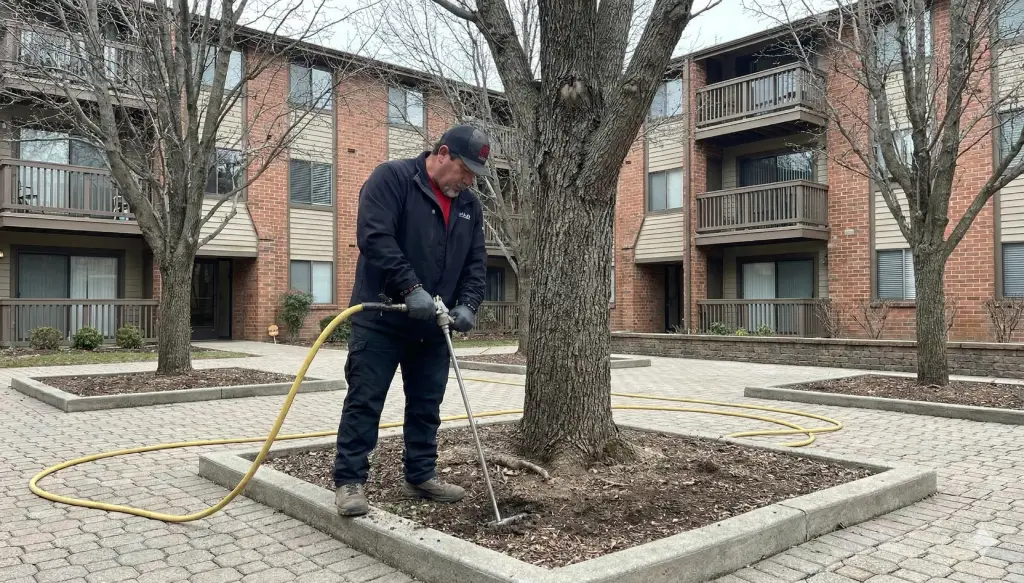
Systemic trunk injections deliver insecticide directly into the tree’s vascular system, where it is transported throughout the canopy. This can be highly effective and removes the coverage problem entirely. It is also more contained than broad spraying, since the treatment stays within the tree.
The tradeoff is that systemics take time to move through the canopy and should be timed carefully to avoid pollinator exposure. This same targeted approach is also used in professional emerald ash borer treatments, which is why timing and species-specific planning matter so much.
Canopy sprays using professional equipment can achieve uniform coverage on large trees that handheld methods cannot reach. Professional spray rigs can reach the tops of tall trees and apply treatments at the correct pressure and dilution for effective contact control.
Your arborist can help you weigh which option makes the most sense based on tree species, infestation severity, timing, and proximity to sensitive plants, water features, or neighboring properties.
How to Prevent Aphids from Coming Back
Getting rid of aphids is only half the job. Understanding why they showed up, and what conditions allowed them to thrive, is what helps keep them from returning.
Improving Tree Health and Soil Conditions
Stressed trees are much more susceptible to aphid infestations than healthy ones. If your tree has been dealing with compacted soil, poor drainage, drought stress, or nutrient imbalances, those underlying conditions create the vulnerability that aphids exploit. In some cases, saturated soil can lead to deeper root problems, so it is worth understanding how to treat root rot when decline does not improve after the aphids are brought under control.
Work with an arborist to assess soil health, improve compaction through aeration when needed, and make sure your trees are receiving appropriate moisture. A tree with stronger vigor is naturally better equipped to tolerate and recover from aphid pressure.
Managing Ants That Protect Aphids
If ants are active on your trees, addressing them is an essential part of long-term aphid control. Ants that farm aphids will often protect them from predators and even move them to fresh growth.
Sticky barrier bands applied around the trunk can be a safe and effective way to prevent ants from climbing into the canopy. Reapply as needed, and check that the band is not trapping moisture against the bark.
Winter Care: Using Dormant Oils to Kill Eggs
Many aphid species overwinter as eggs, laid in bark crevices and hatching in early spring. Applying a horticultural dormant oil during late winter is one of the most effective preventive steps available.
Dormant oils smother overwintering eggs before they can hatch, which helps reduce the spring population before it gets established. Timing matters. Apply after the coldest winter temperatures have passed but before buds begin to open.
Tree-Friendly Fertilizer Practices
Over-fertilization, especially with high-nitrogen products, is one of the easiest ways to make trees more attractive to aphids. Nitrogen pushes lush, tender new growth, which is exactly what aphids prefer, and IPM guidance on nitrogen and aphid pressure makes the same point about excess nitrogen increasing aphid pressure.
That does not mean you should stop fertilizing. It means product choice and timing matter. A proper tree fertilization plan should rely on slow-release, balanced nutrients and avoid pushing heavy growth flushes in mid-summer, when aphid populations are often most active.
FAQs About Aphid Removal
How Do You Get Rid of Aphids Fast?
Use a strong water spray first, then follow with insecticidal soap or neem oil. On large trees, professional canopy sprays usually provide faster and more complete coverage.
How to Get Rid of Aphids Permanently?
You usually cannot eliminate aphids forever. Long-term control comes from stronger tree health, natural predators, ant management, dormant oil, and early treatment when populations first appear.
Are Aphids Harmful to Large, Established Trees?
Usually not by themselves. The bigger concern is when infestations are severe, repeated, or happening on trees already stressed by drought, disease, or soil problems.
Can Aphids Kill a Tree If Left Untreated?
Rarely on a mature tree. But severe infestations can weaken young trees or compound stress in already vulnerable trees over time.
How Long Does It Take to Get Rid of Aphids?
Most infestations improve within two to three weeks of consistent treatment. More severe cases may take four to six weeks, especially on larger trees.
Get a Free Tree Assessment — No Obligation
Tell us about your tree. One of our ISA Certified Arborists will review your situation and get back to you within 24 hours.