
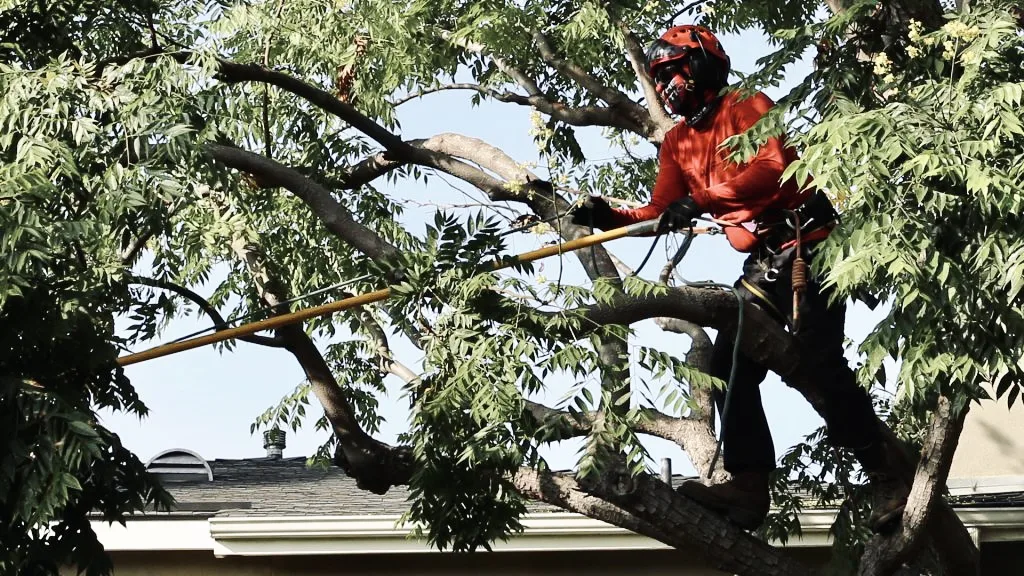
When branches crowd your roof or a tree towers over the yard, cutting back the top can seem like a straightforward solution. Tree topping, however, can leave large wounds, encourage poorly attached regrowth, and create maintenance problems that last for years.
There are better ways to address many size and clearance concerns through professional tree pruning and trimming. Understanding the difference helps you decide what to request before work begins. If your tree has already been topped, knowing what to look for and when to arrange an assessment can help you plan its next stage of care.
What Is Tree Topping?
Tree topping means cutting main stems or branches back indiscriminately to stubs or side branches too small to become the new growing tips. It reduces the tree’s crown without preserving suitable branches to continue its growth. The crown is the upper part of the tree made up of branches and foliage. You may hear it called hat-racking, tipping, or rounding over.
Signs include:
- Large branches ending in blunt stubs between natural branch junctions.
- A canopy cut back to a roughly uniform height.
- Clusters of upright shoots growing around older cut ends.
Shoot clusters alone do not prove a tree was topped. Storm damage and other stresses can also trigger them. Topping concerns the placement and pattern of cuts; over-pruning refers more broadly to removing too much growth.
People often request topping to regain a view, clear a building, or reduce storm worries. Those concerns deserve attention, but the appropriate response depends on the tree and the specific problem.
Not sure if your tree needs professional attention?
A Plus Tree’s ISA Certified Arborists serve homeowners across the West Coast. A free assessment takes 15 minutes and gives you a clear answer.
Why Topping Can Damage a Tree for Years
Removing substantial foliage and major branches changes both the tree’s energy supply and its structure. Some effects appear quickly, while others develop as wounds decay or new shoots grow larger. Topping can contribute to a tree’s death, although outcomes vary with species, condition, and the severity of the cuts.
Losing Too Much Foliage Reduces the Tree’s Energy Supply
Leaves use sunlight to make sugars through photosynthesis. Think of them as the tree’s solar panels: removing a large share reduces the energy available to maintain roots, grow new tissue, and defend against pests. A topped tree may draw heavily on stored reserves to replace its lost foliage. That demand can be particularly difficult for a tree already stressed by drought, root damage, or disease.
Canopy removal also exposes previously shaded branches and trunk surfaces to stronger sunlight. Sensitive bark tissue can suffer sunburn, adding another injury to an already stressed tree.
Large Cuts Increase the Potential for Decay
Trees respond to injury by compartmentalizing, or limiting the spread of damaged and decaying tissue. New growth may gradually cover a wound, but it does not replace the original injured wood.
Large topping cuts can leave exposed wood and stubs that die back. Decay fungi may enter these areas, and the tree’s ability to contain that decay depends on factors including species, vigor, wound size, and cut location.
Not every wound develops extensive decay. However, a leafy canopy can conceal problems in the supporting wood. A wound that has closed over is not proof that the wood beneath it is sound.
Fast Regrowth Can Create Weak Branch Attachments
A tree that produces plenty of leaves after topping may look reassuringly vigorous. Often, that growth includes water sprouts, a type of epicormic shoot. These shoots arise from buds on the remaining trunk or branches and help replace foliage. Their presence does not establish that the tree has regained a sound structure.
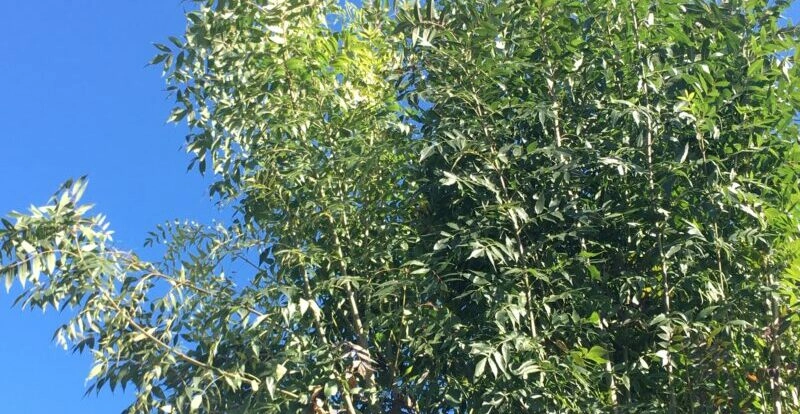
Shoots developing around topping cuts may have weak attachments, particularly where the supporting wood is also decaying. As they become longer and heavier, they place greater demands on those attachments. Their size, position, and supporting wood all matter when an arborist evaluates the remaining branches.
Topping also fails to provide permanent height control. Surviving trees can regain much of their previous height, with the rate depending on species and growing conditions. Repeated maintenance, corrective pruning, and possible eventual removal can make the initial work expensive over time.
Tree Topping vs Crown Reduction and Proper Pruning
Crown reduction cuts shorten selected branches to suitable side branches, also called laterals, that can become the new growing tips. Topping leaves stubs or inadequate side branches. Crown reduction is one form of proper pruning, with cuts selected for the tree’s structure and a specific objective.
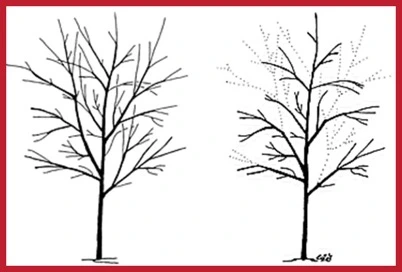
| Comparison | Tree topping | Crown reduction |
| Cut placement | Cuts leave stubs or laterals too small to take over growth. | Cuts return to suitable laterals that can continue the branch’s growth. |
| Branch selection | Branches are shortened indiscriminately, often to a set height. | Branches are selected to meet a defined pruning objective. |
| Remaining form | The natural branching pattern is substantially disrupted. | The work aims to retain a functional branching structure and appropriate form. |
| Size management | Shortens the tree immediately but can trigger vigorous regrowth. | Can reduce height or spread where the tree’s condition and structure allow it. |
| Follow-up | May require assessment, corrective work, and continuing management. | Requires monitoring and possible future pruning as growth continues. |
Crown reduction still creates wounds. An arborist needs to consider the species, existing defects, and how much reduction the tree can tolerate. A requested height may be impossible to achieve through appropriate pruning.
Crown thinning selectively reduces branch density, rather than the tree’s overall height. It does not automatically make a tree safer in wind; the pruning approach needs to match the tree and the concern being addressed.
Developing and maintaining a pollard involves a planned pruning system for suitable species, generally established when young and maintained regularly. Cutting back a mature tree indiscriminately does not turn it into a properly managed pollard.
What to Do When a Tree Has Outgrown Its Space
Start with the conflict you need to resolve. A branch rubbing against a roof, a blocked walkway, and concern about storm failure call for different decisions. The tree’s condition and the available space help determine what is realistic.
Identify the Clearance You Actually Need
Point out the affected feature and explain what happens there. Is a branch touching the gutter, obstructing access, or moving against the building in wind? Specific observations help an arborist determine whether selected branches need attention.
For example, imagine one limb extending toward a roof while the rest of the canopy has room to grow. That situation may call for targeted clearance work. It does not, by itself, establish a need to shorten the entire tree. The appropriate cuts depend on that limb’s structure and condition.
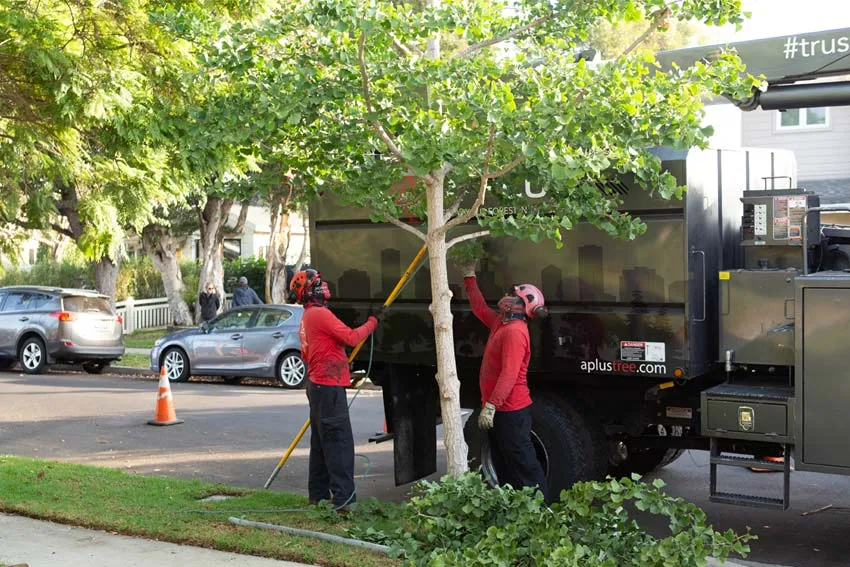
A plan for managing a tree’s size over time should account for future growth as well as today’s clearance. If branches approach overhead power lines, contact the utility before arranging work. Leave line-clearance tree trimming to qualified professionals, and never attempt it from a ladder or with a pole saw.
Have Storm Concerns Assessed Before Reducing Height
A tall tree is not automatically an unsafe tree. Its condition, branch connections, roots, and surroundings all matter when evaluating the chance of failure and its possible consequences. Before requesting height reduction, explain what prompted your concern. Perhaps a branch broke recently, you noticed a change in the trunk, or the tree stands beside a frequently used area. Those observations help establish what needs to be examined.
A professional tree risk assessment considers both the tree and what could be affected if part of it fails. Depending on the findings, the recommendation may involve selected pruning, monitoring, another management option, or removal. Ask what the proposed work is intended to address and what concerns would remain afterward. Making the canopy shorter cannot resolve every type of defect.
Consider Replacement When the Site Cannot Accommodate the Tree
Sometimes the tree’s mature size and its location cannot be reconciled through reasonable pruning. Repeatedly removing major portions of the crown may leave few good options for retaining it over the long term.
An arborist can help you weigh retention against professional tree removal when the available space, condition, or level of risk makes continued management impractical. A large tree does not need removal solely because of its height, and the decision should account for the benefits you would lose as well as the problem you need to solve.
If replacement is appropriate, choose for mature height and canopy spread, not nursery size. Soil, available rooting space, and nearby structures also matter. Planning those details before planting reduces the likelihood of facing the same conflict again.
What to Do If Your Tree Has Already Been Topped
Some topped trees can benefit from staged restoration pruning, but suitability depends on the species, remaining branches, and extent of decay or other damage. An arborist needs to assess these factors before deciding whether the tree can be kept and managed.
If branches are visibly hanging or broken, keep people away from the area and arrange prompt professional help. Once immediate hazards have been addressed, use these steps to plan the tree’s ongoing care:
- Document the previous work. Note when the tree was topped, whether it has been cut repeatedly, and any changes you have noticed. Earlier photographs can help show how its form has changed.
- Arrange an assessment. An arborist’s evaluation of your tree can help clarify concerns about old wounds, supporting branches, and restoration suitability. Explain whether you need management advice, a formal report, or both.
- Avoid further indiscriminate cutting. New shoots provide foliage the tree needs. Removing them all can create another severe loss of leaf area. Have their role assessed before authorizing more work.
- Discuss staged restoration. Where appropriate, an arborist may retain selected shoots, shorten competing growth, and remove unsuitable branches over multiple visits. The aim is to improve the remaining structure without another major loss of foliage.
- Agree on follow-up. Ask when the tree should be reassessed and which changes warrant an earlier visit. Keep dated photographs and report new breakage, visible cracks, or increasing dieback, where twigs and branches die from their tips inward.
Restoration can take years and cannot erase old wounds or guarantee the tree’s original form. Visible new growth may appear well before a more stable branch structure develops, and recommendations may change during follow-up visits.
Have an A Plus Tree arborist assess your topped tree to understand whether staged restoration, ongoing monitoring, or another approach makes sense for its condition.
Frequently Asked Questions About Tree Topping
Can You Top a Pine Tree to Keep It Short?
No. Removing a pine’s main upright growing stem disrupts its form, and many pines cannot produce replacement shoots from bare, older wood. Seek species-specific advice.
Is Every Heading Cut Considered Tree Topping?
No. Arborists sometimes use selected heading cuts during specialist restoration. Their limited use for a specific purpose differs from indiscriminately cutting back a tree’s canopy.
How Can I Tell Whether a Pruning Quote Includes Topping?
Ask where cuts will be made and which side branches will remain. Cuts to arbitrary stubs suggest topping; request a specific pruning description before approving work.
Discuss Your Tree’s Size and Condition With A Plus Tree
Whether your tree is crowding a building or has already been topped, the next decision should account for its condition and the problem you want to resolve. A Plus Tree’s pruning and arborist consulting services can help you understand the available options.
Tell our team what concerns you and describe any previous work. We can help you determine the appropriate assessment and discuss a practical plan for your tree.
Get a Free Tree Assessment — No Obligation
Tell us about your tree. One of our ISA Certified Arborists will review your situation and get back to you within 24 hours.