
You have a tree that needs to come out, someone mentions paperwork, and suddenly a simple tree removal project turns into a question about city code. That reaction makes sense. Whether you need a tree removal permit depends on where the tree grows, how wide the trunk measures, what species it is, and in some cases how healthy it still is.
Rules shift from one city to the next, and two neighboring towns often set different size thresholds for the same species. The pattern underneath stays predictable, though. Measure the trunk, name the species, find the property line, and read the tree’s condition, and you will know which approval applies before you ever open a city website.
Do You Need a Tree Removal Permit?
Often, yes. Most cities regulate removal on three factors: trunk size measured 4.5 feet above the ground, the tree’s species, and whether it stands on private property or in the public right-of-way. Street trees, heritage trees, and protected natives nearly always require approval first. Small ornamentals on a developed residential lot are frequently exempt.
Run through the list below before you schedule any work. If a single item applies to your tree, assume you need approval and verify with your city.
Tree Removal Permit Checklist
A permit is likely required if your tree meets any of these conditions:
- Trunk diameter at or above your city’s threshold, measured 4.5 feet above ground level (Seattle regulates from 6 inches, Portland from 12)
- A protected native species such as coast live oak, western sycamore, or Oregon white oak
- Designated heritage or landmark status
- Located between the sidewalk and the curb, or anywhere in the public right-of-way
- Standing on a lot with an active building, grading, or development permit
- Inside an environmental overlay, critical area, or historic district
- Planted as a condition of an earlier permit or land use approval
Multi-trunk trees deserve a second look. Cities frequently add the diameters together, so three modest stems cross a threshold that none of them would reach alone.
Trees on Your Own Property
Usually yes, once the trunk is wide enough. Owning the tree and controlling the tree are two different things. A helpful way to picture it is a load-bearing wall in a remodel: the wall belongs to you, yet you still need sign-off before removing it, because the consequences reach past your property line. Cities treat mature canopy the same way, since shade, stormwater absorption, and slope stability affect the whole block.
What matters most on a private lot is trunk size. Portland regulates private trees at 12 inches in diameter. Seattle begins regulating at 6 inches. Los Angeles takes a species-first approach and protects certain natives starting at 4 inches of cumulative diameter, while leaving most non-native ornamentals unregulated. Measure before you plan, not after.
Protected and Heritage Trees
Protected status attaches to a species. Heritage status attaches to an individual tree. Both narrow your options, and both survive a change of ownership, so a tree that was protected before you bought the house stays protected after.
Species protection targets natives a city wants to keep, and the qualifying size is usually small. Heritage designation gets applied tree by tree, often for age, size, or historical association, and it commonly restricts pruning as well as removal. Portland requires a permit for any work on a heritage tree. Seattle places every heritage tree in Tier 1, its most protected category. Los Angeles protects a defined list of Southern California natives, named in the Los Angeles section.
Verify before you assume. City tree maps, heritage registries, and county assessor records show most designations, and a certified arborist confirms species where leaf shape alone leaves room for doubt.
Street and Right-of-Way Trees
The strip of grass between your sidewalk and the curb probably belongs to the city, even though you mow it. Trees planted there are street trees, and they sit under a different department than the rest of your yard.
Seattle routes them through SDOT Urban Forestry rather than SDCI. Portland requires a permit to remove a street tree of any size, with a narrow exception for self-sown shoots under half an inch. Los Angeles handles them through the StreetsLA Urban Forestry Division.
Approval for a street tree also tends to hinge on a specific defect, such as sidewalk damage the city has already documented or a structural problem confirmed by a municipal arborist.
Dead, Diseased, and Hazardous Trees
A dead tree still needs a paper trail. If its condition is not obvious, check the signs a tree may be dying or dead before relying on a hazard exemption. Most cities offer an exemption or a faster review path for hazardous trees, and nearly all of them require proof that the hazard existed before the tree came down. Seattle allows hazardous tree removal across all four tiers with SDCI approval.
A homeowner notices a Douglas fir with nothing left in the upper canopy, calls a crew, and has it down by Friday. Two months later a code enforcement notice arrives. The tree was dead, the removal was reasonable, and neither fact helped, because no photographs, no arborist report, and no inspection record existed to prove the condition. Document first, remove second.
Watch a declining tree over weeks rather than days. Thinning at the outer canopy, bark that separates from the trunk, mushroom growth at the trunk flare, and leaves that emerge late or not at all are the patterns an inspector wants to see recorded. After sudden wind or weather damage, our guide to what to do after tree storm damage covers the immediate safety and assessment steps.
Boundary and Shared Trees
A trunk that crosses a property line makes both owners co-owners in most states, which turns removal into a two-signature decision. A permit settles the public question. Only your neighbor settles the private one.
Get the agreement in writing before you apply, and keep a copy with your permit file. Removing a shared tree with city approval but without your neighbor’s sign-off exposes you to a civil claim for the tree’s appraised value, and mature specimens appraise higher than most owners expect.
Not sure if your tree needs professional attention?
A Plus Tree’s ISA Certified Arborists serve homeowners across the West Coast. A free assessment takes 15 minutes and gives you a clear answer.
Tree Removal Permit Requirements by City
Local rules diverge sharply, and A Plus Tree works in all three cities covered here. Every threshold in the table carries exceptions tied to zoning, overlays, and whether construction is planned, so treat it as a starting point and read your city’s section for the detail. Two more layers follow the cities: wildfire clearance rules in California, and the private governing documents that apply to HOA, multifamily, and commercial property.
| City | Private tree threshold | Street trees | Replacement |
| Seattle | 6 inches DSH and above, by tier | Separate SDOT permit | Required for most approved removals |
| Portland | 12 inches DBH, 6 inches in environmental zones | Permit for any size | Required, with fee-in-lieu option |
| Los Angeles | Protected natives at 4 inches cumulative | StreetsLA permit | 2:1 on street trees, 4:1 minimum on protected trees |
City of Seattle Tree Removal Permit
Seattle rebuilt its tree code in 2023, and the current framework sorts regulated trees into four tiers rather than a single size cutoff. Both halves of the system, private property and right-of-way, run through separate departments.
Private Property and Protected Trees
Seattle Municipal Code 25.11 sorts every regulated tree into a tier by diameter at standard height:
- Tier 1: all heritage trees
- Tier 2: 24 inches and above, plus tree groves and specific species under 24 inches named in Director’s Rule 7-2023
- Tier 3: 12 inches up to 24 inches
- Tier 4: 6 inches up to 12 inches
Trees under 6 inches fall outside the chapter entirely.
Removal from any regulated tier is generally prohibited when no development is proposed, which catches owners who assume a mid-sized tree in a back yard is theirs to take. Allowances exist. A developed lot in a Neighborhood Residential, Residential Small Lot, Lowrise, Midrise, Neighborhood Commercial, Commercial, or Seattle Mixed zone permits removal of two Tier 4 trees in any three-year period, and developed lots in all other zones allow three Tier 3 or Tier 4 trees in any one-year period. Hazardous trees qualify across all four tiers with SDCI approval. Properties inside an Environmentally Critical Area follow SMC 25.09 instead, where tiers do not apply and most exemptions disappear.
One requirement catches contractors more often than owners: the company doing the work must appear on the city’s Tree Service Provider Registry. Both the property owner and the provider face penalties for code violations.
Street and Right-of-Way Trees
Street trees in Seattle sit outside SMC 25.11 and outside SDCI’s authority. SDOT Urban Forestry issues those permits, and approval generally depends on a documented defect or an infrastructure conflict. SDOT also requires a yellow Tree Removal Notice on the tree for at least 14 calendar days before the work, and you may post it yourself while the application is under review rather than waiting for approval. Confirm which side of the property line your tree actually stands on before you apply anywhere, because a tree that looks like a yard tree sometimes sits in the planting strip by a foot.
Portland Tree Removal Permit
Portland’s Title 11 Tree Code turns on two questions: how wide the trunk is, and whether development is involved. Portland Parks and Recreation Urban Forestry handles permits where no development is proposed, while removals tied to a building project route through a different chapter of the same code.
Private Property Tree Permits
A permit is required for private trees measuring 12 inches or more in diameter at 4.5 feet above ground. Environmental overlay zones drop that threshold to 6 inches, so verify your address against the city’s mapping tool rather than relying on a single citywide number.
Portland sorts applications into Type A and Type B. Type A moves faster and covers smaller trees, dead or dying trees, hazardous trees, and one healthy large tree per residential lot per calendar year. Type B applies to most removals of large healthy private trees, triggers notice to neighbors, and allows an appeal. Replanting follows nearly every approval, with a fee-in-lieu option where on-site planting is impractical. If replacement is required, choosing what to plant after tree removal belongs in the same planning step. Applications go through the city’s DevHub portal, and an issued permit expires 90 days from the date of issuance.
Cost is no longer the obstacle it once was. Portland Parks and Recreation eliminated or reduced most Urban Forestry permit fees on July 1, 2025, so the application itself now costs nothing in most cases. The requirement did not disappear with the fee, the replanting waiver still carries one, and the penalties for skipping the permit have not changed.
Street Tree Removal Permits
Every street tree needs a permit before removal, at any diameter, with the narrow carve-out for self-sown shoots under half an inch. Heritage trees require a permit for pruning and inoculation as well, not solely removal. Urban Forestry reviews the request, and an approved street tree removal normally comes with a replanting condition and a species chosen from the city’s list.
Tree Removal Permit Los Angeles
Los Angeles regulates by species first, which produces results that surprise owners who moved south from the Pacific Northwest. Most non-native ornamental trees on private property need no city permit at all. Protected native species need one at a small size, and approval takes months rather than weeks.
Protected Trees on Private Property
LAMC sections 46.00 through 46.06 govern protected trees and shrubs. Protection begins at 4 inches of cumulative diameter measured 4.5 feet above the base, a size a young coast live oak reaches quickly. Covered species include:
- Oaks indigenous to California, including valley oak and California live oak, with scrub oak excluded
- Southern California black walnut
- Western sycamore
- California bay, also called California bay laurel
- Toyon and Mexican elderberry, both protected as shrubs
Permits come from the Board of Public Works through the StreetsLA Urban Forestry Division. Because the code counts any act that kills a protected tree as removal, root damage from trenching, soil fill inside the drip line, and equipment traffic all require the same approval as cutting.
Plan for time. The city’s own application materials cite average processing of 90 to 120 days from a complete submission, and removal of any Southern California native protected tree goes to the Board with a public hearing rather than a staff sign-off. Replacement is standard, and the ratio runs steeper than the street tree policy: current Board of Public Works policy sets a minimum of four replacement trees or shrubs for every protected one removed. A construction schedule built around a 30-day approval will slip.
Street Tree Removal Permits
StreetsLA reviews street tree removals and applies a two-for-one replacement policy, with replacement trees placed on site whenever the parkway allows. Removing three or more trees triggers a 30-day public posting before work begins, so multi-tree frontage projects need that window built into the schedule from the start. Property owners may also obtain a no-fee permit for pruning street trees at their own expense.
Defensible Space and WUI Requirements
Wildfire clearance and tree preservation often point to opposite conclusions about the same tree, and California property owners sit between the two. Public Resources Code 4291 requires 100 feet of defensible space around structures in fire hazard severity zones, measured outward from the exterior wall. Dead and dying vegetation comes out. Ladder fuels that let fire climb from grass into the canopy come out, and spacing between crowns matters.
The statewide Zone 0 rule for the first 5 feet around a structure remains a Board of Forestry draft rather than adopted regulation. The Board released an updated version in April 2026, after the original December 2025 adoption deadline passed without a final rule, and several jurisdictions have moved ahead on their own, including the City of San Diego. What applies at a given address therefore depends on local adoption, and owners in high hazard areas should confirm with their fire authority rather than work from a statewide summary.
Clearance work does not automatically override a tree ordinance. A protected oak inside a defensible space zone usually calls for pruning, fuel reduction underneath, and documentation rather than removal. Coordinate the two requirements before the crew arrives, because a fire inspector and an urban forester will each enforce their own code.
HOA, Multifamily, and Commercial Requirements
City approval is one layer. Governing documents are another. Homeowners associations frequently claim authority over trees in common areas and sometimes over specimen trees on individual lots, and architectural review committees meet on their own schedule.
For a property manager overseeing multiple sites, the practical risk is sequencing. An approved city permit paired with a rejected HOA request leaves the work stalled and the hazard in place. Multifamily and commercial owners carry an additional exposure, since a known defect documented in an inspection report and left unaddressed becomes evidence in a liability claim.
ArborPlus answers both problems at once, because it records what stands on the property, what condition each tree is in, and which removals already have approval.
Emergency Tree Removal Permit Requirements
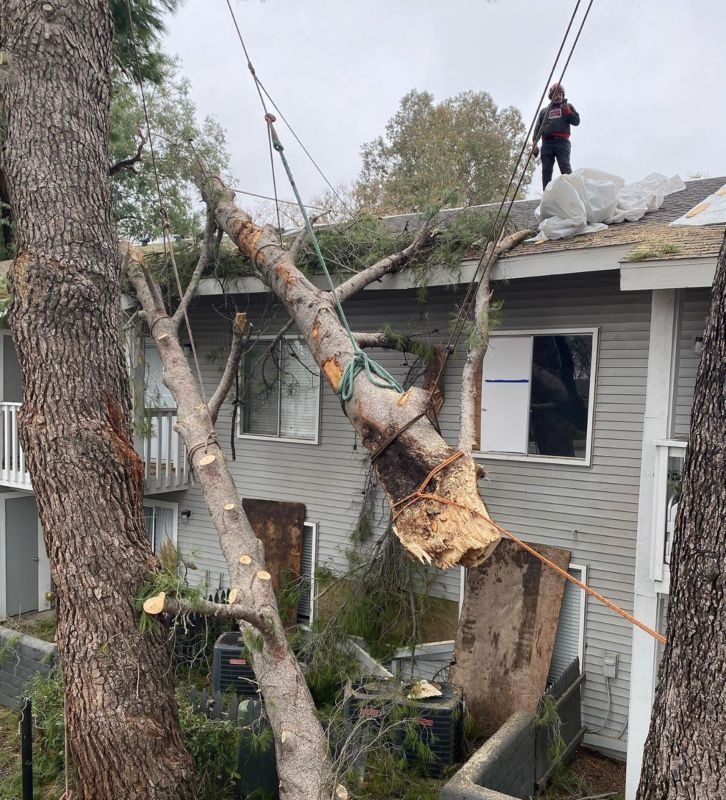
Storms do not wait for review periods, and most tree codes account for that. Emergency provisions are narrow, though, and they trade advance approval for after-the-fact proof.
When Emergency Removal May Apply
Emergency authority generally requires a clear and present danger to people or structures, plus insufficient time to obtain a permit through normal channels. Portland’s code addresses emergency pruning and removal directly, and limits immediate work to the hazardous portion of the tree.
A limb resting on a roof after a windstorm qualifies. A tree that has looked poor for two seasons does not, because the time to apply already existed. Genuine emergencies involve failure that has occurred or is imminent, not decline you have been watching.
Document the Hazard Before Removal
Photographs taken before the saw starts are the whole case later. Capture the following:
- The tree from at least three angles, before anyone begins cutting
- One wide shot showing the tree in relation to the structure it threatens
- A tape measure or a person in frame, so trunk size stays verifiable
- The failure point itself: the lean, the crack, or the root plate lifting out of the soil
- The date and time each photograph was taken
If you have room, keep the wood on site until the city closes the file. Physical evidence of decay at the failure point answers questions that photographs sometimes leave open, and a certified arborist writing a report after the fact will want to examine it.
Check After-Hours and Retroactive Requirements
Emergency work usually carries a filing deadline measured in days rather than weeks. Ask your city how quickly the after-the-fact notification must arrive, who receives it, and whether the authorization covers the whole tree or only the hazardous portion. Crews sometimes remove an entire trunk when the code permitted the failed limb alone, and the owner absorbs the citation.
For work in Seattle, verify that your tree service appears on the provider registry before an emergency happens rather than during one.
How to Get a Tree Removal Permit
The path looks similar in most cities even when the thresholds differ, and the first step resolves most of the uncertainty:
- Check your local tree regulations and overlay zones
- Measure the trunk, identify the species, and confirm the property line
- Get an arborist assessment if the city requires one
- Submit the application with a site plan, photographs, and a replanting proposal
- Meet the replacement and inspection conditions printed on the permit
Check Your Local Tree Regulations
Start with your city’s urban forestry or building department page, and find the actual code section rather than a summary. Confirm your zoning, then check whether your parcel falls inside an environmental overlay, critical area, historic district, or fire hazard severity zone, because overlays change thresholds more often than base zoning does. Municipal GIS viewers show these layers.
Identify the Tree and Property
Measure the trunk diameter at 4.5 feet above ground level, and add the diameters together on multi-stem trees. Identify the species, since a native oak and a non-native maple of identical size sit under different rules in Los Angeles. Determine whether the tree stands on private property or in the right-of-way, using your plat or survey rather than the sidewalk as a guide.
Get an Arborist Assessment if Required
Ask the reviewing department whether a report is mandatory before you pay for one. Hazard claims, protected species, construction-related removals, and appeals almost always require an assessment from a certified arborist. A voluntary report also strengthens a marginal application, particularly where the reviewer has discretion.
Submit Your Tree Permit Application
Most cities now accept applications through an online portal, Portland through DevHub and Seattle through its services portal, while Los Angeles routes protected and street tree requests through StreetsLA. Expect to provide a site plan showing tree locations, photographs, the measured diameter, species, your reason for removal, and a replanting proposal. Incomplete submissions restart the clock, so review the checklist twice before you file.
Follow Replacement and Approval Requirements
Read the conditions printed on the permit, not the ones you expected. Approvals commonly specify replacement species, minimum planting size, on-site location, and a maintenance period, and Seattle requires replacement trees to survive for a set number of years. Schedule the planting when you schedule the removal, and keep receipts and photographs proving compliance.
Who Pulls the Tree Removal Permit?
The property owner is almost always the applicant of record, and the legal responsibility stays with the owner regardless of who fills out the form. A qualified tree company prepares the package, measures and identifies the trees, produces the arborist report, files through the portal, and manages corrections. Owners who hand off that work still sign it.
Ask any company three questions before hiring. Will you pull the permit or will I? Are you on the required registry for this city, where one exists? What happens to the schedule if the city issues a correction notice? A company that answers those clearly has done the work before. At A Plus Tree, our certified arborists handle permit documentation as part of the job, and we work in Seattle, Portland, and across California, so the local requirements are familiar ground.
What Arborists Document for Permit Applications
Reviewers approve applications that answer their questions before they ask them. Most denials and correction notices trace back to gaps rather than disagreements: a species left unnamed, a measurement taken at the wrong height, a hazard claim with no observation behind it. A certified arborist assembles the record that closes those gaps, and the same document usually carries the appeal if the first answer comes back no.
Tree Species, Size, and Location
Species identification decides whether protection applies at all, and a report names the species in Latin as well as common usage so no ambiguity survives review. Measurements follow the city’s method, diameter at standard height in Seattle and diameter at breast height in Portland, taken at the specified height and recorded with multi-stem totals. A site sketch places each tree relative to structures, property lines, and the right-of-way.
Tree Health and Hazard Conditions
Hazard documentation describes what the arborist observed and what it means for failure risk. Decay at the trunk flare, included bark at a major union, a cavity, deadwood in the upper canopy, root plate movement, or a lean that has changed over time each get recorded with location and extent. Photographs support the written findings. Where a formal risk assessment fits the situation, a TRAQ-qualified arborist rates likelihood of failure and consequences, which gives a reviewer a defensible basis for approval.
Removal Versus Preservation Options
Cities approve removals more readily when the applicant has shown that alternatives were considered. Crown reduction, selective deadwood removal, cabling, root zone treatment, soil decompaction, and irrigation changes sometimes resolve a hazard without losing the tree. An honest report says when they will not. A trunk with extensive basal decay and a target beneath it comes out, and stating that clearly serves the application better than an argument that stretches.
What Happens Without a Tree Permit?
Penalties are steeper than the process they replace, and they land on more than one party:
| City | Penalty exposure | Additional consequence |
| Portland | Civil penalties up to $1,000 per tree per day of violation | Mitigation fees assessed per inch of diameter removed |
| Seattle | Financial penalties on the property owner and the tree service provider alike | The provider loses its place on the city registry for a year |
| Los Angeles | Authority to withhold building permits on the property | A construction project stops outright until the violation clears |
Consequences reach past the fine. Cities routinely require replacement planting at ratios well above what a permit would have demanded. Unpermitted removals surface during title work and inspections, and a pending code violation complicates a sale or a refinance. Neighbors file claims over shared and boundary trees, and appraised value for a mature specimen runs into five figures.
Get a Tree Assessment Before Removal
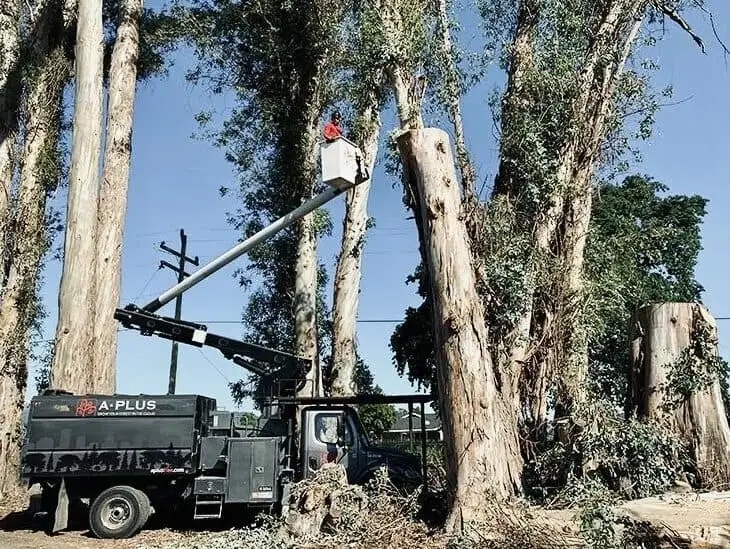
If you are unsure whether your tree is regulated, how far its decline has progressed, or which permit applies to your address, an assessment answers all three before you commit to anything. A Plus Tree’s certified arborists measure, identify, and document trees for permit applications every week across Seattle, Portland, and California.
Schedule a free tree assessment, and we will tell you what your tree needs, whether that turns out to be removal, preservation, or a permit application we handle for you.
Tree Removal Permit FAQs
How Much Does a Tree Removal Permit Cost?
Portland eliminated most tree permit fees in July 2025, so the permit itself is free there. Seattle and Los Angeles charge review fees, published on their current fee schedules.
How Long Does Permit Approval Take?
Simple approvals take two to six weeks. Los Angeles averages 90 to 120 days for protected and street tree removals, so build that window into any construction schedule.
Do You Need a Permit for Pruning?
Often, yes. Street trees and heritage trees usually require approval before major pruning, and heavy cuts on protected species may count as removal under city code.
Does an Arborist Need to Approve Removal?
Not always. Many cities accept owner applications, though hazard claims, protected species, and construction-related removals typically require a report from a certified arborist.
Can Permits Require Replacement Trees?
Yes. Portland, Seattle, and Los Angeles all require replanting for most approved removals, and Los Angeles applies a two-for-one policy on street trees.
Get a Free Tree Assessment — No Obligation
Tell us about your tree. One of our ISA Certified Arborists will review your situation and get back to you within 24 hours.