
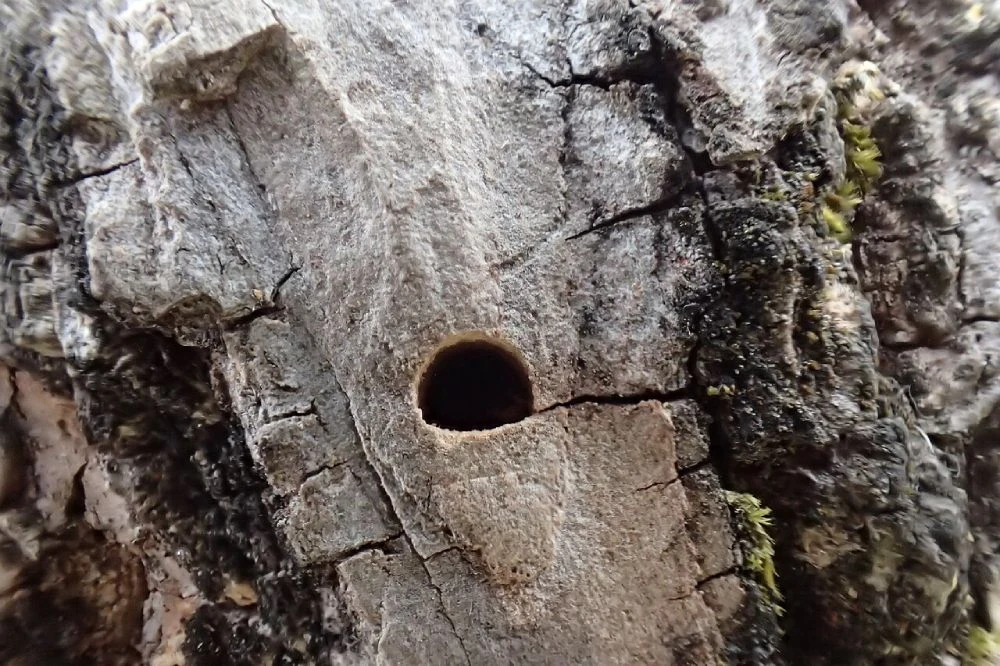
Fine strands of sawdust sticking out of a tree trunk can be a sign of ambrosia beetle activity. Finding them is unsettling, especially when the tree looked healthy a few weeks earlier. The next step is to identify what is happening before choosing a treatment.
Recognizing the damage, understanding which trees are vulnerable, and knowing the limits of treatment can help you protect the trees on your property. When the cause is uncertain, professional tree health care can connect visible symptoms with conditions affecting the whole tree. Start with the clues you can see from the ground.
How to Recognize Ambrosia Beetle Damage
Common signs of ambrosia beetle damage include tiny round holes, toothpick-like sawdust strands, bark staining, and wilting or dying branches. Symptoms vary by beetle and host tree, and several other problems can look similar.
| Observation | Possible significance | Limitation |
| Thin sawdust strands projecting from bark | A beetle is pushing material out as it tunnels | Strands can break off in wind or rain |
| Tiny round holes with fresh boring dust | Possible recent boring activity | Several insects make similar holes |
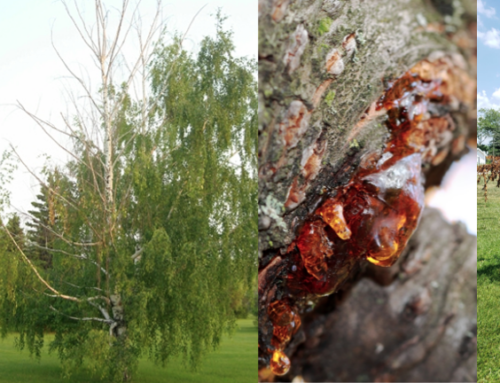
| Wet staining, sap, or gum around holes | A response to an attack or associated infection | Other injuries and diseases can look similar |
| Wilting, delayed leafing, or branch dieback | The tree is struggling to support affected growth | Root problems and other stresses can also cause decline |
Tiny Entry Holes and Toothpick-Like Sawdust Strands
Female beetles push excavated material out through their entry holes. With some species, including granulate ambrosia beetles, that material forms narrow, toothpick-like strands projecting from the bark. You may also find loose dust in bark crevices or near the trunk base.
Because strands can disappear after bad weather, check sheltered bark crevices as well as exposed areas. Photograph anything unusual before rain or routine yard work disturbs it. The absence of strands does not rule out an infestation.
Bark Staining, Wilting, and Branch Dieback
Some trees develop wet patches, dark staining, or sticky deposits around entry holes. Others show little outward response until foliage wilts or branches begin declining. The combination matters more than the color of a stain alone.
Look at where symptoms occur: one branch, the lower trunk, or several parts of the canopy. Record when you first noticed them and whether they are spreading. A stained trunk without clear boring evidence needs investigation rather than an automatic beetle diagnosis.
How Signs Differ from Other Tree Borers
Ambrosia beetles excavate tunnels within wood and cultivate fungi for food. Many other borers feed on tree tissues, while typical bark beetles make their galleries beneath the bark. Those differences affect both diagnosis and treatment.
Hole shape can help narrow the possibilities, but several insects leave round holes. Finding a small opening does not tell you which beetle made it, whether it is still present, or which product could help. An older hole can remain visible after the insect has gone.
Because treatment for other tree borers depends on the pest involved, avoid transferring a treatment recommendation from one insect to another. Leave bark cutting and wood sampling to someone qualified to interpret the findings. Ground-level photographs of the trunk, affected branches, and whole canopy give an arborist useful context without creating additional wounds.
Not sure if your tree needs professional attention?
A Plus Tree’s ISA Certified Arborists serve homeowners across the West Coast. A free assessment takes 15 minutes and gives you a clear answer.
What Are Ambrosia Beetles?
Ambrosia beetles are a group of small beetles that tunnel into wood and grow fungi as food. The name describes this feeding relationship, rather than a single species. Many species colonize dead or weakened wood, while some introduced species cause serious problems in living trees.
Adults are often brown or black and only a few millimeters long, although size varies. Both native and introduced species occur in the United States, so an ambrosia beetle is not automatically an invasive pest.
The ambrosia beetle life cycle includes egg, larva, pupa, and adult stages, with development taking place inside tunnels called galleries. Dispersing females establish new colonies. Activity often increases with warmer weather, but flight periods and the number of generations depend on species and climate.
How Beetles and Their Fungi Live Inside Trees
Think of the tunnels as small fungal gardens inside the wood. A female carries fungal spores into a new gallery, where the fungi provide food for the beetles and their developing young. The beetles excavate wood to create a suitable place for that food to grow.
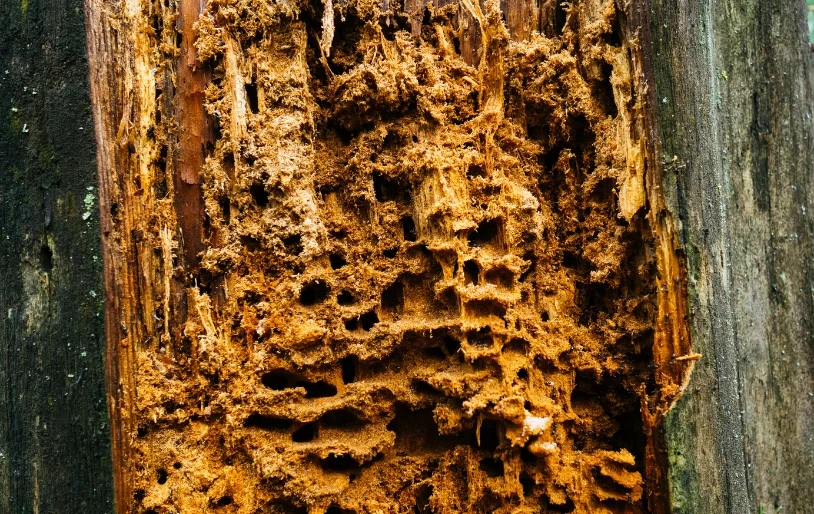
The consequences vary. Some beetles and their fungi mainly use already declining wood. Others introduce disease-causing fungi that damage the tree’s water-conducting tissue. Different beetle species carry different fungi, so identifying the insect helps clarify the disease risk.
What Trees Do Ambrosia Beetles Attack?
Ambrosia beetles can attack maples, oaks, dogwoods, redbuds, and many other woody plants. Susceptibility depends on the beetle species, location, and growing conditions. Being a possible host does not mean a tree will inevitably become infested.
Maples, Oaks, and Other Susceptible Landscape Trees
Reported hosts of granulate ambrosia beetles include Japanese maples, other maples, dogwoods, redbuds, flowering cherries, crape myrtles, and some oaks. Other ambrosia species have different host ranges. Even within a tree group, the response can vary: a beetle may enter one host without successfully reproducing, while another supports an established colony.
Oaks deserve particular care in diagnosis. Mediterranean oak borer, established in California and Oregon, carries the fungus Raffaelea montetyi, which can cause a wilt disease. This differs from classic oak wilt, caused by Bretziella fagacearum. The shared use of the word wilt can make two different problems sound interchangeable.
The distinction affects diagnosis and treatment of oak wilt. A declining oak needs an assessment of the insect, disease, and site conditions before a treatment is selected. An oak’s common name and a few entry holes are not enough to establish which disease, if any, is present.
Why Stressed and Newly Planted Trees Attract Beetles
Many damaging ambrosia beetles are attracted to ethanol released by stressed trees. Waterlogged roots, drought, cold injury, and physical damage can make a tree more vulnerable. The tree may still have green leaves when that stress begins, which helps explain why an attack can appear sudden.
Newly planted trees are adjusting to changes in their root system and growing environment. During that period, stress associated with tree transplant shock can increase susceptibility to opportunistic pests. Saturated planting holes and damaged roots deserve attention alongside any insects found on the trunk.
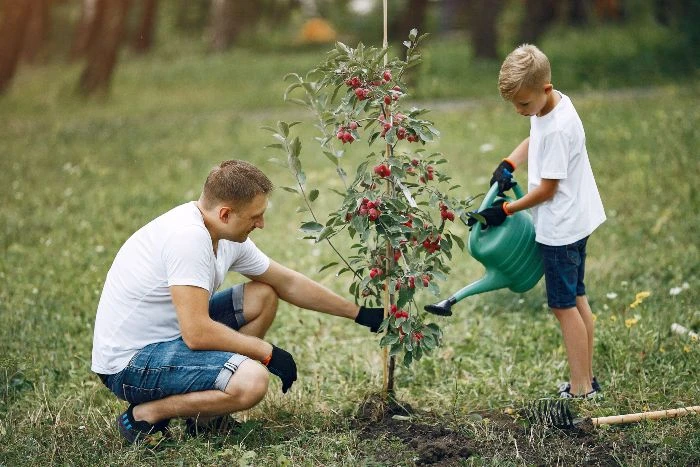
Consider what changed before the holes appeared. Recent planting, a drainage problem, or damage from nearby work may help explain why the tree became vulnerable. Sharing that history with an arborist supports a treatment plan that addresses both the infestation and the conditions contributing to it.
Why Some Species Also Attack Healthy Trees
Invasive shothole borers in California can colonize healthy trees and introduce fungi associated with Fusarium dieback. Good growing conditions remain valuable, but they do not provide complete protection against these pests.
A tree with a full canopy can therefore still warrant inspection when fresh boring evidence appears. Local pest information helps determine which trees need attention and whether the symptoms could involve one of these more aggressive species.
Can a Tree Survive Ambrosia Beetle Damage?
Some trees survive, but recovery depends on the beetle and fungi involved, the extent of the infestation, and the tree’s underlying condition. Visible damage alone cannot provide a reliable prognosis.
An arborist needs to determine whether the beetles are contributing to decline or colonizing a tree already struggling with another problem. A lightly affected tree with adequate remaining function presents a different situation from one with extensive trunk involvement and progressive canopy loss.
Continued growth can be encouraging, especially when decline has stabilized, but it needs to be considered alongside evidence of fresh attacks. Ask the arborist what improvement would look like for your tree and when it should be reassessed. New growth alone does not confirm that the infestation has ended.
What Are the Options for Ambrosia Beetle Treatment?
Ambrosia beetle treatment begins with identification and an assessment of how far the problem has progressed. Management may involve correcting stress, preventing new attacks where appropriate, treating a specific beetle and fungus problem, or removing affected material. The right combination depends on the diagnosis.
Confirm the Beetle Species and Assess the Tree’s Condition
An assessment should establish the likely pest, the extent of fresh activity, and the tree’s overall condition. Before a visit, gather:
- Photographs of affected bark and the whole canopy.
- The date you first noticed damage and any changes since then.
- Recent planting, irrigation, construction, or pruning history.
- Details of nearby trees showing similar symptoms.
For example, consider a recently planted Japanese maple with fresh boring dust and soil that stays wet between watering days. An arborist would investigate the insect activity while checking whether drainage or irrigation is compromising the roots. Treating one problem without addressing the other could leave the tree vulnerable.
A tree pest and disease assessment brings those findings together before treatment is selected. Photographs help with the initial discussion, although some identifications require a specimen or specialist examination.
When Treatments May Help and Where Their Limits Lie
For granulate ambrosia beetles, correctly timed preventive bark applications of labeled insecticides, such as certain permethrin or bifenthrin products, may reduce new attacks. Once beetles are established inside the wood, control becomes much more difficult. Routine systemic treatments used for other borers should not be assumed effective.
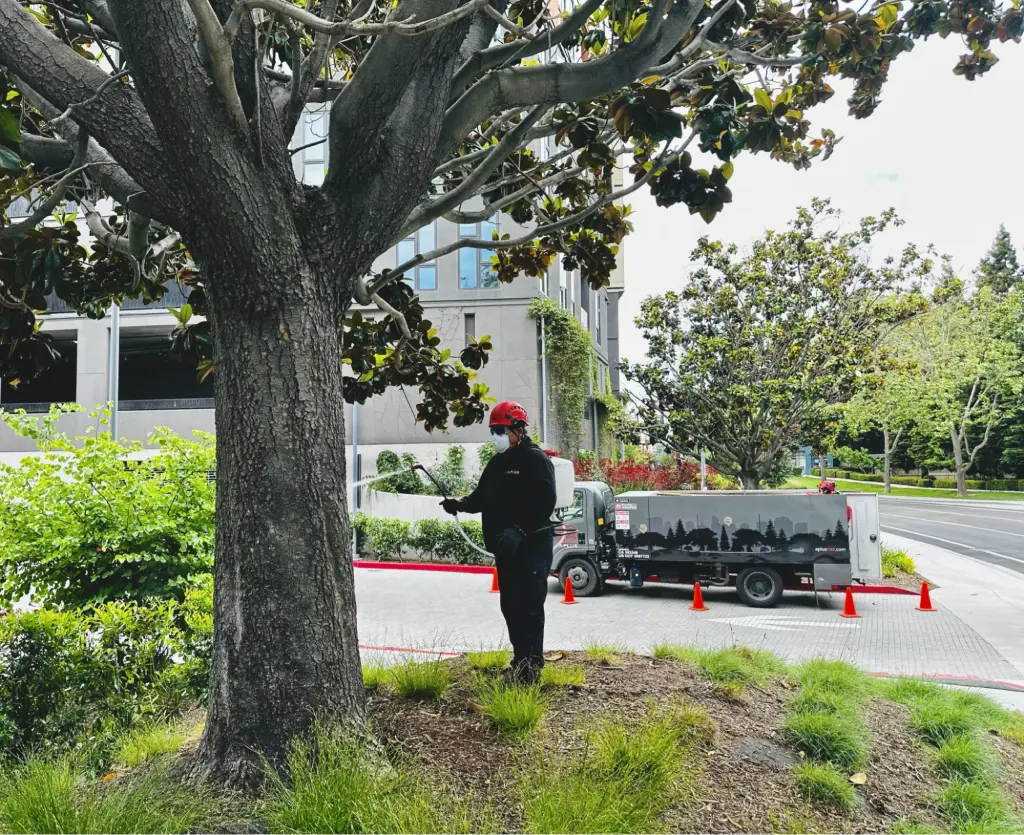
Management of invasive shothole borers requires different guidance. UUniversity of California recommendations include professional insecticide and fungicide treatments for some actively infested trees, depending on their condition and infestation level. Treating uninfested trees for these beetles is not recommended.
Ask what a proposed treatment is intended to achieve: prevent entry, reduce continuing attacks, or manage an associated disease. Product selection and timing must follow the identified pest, local conditions, and label requirements. A general borer spray recommendation cannot replace that assessment.
When Infested Branches or Trees Need Removal
When an infestation is limited to branches, selective removal may be appropriate for some pests and hosts. An arborist should decide whether pruning can remove the affected material while retaining enough healthy canopy and a sound tree structure. Extensive pruning can itself create stress, so removing every questionable branch is not a reliable strategy.
Whole-tree removal may become necessary when infestation and decline are extensive, preservation is unlikely to succeed, or weakened parts threaten people and property. Dead branches above a walkway and a compromised trunk beside a building require particular attention.
If the assessment supports removal, professional removal of the affected tree should include a plan for the infested material. Large branches and compromised trees are unsuitable for untrained removal work. Keep people away from suspect limbs while arranging an assessment.
How to Handle Infested Wood Without Spreading Beetles
Cutting down a tree does not necessarily kill the beetles inside it. Plan wood handling before pruning or removal so untreated material does not carry an infestation elsewhere.
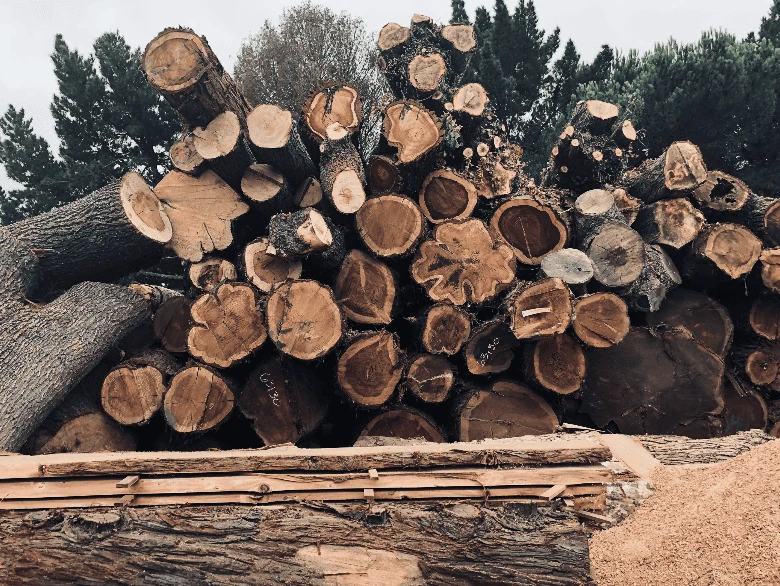
- Keep suspect material on site while arranging disposal. Avoid giving away logs as firewood or spreading untreated chips on another property.
- Confirm the required treatment. Ask your arborist or local plant-health authority about the identified pest. For invasive shothole borers, fine chipping may need to be followed by properly managed composting or solarization, which uses trapped solar heat to treat the material.
- Arrange contained transport when authorized. If an approved facility will handle treatment, follow local instructions for containment and delivery. Do not move an uncovered load.
Ordinary chipping alone should not be assumed to eliminate every beetle and fungus.
How to Reduce the Risk of Future Attacks
Prevention combines suitable growing conditions with early detection. Concentrate on the stresses you can correct and a monitoring routine suited to local pest activity.
Address Watering, Drainage, and Root Stress
heck the soil before changing irrigation. Wilting can occur when roots have too little water or when waterlogged soil limits root oxygen and function. Increasing watering without checking conditions can worsen the problem.
Use these practical checks:
- Feel the soil below the surface near the root zone, including the original root ball on a new tree.
- Adjust irrigation for rainfall and actual soil moisture rather than relying on a fixed daily schedule.
- Investigate standing water or a planting hole that stays saturated.
- Keep mulch away from direct contact with the trunk.
- Protect roots and bark from digging, compaction, mowers, and string trimmers.
Persistent moisture combined with declining foliage deserves closer attention to signs of overwatering in your trees. Correcting the cause of stress supports the tree, but it does not replace assessment of an established infestation.
Monitor Vulnerable Trees During Local Beetle Activity
Keep a simple record of the affected area and the whole canopy, using photographs from the same positions. Compare new observations with earlier images and tell your arborist about fresh activity or increasing decline.
Local extension guidance can help establish when to inspect more frequently. Do not assume that a spray date or flight period recommended in another state applies to your property.
Traps can help professionals detect activity and time management measures for particular species. They complement tree inspections, but they cannot cure an established infestation. Their usefulness depends on the target beetle, lure, and placement.
Frequently Asked Questions
Can I Plant a New Tree Where an Infested Tree Was Removed?
Replanting may be possible after addressing site stress and remaining pest activity. Ask which replacement species suits the location; there is no universal waiting period.
Could a Newly Purchased Tree Already Have Ambrosia Beetles?
Yes, nursery trees can be infested before purchase. Discuss suspicious stock with the nursery before planting; damage discovered later does not establish when the attack began.
Should I Report a Suspected Ambrosia Beetle Infestation?
Contact your local extension office or plant-health authority if you suspect an invasive species, especially outside its known range. Reporting guidance depends on species and location.
Get Help Assessing Your Trees with A Plus Tree
Recognizing ambrosia beetle damage early gives you a clearer starting point, but the right response depends on what is happening inside the tree and around its roots. If symptoms are spreading or you are unsure what caused them, our team can assess the tree and discuss appropriate next steps.
Contact A Plus Tree with your observations and concerns. We can help you understand whether monitoring, treatment, or removal is appropriate for your situation.
Get a Free Tree Assessment — No Obligation
Tell us about your tree. One of our ISA Certified Arborists will review your situation and get back to you within 24 hours.