
Spring is one of the best times to plant new trees, but only if you do it right. Planting trees in spring gives roots time to establish before summer heat arrives, and it takes advantage of cooler soil temperatures and natural rainfall. Done correctly, a spring-planted tree can thrive for decades. Done poorly and you’re fighting transplant shock all season.
This guide covers everything you need to know: when to plant, what to plant, and how to give your tree the best possible start. If you’d rather skip the guesswork and have professionals handle it, A Plus Tree’s tree planting and transplanting services are available across California, Oregon, and Washington.
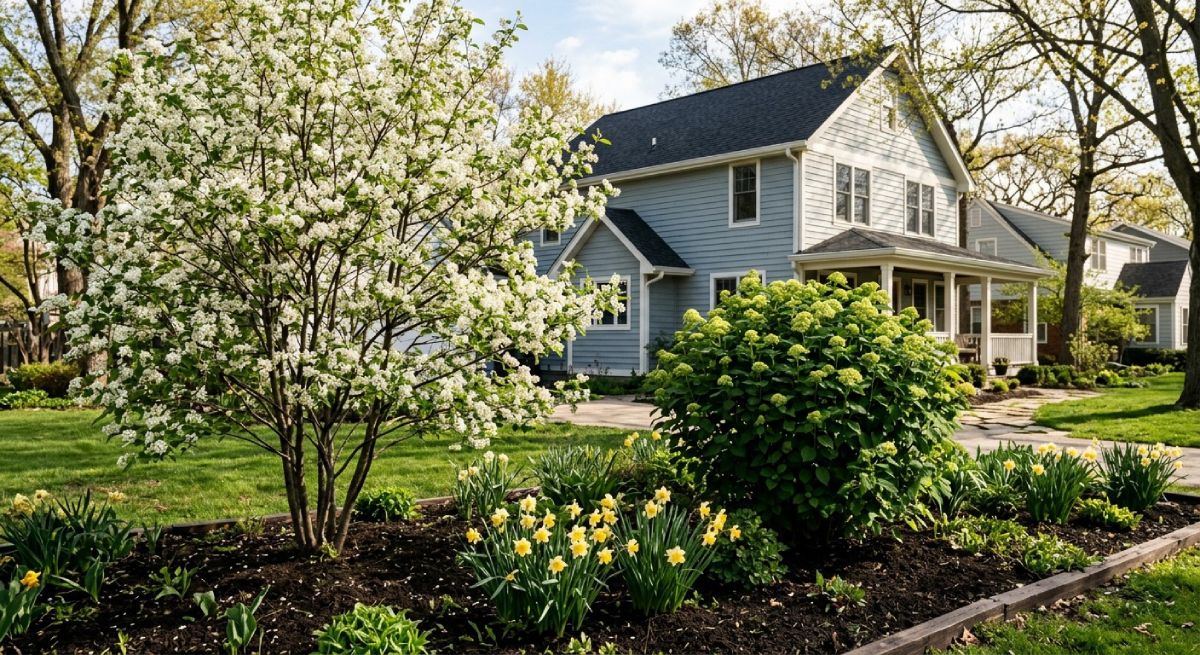 Source: Plant by Number
Is Spring a Good Time to Plant Trees?
Can you plant trees in the spring? Yes — with some important caveats.
Spring tree planting works well because the soil warms up, moisture levels are naturally higher, and trees come out of dormancy, ready to push new growth. Roots establish more easily in cool, moist conditions than in the heat of summer. That combination gives a newly planted tree a window to get anchored before the stress of summer kicks in.
The caveat is timing. Plant too early and you’re working in frozen or waterlogged soil. Plant too late and you’re sending a tree into the ground right as temperatures spike, setting it up for heat stress before the roots have found their footing.
Additionally, spring planting requires a commitment to watering through summer. The tree must establish a new root system while heat and drought are ramping up, which requires consistent irrigation, not just an occasional drink.
Spring is a good time to plant trees, as long as you’re aware of what the tree will need in the months after it goes in the ground.
Not sure if your tree needs professional attention?
A Plus Tree’s ISA Certified Arborists serve homeowners across the West Coast. A free assessment takes 15 minutes and gives you a clear answer.
Spring vs. Fall Tree Planting: Which Is Better?
The right answer depends on your species, your site, and your climate.
Fall planting has an edge in many climates because the tree goes dormant shortly after planting, which reduces stress. Roots continue to grow through fall and into early winter, building establishment before spring growth begins. Summer heat is no longer a factor.
Spring planting has its own advantages, especially on the West Coast. In California, Oregon, and Washington, springs tend to be cool and wet, which are ideal conditions for root establishment. Spring planting also allows the tree leaf out and confirm it’s healthy before summer arrives, rather than waiting all winter to find out.
Generally speaking:
- Spring is better for bare-root trees (which must go in the ground while dormant) and for regions with mild summers
- Fall is better for container or balled-and-burlapped trees in areas with harsh summers
- Both work for most container-grown trees when planted properly and watered consistently
Neither season saves you from bad technique. Poor planting depth, inadequate watering, or a mismatched site will cause problems regardless of when the tree goes in.
When to Plant Trees in Spring
Timing is one of the most overlooked parts of spring tree planting. Planting a week too early or late can meaningfully affect how well a tree establishes.
The general rule: plant after the last frost but before temperatures consistently exceed 80°F. You want the soil workable and warming — not frozen, not waterlogged, and not already baking.
Best Spring Planting Window by Region (California, Oregon, Washington)
| Region | Ideal Planting Window | Notes |
|---|---|---|
| Northern California (Bay Area, Sacramento) | Late February – April | Mild winters allow early planting; watch for late frost inland |
| Southern California | January – March | Heat arrives early; earlier planting is better |
| Central Valley, CA | February – March | Summer heat comes fast; don’t delay |
| Oregon (West of Cascades) | March – May | Cool, wet springs are ideal; soil may be slow to drain |
| Oregon (East of Cascades) | April – May | Higher elevation and colder winters push timing later |
| Western Washington | March – May | Long mild springs give a good window; watch for late rain |
| Eastern Washington | April – May | Similar to Eastern Oregon; cold winters delay planting |
These are general windows. Actual timing should account for your specific elevation, microclimate, and the species you’re planting.
When Spring Planting Is Too Late
When is it too late to plant trees in spring? As a rule of thumb, once soil temperatures are consistently above 60°F and daytime highs are regularly hitting 80°F or more, your tree is at risk. At that point, a tree going into the ground is immediately fighting heat stress and elevated water demand before its root system is established.
For most of the West Coast, that window closes sometime in May or June, depending on your location. If you’ve missed the spring planting window, wait until fall. A well-timed fall planting will generally outperform a late-spring one.
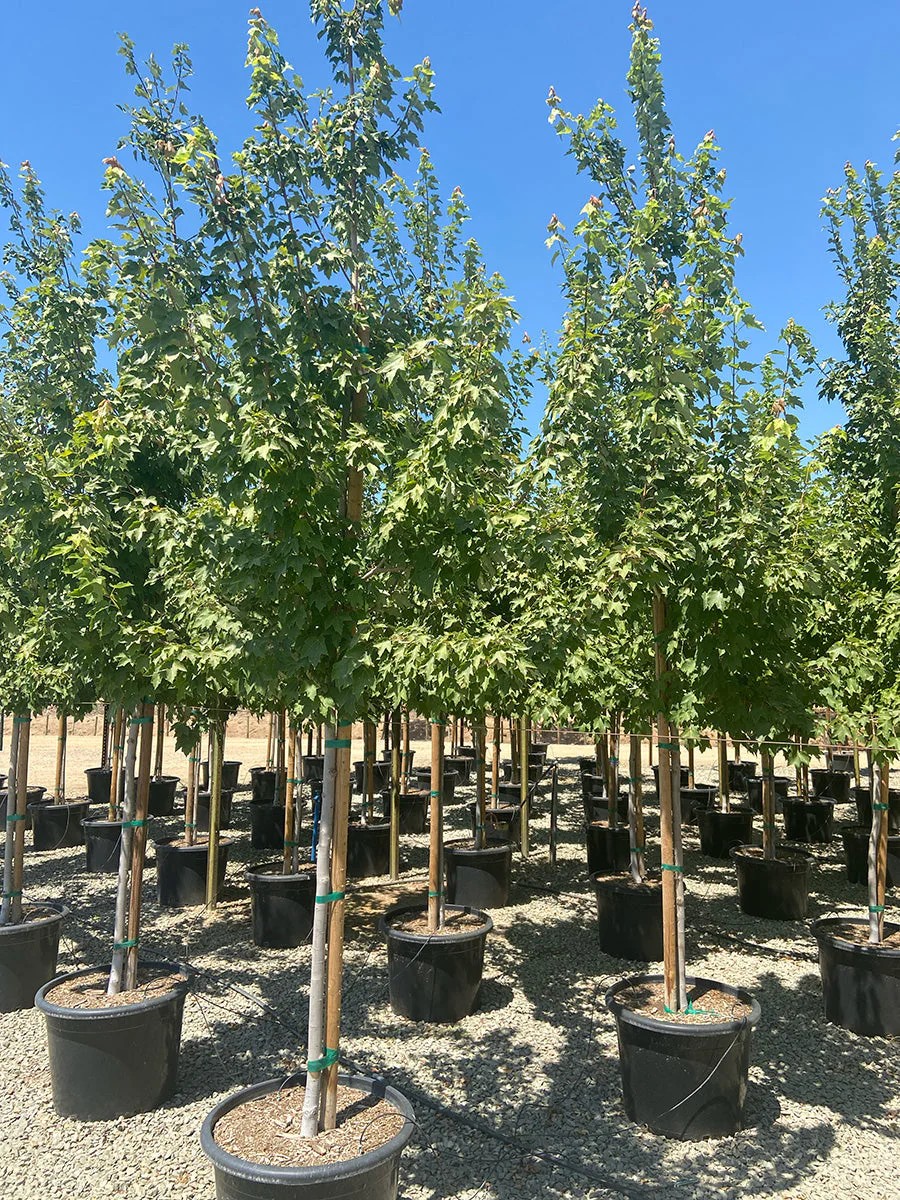
Source: Yardwork
Check Your Site Before Planting (What the Pros Look For)
Where you plant matters as much as when. A tree in the wrong location is going to struggle no matter how well you plant it.
Site Conditions That Affect Tree Survival
Before putting a tree in the ground, evaluate:
Drainage. Dig a hole about 12 inches deep and fill it with water. If it drains within an hour, the soil is draining properly. If water is still sitting there several hours later, you have poor drainage, and most trees will develop root rot in those conditions. Either select a species that tolerates wet soil or improve drainage before planting.
Sun exposure. How many hours of direct sun does the site get? Full sun means 6+ hours; partial shade means 3–6; deep shade means fewer than 3. Matching the tree’s light needs to the site is non-negotiable.
Soil type. Clay soils drain slowly and compact easily. Sandy soils drain fast and don’t retain moisture. Loam is the sweet spot. Know what you’re working with before you choose your species.
Overhead and underground utilities. A tree planted under power lines or over a sewer line can quickly become a problem. Check before you plant.
Wind exposure. Exposed, windy sites add stress to newly planted trees. You may need staking or a more wind-tolerant species.
Planning for Mature Size, Root Space, and Long-Term Health
One of the most common planting mistakes: choosing a tree for how it looks at the nursery without accounting for how large it grows. A 6-foot sapling can become a 60-foot tree. That’s a problem if it’s 10 feet from a structure.
Think about:
- Mature height and canopy spread — give the tree room to grow
- Root zone — roots typically spread 2-3 times the canopy width, needing permeable soil
- Proximity to structures — buildings, fences, driveways, and patios can all be damaged by roots or falling limbs at maturity
- Long-term goals — shade, screening, fruit production, wildlife habitat? Choose the species accordingly
If you’re unsure, an arborist consulting visit can save you from a costly mistake down the road.
Choosing the Right Tree for Spring Planting
Not all trees establish themselves equally well in spring. Some are well-suited to spring planting; others are more well-adapted to be planted in the fall. Here’s a comparison of how common types perform.
| Tree Type | Spring Planting Suitability | Notes |
|---|---|---|
| Deciduous shade trees | Excellent | Good spring growth response; establish well with moisture |
| Ornamental flowering trees | Excellent | Great visual confirmation of health post-planting |
| Conifers | Good | Plant early in spring while soil is still cool |
| Native oaks (CA/OR/WA) | Good | Plant early; avoid summer watering once established |
| Fruit trees | Good | Bare-root fruit trees ideal in late winter/early spring |
| Evergreen broadleafs | Fair | More sensitive to heat stress; plant early or wait for fall |
| Palms | Fair | Prefer warm soil; late spring planting works in Southern CA |
Matching Species to West Coast Conditions
The West Coast is not one climate, it’s dozens. Species selection needs to account for your specific region.
For California: Coast Live Oak, California Buckeye, Western Redbud, and Toyon are all excellent native choices adapted to long dry summers. In more urban or irrigated settings, many fruit trees and ornamental species also do well.
For Oregon and Washington: Vine Maple, Big-Leaf Maple, Oregon White Oak, Pacific Dogwood, and Western Red Cedar are solid natives. Non-native options like Japanese Maple, Serviceberry, and most conifers also perform well given the mild, wet springs.
The general principle: whenever possible, favor species native to your region or drought-adapted varieties. They’re built for your climate and will need less intervention once established.
Bare-Root Trees
Bare-root trees are sold and planted while dormant without soil around the roots, just the root system itself. They’re typically available in late winter and very early spring, and they need to go in the ground before buds break. Miss that window and you’re in trouble.
The upside: bare-root trees are cheaper, establish quickly, and are often available in a wider range of species and varieties. The downside: the planting window is narrow and the trees are more vulnerable if planted incorrectly.
Container-Grown Trees
Container trees are the most forgiving and the most widely available. They can be planted almost any time the ground isn’t frozen, though spring and fall are still preferred. The root ball stays intact and the tree doesn’t experience as much transplant shock.
Watch out for circling or girdling roots on container trees — roots that have been constrained by the container and started wrapping around themselves. These need to be corrected at planting or they’ll become a structural problem at maturity.
Balled-and-Burlapped Trees
Balled-and-burlapped (B&B) trees are field-grown, then dug with a soil ball that’s wrapped in burlap for transport. They’re common for larger caliper trees that would be impractical to container-grow.
B&B trees are heavier and require more care at planting, because the burlap and wire basket need to be removed or pulled back once the tree is in the hole. Leaving them on can restrict root growth and cause long-term decline.
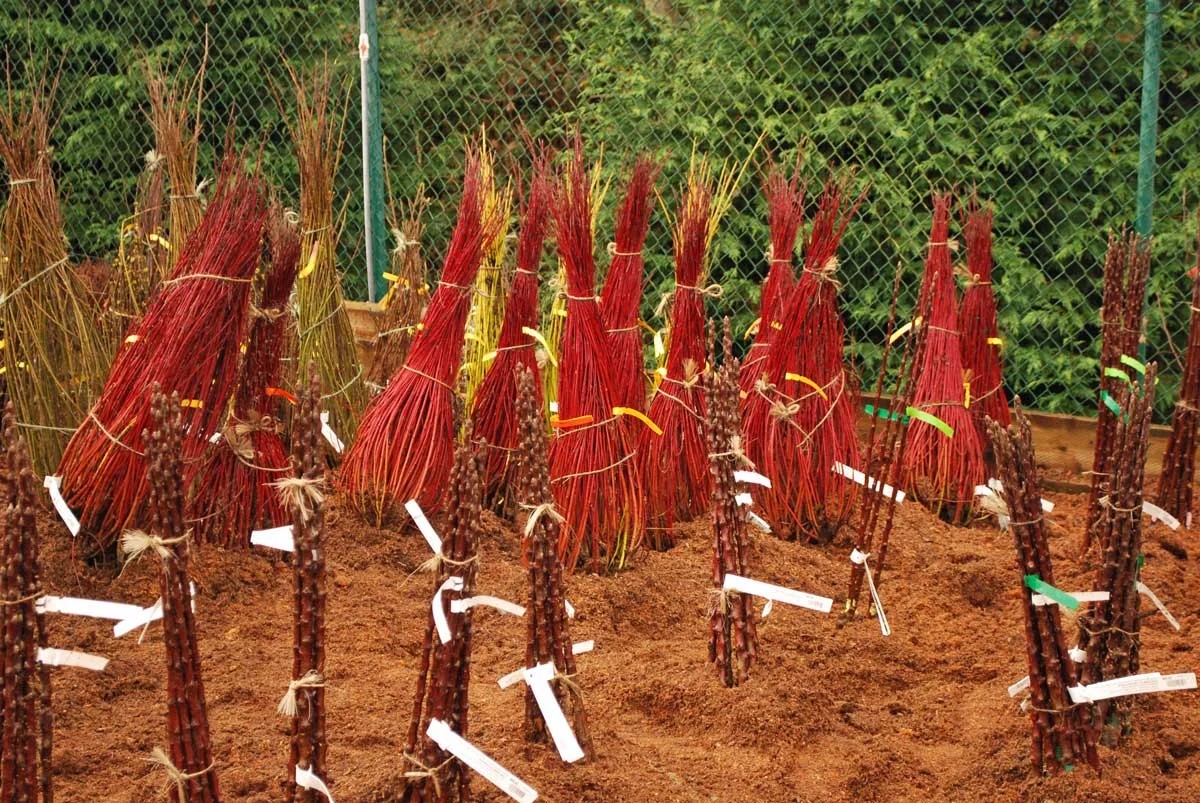
Source: Swanson’s Nursery
How to Plant a Tree in Spring
Good technique at planting time is what separates trees that thrive from trees that limp along for years and never quite take off.
Spring Tree Planting Checklist
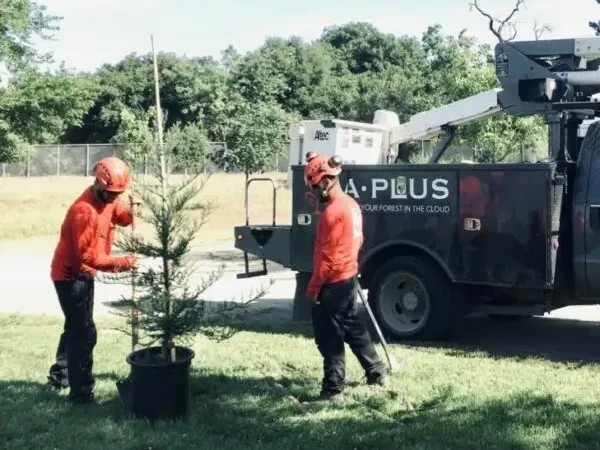
- Call 811 before digging to check for underground utilities
- Test drainage at the planting site before you start
- Gather tools: shovel, wheelbarrow, mulch, hose or irrigation
- Locate the root flare before placing the tree in the hole
- Dig a wide, shallow hole (2-3x the root ball width, same depth)
- Remove container, burlap, or wire basket
- Set the tree so the root flare sits at or slightly above grade
- Backfill with native soil (no amendments)
- Water deeply immediately after planting
- Apply 3–4 inches of mulch in a wide ring, keeping it off the trunk
Source: A Plus Tree LLC
Prepare the Planting Area
Clear the planting area of turf, weeds, and debris. Grass is a major competitor for young trees — removing it in at least a 3-foot radius around the trunk makes a measurable difference in establishment speed.
If the soil is heavily compacted, break it up in a wide area around the planting hole. Compaction restricts root spread, so loosening a larger zone gives the tree more room to push outward.
Dig a Wide, Shallow Hole
The hole should be 2-3 times as wide as the root ball, but no deeper than the root ball itself. Most people dig too deep, but a hole that’s too deep can bury the root flare and cause long-term decline.
Roots grow outward, not downward. A wide hole breaks up compacted soil and makes it easier for lateral roots to spread into the surrounding area.
Find the Root Flare
The root flare is where the trunk transitions into the root system, where there is visible widening at the base of the tree. It should be at or slightly above finished grade when the tree is planted.
On many nursery trees, the root flare has been buried in the container. You may need to remove excess soil to find it. If it’s buried at planting, the tree is too deep, which is one of the most common causes of slow decline and eventual tree death.
Backfill and Water Thoroughly
Backfill with the native soil you removed rather than adding amendments to the planting hole. Amended backfill can create a “bathtub effect” where water collects in the hole rather than draining outward. Native soil encourages roots to grow beyond the hole and into the surrounding ground.
Tamp lightly in layers to eliminate large air pockets, but don’t compact heavily. Water thoroughly immediately after planting. This settles the soil around the roots and is the single most important thing you can do after planting.
Mulch Without Covering the Trunk
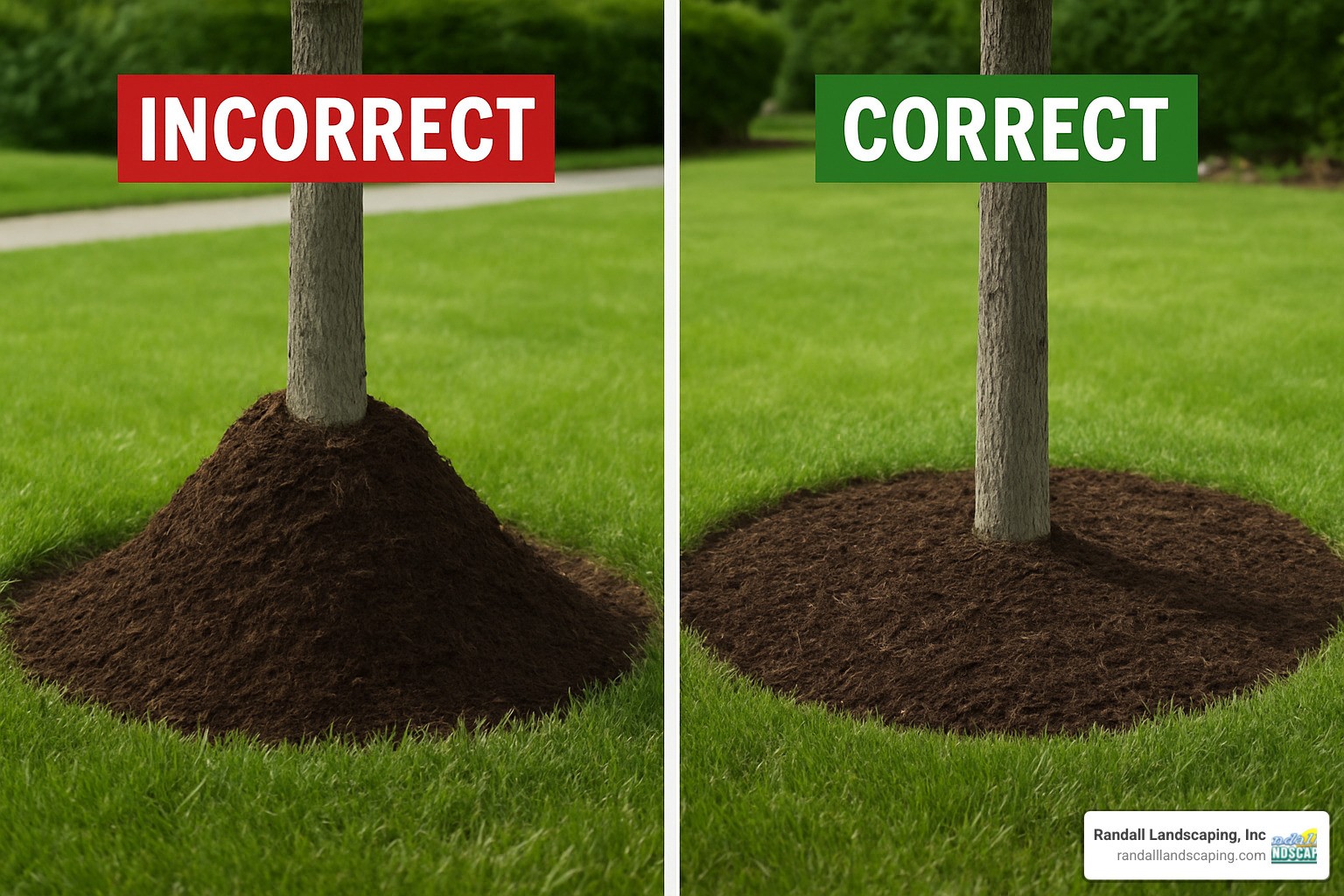
Apply 3-4 inches of mulch in a wide ring around the tree, starting a few inches away from the trunk. A 3-4 foot radius is minimum; wider is better for young trees.
Do not pile mulch against the trunk. “Mulch volcanoes,” the mounded mulch rings often seen around trees, hold moisture against the bark, invite pests and disease, and encourage roots to grow up into the mulch layer rather than down into the soil. Keep the trunk base clear.
Source: Randall Landscaping Inc.
Caring for Newly Planted Trees and Avoiding Common Mistakes
Planting is only the beginning. The first growing season is critical, and the decisions you make in the months after planting have a huge impact on long-term tree health.
For more detail, A Plus Tree’s guide to best practices for newly planted trees covers post-planting care in depth.
Watering Schedule: Too Little vs. Too Much
Overwatering and underwatering look similar, as both cause wilting, yellowing leaves, and poor growth. This can make diagnosis tricky, but the difference is in the soil. Check moisture a few inches below the surface before you water. If it’s still moist, wait. If it’s dry, water deeply.
A general schedule for newly planted trees:
- Weeks 1-2: Water every day or every other day
- Weeks 3-12: Water 2-3 times per week
- After 12 weeks: Taper to once per week, adjusting for heat and rainfall
Always water slowly and deeply. A slow trickle at the base for an extended period is far more effective than a quick spray. A deep watering service ensures water reaches the root zone, not just the surface.
Volume matters too. A general rule is 1–1.5 gallons of water per inch of trunk diameter per watering. Small trees need less; larger trees require more.
Mulching and Soil Protection
Mulch is your best tool for retaining soil moisture, moderating temperature, and suppressing weeds, all of which help a newly planted tree get through its first summer. Reapply as it breaks down, and maintain that trunk-free zone throughout the establishment period.
Managing Summer Heat and Drought Stress
Spring-planted trees don’t have a fully established root system when summer heat arrives. That’s the inherent challenge of spring planting. To bridge that gap:
- Water consistently through June, July, and August. Don’t slack off when the tree looks fine
- Avoid fertilizing in the first year; it pushes top growth when you want root growth
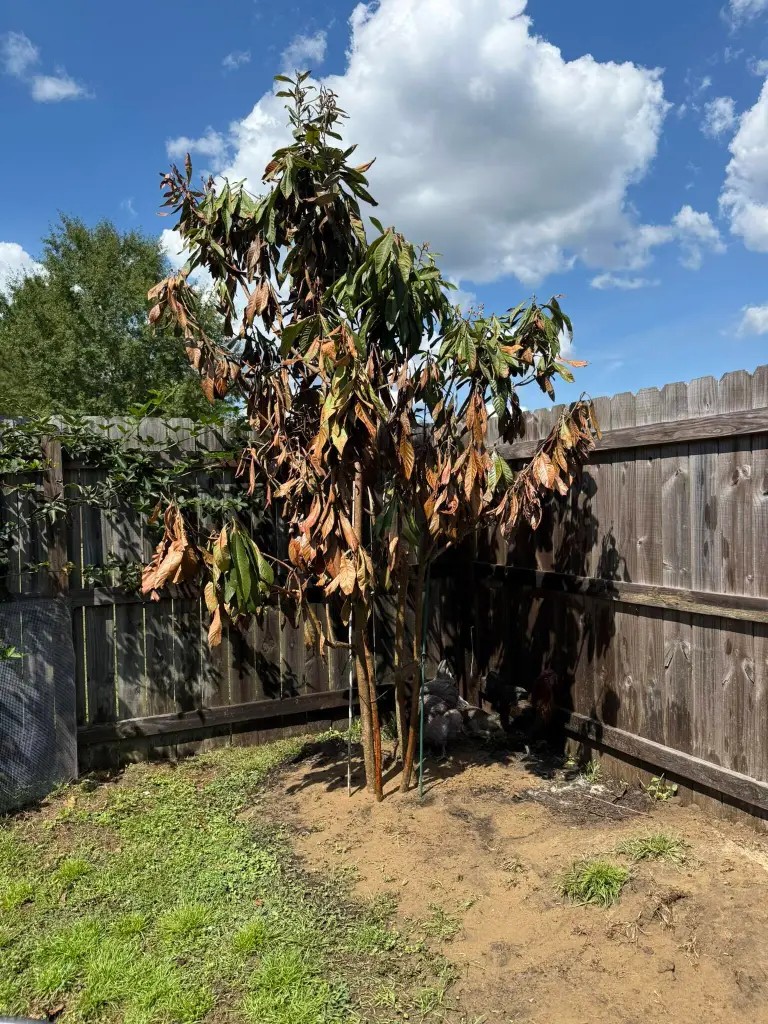
- Watch for signs of heat stress: leaf scorch, wilting in the afternoon, premature leaf drop
Consistent, adequate irrigation is the single biggest factor in getting a spring-planted tree through its first summer.
Recognizing Transplant Shock
Transplant shock can be a normal response to being moved and having its root system disrupted. Symptoms include wilting, yellowing leaves, reduced leaf size, and slowed growth. Most trees move through it within a season if watered and cared for properly.
Severe transplant shock, with symptoms of significant leaf drop, dieback on branches, and no new growth, warrants a closer look. It could be a watering issue, a planting depth problem, or sometimes even a root defect. If a newly planted tree looks like it’s failing, it’s worth having an arborist assess it. Learn more about identifying and addressing tree transplant shock on our site.
Planting Too Deep and Other Frequent Errors
Planting depth is the number one mistake arborists see. Bury the root flare and the tree will slowly decline over years. By the time the problem is obvious, it’s often too late to easily fix.
Other common errors:
- Leaving the wire basket or burlap on B&B trees — restricts root development
- Watering on a schedule instead of based on soil moisture — leads to overwatering in cool weather and underwatering in heat
- Planting too close to structures — creates future liability
- Staking too tightly — prevents the trunk from developing natural taper and strength; if you stake, remove stakes after the first season
- Fertilizing at planting — pushes top growth at the expense of root establishment
Source: A Plus Tree LLC
Final Takeaway: Plan for Summer, Not Just Planting Day
Planting trees in spring is about more than getting a tree in the ground before it gets warm. It’s about setting up a tree to survive its first summer, which means choosing the right species for your site, nailing your timing, planting at the correct depth, and committing to a watering schedule that lasts through the heat.
The trees that fail after spring planting don’t usually fail in April. They fail in July and August, when water demand peaks and a root system that never got properly established can’t keep up. Do the work right in spring, stay on top of irrigation through summer, and your new tree has every reason to thrive.
If you want professional help at any stage, from site assessment to planting to summer tree health care, A Plus Tree’s ISA Certified Arborists are available throughout California, Oregon, and Washington.
Ready to plant? Learn how to plant a tree step by step →
FAQ About Planting Trees in Spring
What Trees Are Best to Plant in Spring?
Most deciduous trees and ornamental flowering trees are excellent candidates for spring planting. In California, consider native species such as Coast Live Oak and Western Redbud; in Oregon and Washington, Vine Maple, Pacific Dogwood, and Oregon White Oak.
How Often Should You Water a Newly Planted Tree in Spring?
In the first two weeks, water daily or every other day. From weeks 3 through 12, scale back to 2-3 times per week. After that, water deeply once a week through summer.
Should You Fertilize a Tree Right After Planting?
Skip fertilizer in the first year. After the first year, a soil test can tell you whether amendments are actually needed.
Can Newly Planted Spring Trees Survive Summer Heat?
Yes, but only with consistent irrigation. However, because their roots are not yet fully established, it requires regular deep watering until roots are established.
Get a Free Tree Assessment — No Obligation
Tell us about your tree. One of our ISA Certified Arborists will review your situation and get back to you within 24 hours.