
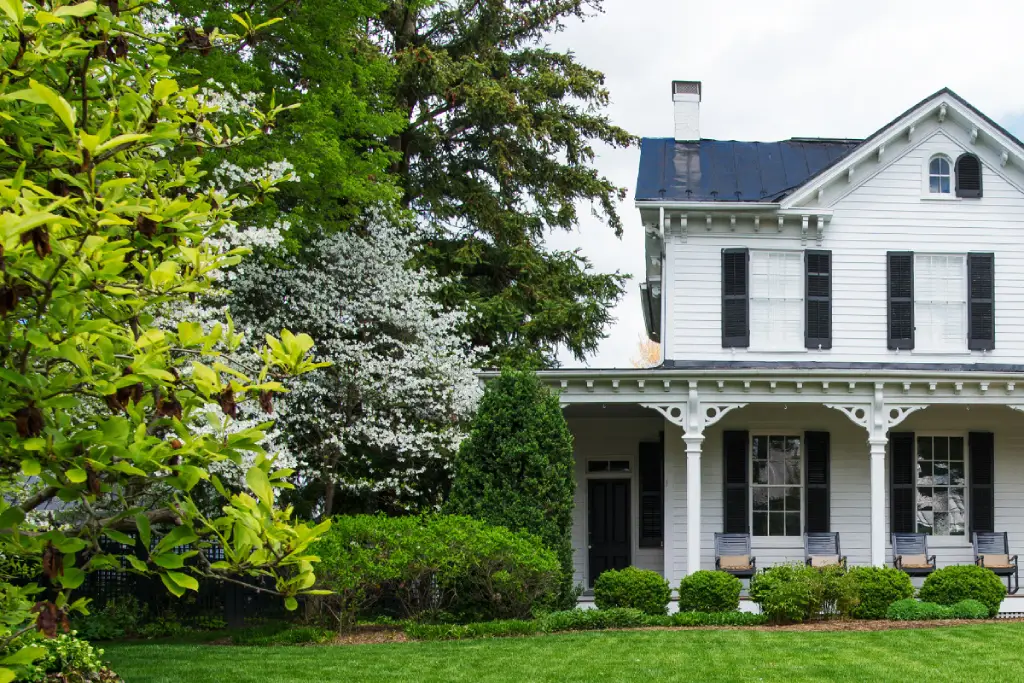
There is a moment most homeowners recognize. You planted that tree thinking it would add some shade to the yard, and now it is pushing against the roofline, creeping toward power lines, or sending roots in directions you never planned for. The instinct to do something about it is completely reasonable.
The good news is that there are real, professional tree pruning and trimming methods for managing a tree’s size and growth rate without removal being the only option on the table.
This guide walks you through how to stop a tree from growing, or more precisely, how to slow, shape, and manage its growth in ways that protect both the tree and your property. You will learn which methods are safe, which ones cause lasting damage, and when a professional assessment is the smartest next step.
Quick Answer: Can You Actually Stop a Tree’s Growth Without Removing It?
The short answer is no, not completely. A living tree will always try to grow. That is the nature of the organism. But the more useful question is whether you can meaningfully reduce that growth to a manageable level, and the answer to that is yes, with the right approach.
Think of it like managing a vine on a trellis. You are not changing what the plant wants to do. You are redirecting and limiting how far it goes. Mature trees respond similarly to well-executed pruning, tree growth regulators, and structural interventions. The key word there is well-executed. Poor technique does not slow growth so much as damage the tree and create new problems down the road.
How to stop a tree from growing without killing it starts with understanding that healthy management and aggressive intervention are not the same thing. A stressed or wounded tree often accelerates regrowth as a survival response. The goal is to work with the tree’s biology and support that process carefully.
Not sure if your tree needs professional attention?
A Plus Tree’s ISA Certified Arborists serve homeowners across the West Coast. A free assessment takes 15 minutes and gives you a clear answer.
Professional Methods to Limit Tree Size
Managing tree size effectively is not a single action. It is a program of care built around the specific tree, the site, and what outcomes actually matter to the property owner. At A Plus Tree, we evaluate each situation before recommending any course of action, because the right method depends on species, age, health, and proximity to structures.
Here is what that program typically includes.
Strategic Pruning: Crown Reduction vs. The Dangers of Topping
Crown reduction is the professional standard for reducing tree height and spread while preserving structural integrity. The approach involves cutting branches back to a lateral branch that is at least one-third the diameter of the limb being removed. This gives the tree a natural-looking shape and leaves it with enough foliage to sustain itself through photosynthesis.
Topping takes a fundamentally different approach: it involves cutting the main trunk or large branches at an arbitrary height, leaving stubs with no lateral branch to redirect growth. Many homeowners associate topping with size control, but it is one of the most harmful practices in tree care.
Topped trees are forced to push dozens of weakly attached, fast-growing water sprouts from the wound sites. The result is a tree that grows back faster, with weaker structure, and is far more likely to fail during a storm.
Here is what this looks like in real life: a homeowner tops a large oak to clear it from their roof. Within two seasons, the tree has produced a dense flush of vertical shoots that are taller than the original cut point and attached to the tree with minimal structural strength. Within five years, the problem is worse than before, and the tree has been seriously compromised.
Reducing tree height safely requires proper crown reduction by a certified arborist. That is the approach we use, and it is the one that actually works long-term.

Plant Growth Regulators (PGRs): Science-Based Stunting
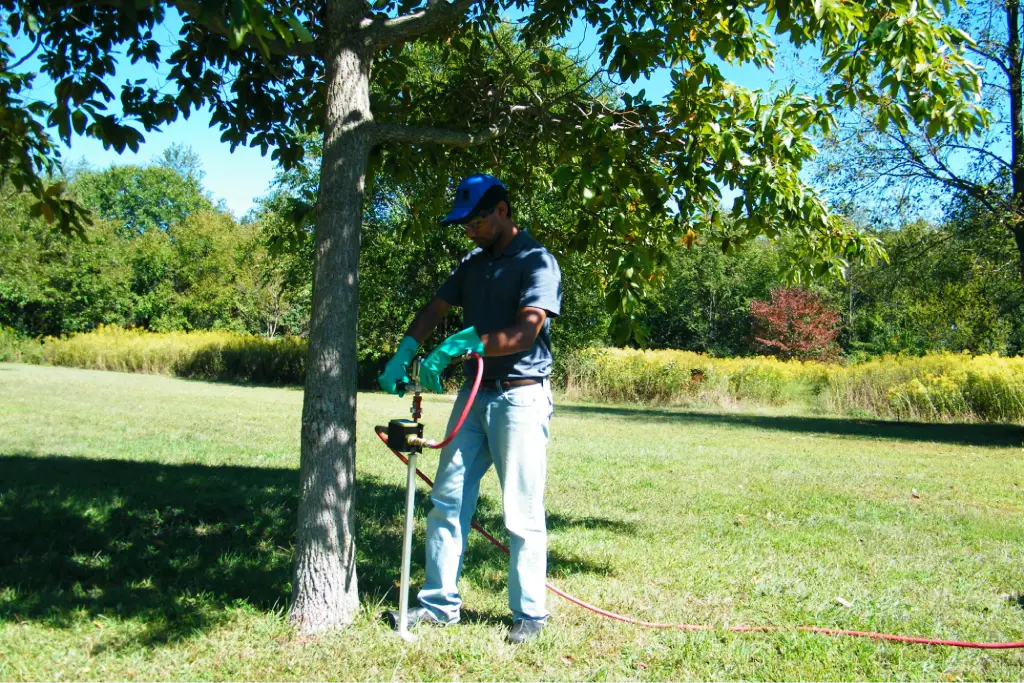
Plant growth regulators (PGRs) are soil-applied treatments that reduce a tree’s production of gibberellins, the hormones responsible for shoot elongation. When applied correctly by a licensed professional, PGRs can reduce annual growth by 50 to 80 percent for up to three years, depending on the species and site conditions.
PGRs are particularly useful for trees in sites where repeated pruning is impractical, such as near power lines, over structures, or in areas with difficult access. They are not a permanent solution, but they are a meaningful tool when used as part of a broader management plan.
One thing worth clarifying: PGRs are not herbicides, and they do not harm the tree when applied at the correct rate. In many cases, trees treated with PGRs actually show improved root health and drought tolerance because more of the tree’s energy is redirected below ground. A trained applicator and proper soil injection technique matter here. This is not a product to apply from a garden center shelf.
Root Containment and Structural Barriers
When surface roots or spreading roots are the primary concern, physical root barriers can redirect growth before it reaches a foundation, driveway, or utility line. That kind of encroachment can escalate into broader tree root damage issues if it is ignored. These are typically high-density polyethylene panels installed vertically in the soil, creating a boundary that root tips cannot easily penetrate.
Root barriers work best as a preventive measure during or shortly after planting. Installing them around an established tree with an already-extensive root system is far less effective and sometimes impossible without causing significant root damage. If roots have already reached a structure, the conversation shifts from containment to assessment and removal decisions.
How to Stop a Tree Stump from Re-Sprouting
Cutting a tree down does not always resolve the situation. Many species, particularly those with vigorous root systems like willows, cottonwoods, elms, and certain oaks, will push new shoots from the stump and surrounding roots almost immediately after removal. Understanding why tree stumps grow back makes the control options much clearer.
Why Stumps Resprout (The Survival Mechanism)
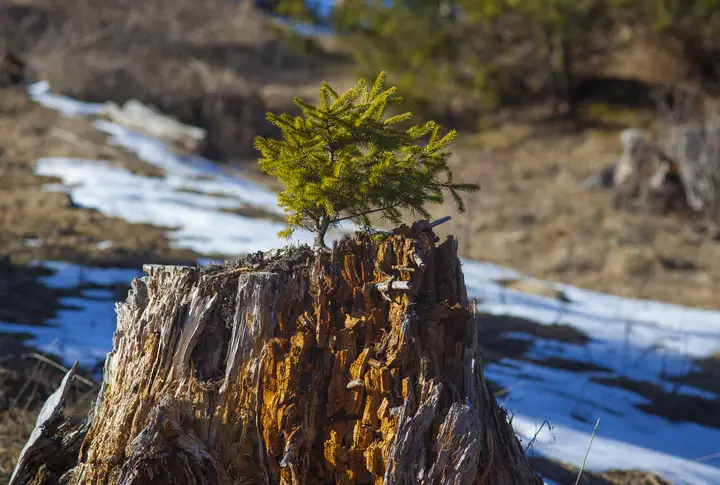
When a tree is cut, the root system still contains a significant reserve of stored energy in the form of carbohydrates. The tree interprets the sudden loss of its canopy as a critical threat and activates dormant buds at the stump surface and along shallow roots. This is not random regrowth. It is a coordinated survival response, and it can be surprisingly vigorous.
Some species can send up multiple shoots per week during the growing season if left untreated. The goal of stump sprouting is to re-establish a canopy and resume photosynthesis as quickly as possible. Until that stored energy is depleted, the root system will keep trying.
Chemical vs. Organic Stump Inhibition
The most reliable way to stop how a tree stump grows back is to treat the freshly cut surface immediately after removal. Herbicide-based stump treatments containing triclopyr or glyphosate are applied directly to the outer ring of the cut surface, where the vascular tissue is most active. Timing matters significantly here. Waiting even a few hours can reduce absorption and effectiveness.
For those who prefer to avoid chemical applications, two organic approaches show real-world results. First, persistent manual removal of all new sprouts as they appear will eventually exhaust the root system’s stored energy, though this process takes one to three growing seasons depending on species and root mass. Second, covering the stump with a light-blocking material can slow resprouting, though it rarely stops it entirely for vigorous species.
The honest expectation to set is this: no organic method matches the speed or reliability of a properly timed herbicide treatment on a freshly cut stump. If complete elimination of regrowth is the priority, a chemical approach is the more direct route.
When Total Stump Grinding is the Only Permanent Solution
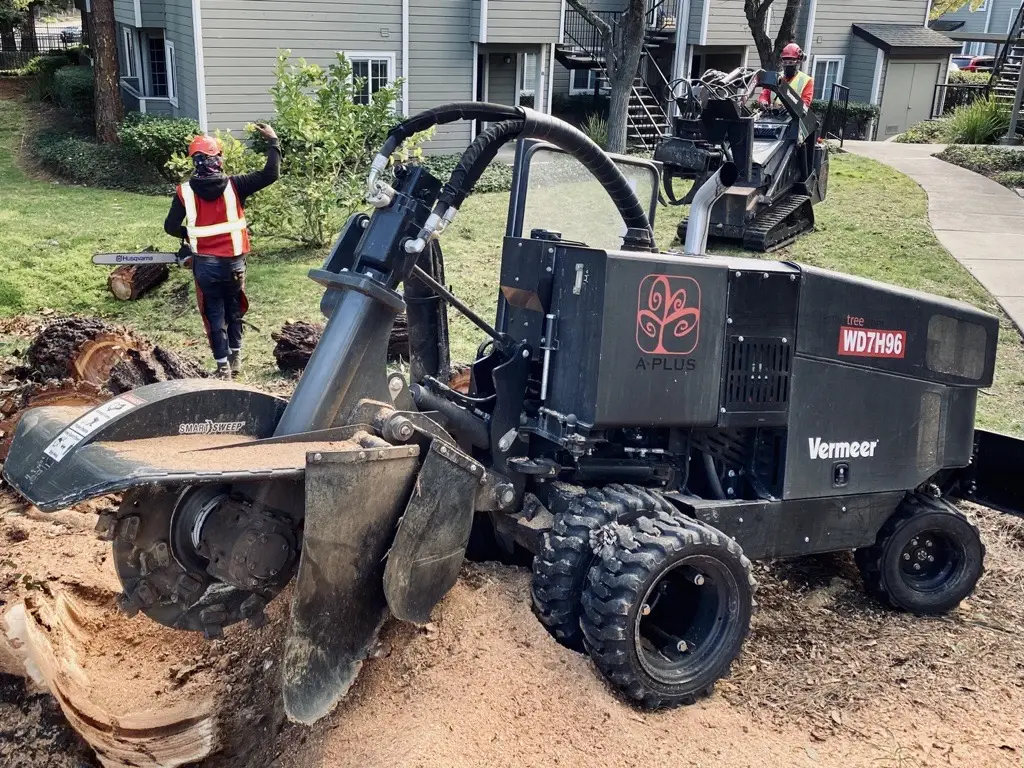
Stump and root grinding mechanically removes the stump and the upper portion of the root structure down to a depth of 8–12 inches, reducing the material to wood chips. This depth eliminates most sprouting from the stump itself, though some regrowth from roots beyond the grind area remains possible in aggressive species.
Grinding does not remove the entire root system, which continues to decay naturally over several years. For species with aggressive lateral roots, some sprouting from roots outside the grind radius is still possible after grinding. Treating the outer root zone with an appropriate herbicide at the time of grinding significantly reduces this risk.
Stump grinding is the right call when the stump is large, the species is known for aggressive regrowth, or the area is being prepared for replanting or hardscape installation. It is a permanent solution for the stump itself, and when combined with appropriate treatment, it is the most reliable long-term answer to how to stop a tree stump from growing.
Managing Tree Height and Urban Encroachment
Urban trees face a particular challenge: they are often growing in spaces that were designed without their eventual size in mind. A tree planted near a home ten or twenty years ago may now be pressing against gutters, shading solar panels, or conflicting with neighboring property. Managing height in these situations requires proper technique, not a ladder and a handsaw.
Drop-Crotch Pruning Explained
Drop-crotch pruning is the foundation of professional height reduction. The method involves identifying a strong lateral branch growing at a lower height than the branch being removed, then cutting back to that lateral in a way that redirects the tree’s upward energy outward rather than straight up.
The lateral branch that takes over becomes the new leader, or at least the new focal point of growth in that zone. Done correctly, this gives the tree a natural and proportional appearance while reducing its overall height by a meaningful amount. Done incorrectly, with cuts made between branches rather than at them, it produces the same stub-wound problems associated with topping.
Reducing tree height through drop-crotch pruning is a skilled task. The correct cut angles, the right choice of lateral branch, and the sequencing of cuts all affect how well the tree responds. This is one of those areas where a trained arborist is genuinely the right call.
Timing Your Cuts: When Seasonal Dormancy Matters
Most major pruning work is best done during late dormancy, in late winter to very early spring, before bud break. At that point, the tree’s stored energy is still held in the root system, the canopy is not yet demanding resources, and wounds heal more quickly once the growing season begins. Pests and disease pathogens that target fresh wounds are also far less active in cooler months.
Dormancy timing is not a universal rule across all species. Some species are better pruned at other times to avoid specific disease vectors. For example, Ohio State University notes that fresh wounds can attract nitidulid beetles and become infection gateways for oak wilt, which is why pruning oaks during spring and early summer is risky in many regions. Elms carry a similar concern with Dutch elm disease.
Always confirm species-specific timing recommendations with an arborist before scheduling major work. The wrong pruning window can turn a routine cut into an expensive problem.
The Role of Soil Health in Growth Rate Management
Soil conditions are one of the most overlooked factors in growth rate management. A tree growing in heavily fertilized, well-amended soil will grow more aggressively than the same species in compacted or nutrient-limited conditions. If vigorous growth is the problem, contributing to it through heavy nitrogen fertilization is counterproductive.
A practical rule: if growth rate is a concern, avoid high-nitrogen fertilizers in the root zone. Focus instead on soil structure, aeration, and organic matter if the tree needs support. A soil test from a certified arborist or extension service can help you understand exactly what is happening below the surface and make smarter decisions about what, if anything, the tree actually needs from its soil.
Data-Driven Tree Care: Using ArborPlus for Long-Term Monitoring
Managing a tree’s growth is not a one-time fix. It is an ongoing process, and the most effective programs are built on consistent observation and documentation. At A Plus Tree, we use our ArborPlus system to track tree health data over time, including canopy measurements, PGR application records, pruning history, and observable signs of stress or structural change.
This kind of longitudinal record matters because trees respond to interventions over months and seasons, not days. A crown reduction performed in one year affects how the tree grows over the next three to five years. A PGR treatment applied this season informs the timing and dosage of the next one. Without a record, every service call relies on guesswork rather than documented history.
For homeowners, the practical takeaway is this: keep notes. Document when pruning work was done, what was removed, how the tree looked before and after, and how it responded over the following seasons. That information helps any arborist provide better recommendations over time, and it helps you catch changes early when they are still manageable.
When “Stopping” Isn’t Enough: Evaluating Removal vs. Mitigation
Sometimes the honest conversation is about whether a tree is in the right place at all. Growth control methods are genuinely effective in many situations. But there are cases where they are treating a symptom rather than the underlying problem.
A tree that is structurally compromised, significantly diseased, or planted in a location that is fundamentally incompatible with its mature size may cost more in ongoing management than removal and replanting with a better-suited species would. That calculus is worth doing openly, and it is part of what a good arborist assessment should address when deciding when removal is the better option.
The question to ask is not only “can we stop this tree from growing?” but also “is this the right tree for this space, and does managing it make long-term sense?” Sometimes it does. Sometimes the better answer is a well-planned replacement. We work through that decision carefully with every property owner, because the right outcome is the one that serves the property well over time.
Comparison Table: Growth Control vs. Full Removal
| Factor | Growth Control Methods | Full Removal |
| Cost (short-term) | Lower | Higher upfront |
| Cost (long-term) | Ongoing management | One-time (plus replanting) |
| Tree preserved | Yes | No |
| Effectiveness | Partial to significant | Complete |
| Best for | Manageable size issues, healthy trees | Incompatible placement, severe health issues |
| DIY-appropriate | Rarely | Never |
| Results timeline | Seasons to years | Immediate |
| Risk of regrowth | Possible without follow-up | Low with stump treatment or grinding |
FAQs About Common Growth Control
What Is the Best Thing to Put On a Tree to Stop It From Growing?
Plant growth regulators applied by a licensed professional are the most effective treatment for slowing growth. For stumps, herbicide applied to a fresh cut works best.
How Do You Naturally Stunt a Tree’s Growth?
Consistent manual removal of new shoots, withholding high-nitrogen fertilizer, and strategic pruning at correct lateral points can slow growth naturally. Results take multiple seasons.
Will Cutting the Top off a Tree Stop It From Growing Taller?
Topping typically accelerates regrowth by triggering fast-sprouting water shoots. It does not control size reliably and creates structural hazards. Proper crown reduction by a certified arborist is the correct alternative.
How Do I Stop Tree Roots From Growing Under My Foundation?
Install physical root barriers early, ideally before roots reach the structure. For existing encroachment, have an arborist assess the extent first. Severing major roots incorrectly can destabilize the tree.
Managing tree growth is entirely achievable with the right methods and realistic expectations. Whether your concern is height, spread, stump regrowth, or root encroachment, there is a professional approach that addresses it without unnecessary risk to the tree or your property. If you are unsure about the right next step for your situation, reaching out to an A Plus Tree certified arborist is a sensible place to start. We are happy to take a look and help you make a confident, well-informed decision.
Get a Free Tree Assessment — No Obligation
Tell us about your tree. One of our ISA Certified Arborists will review your situation and get back to you within 24 hours.