
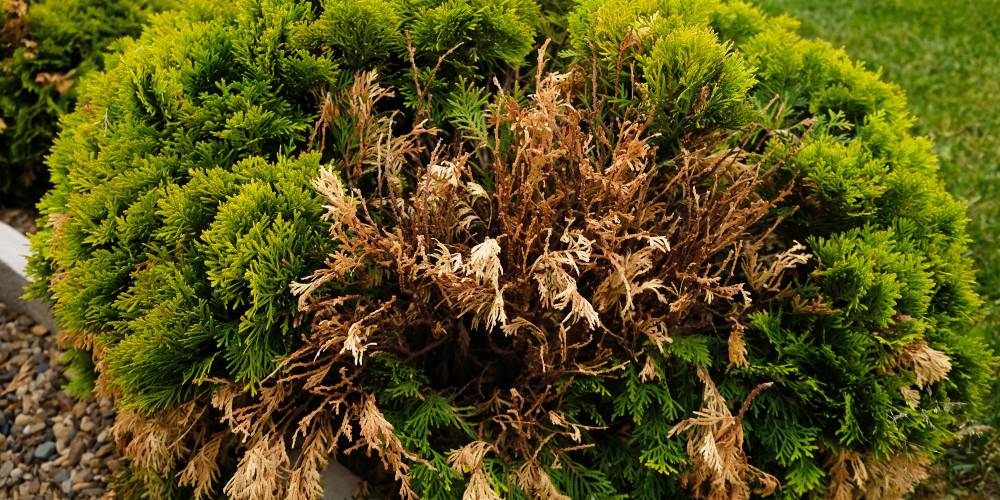
Have you spotted spreading brown patches or noticed small, cone-shaped bags hanging from your evergreens? You might be dealing with one of the most deceptive dangers to your trees: Bagworms. Recognizing and addressing the damage that bagworms can cause before it becomes obvious is crucial to combating this pest.
Bagworms are masters of disguise, building protective cases from parts of your tree’s own foliage. This camouflage makes them nearly invisible until the damage is already severe. This guide outlines how bagworms actually affect trees, how to spot them early, and what works when it comes to control. If you’re wondering if bagworms are bad for trees, the answer depends on timing and infestation severity. Catching infestations early through professional tree pest and disease management can mean the difference between minor damage and total tree loss.
Quick Answer: The Real Impact of Bagworms on Your Landscape
Are bagworms bad enough to warrant immediate action? Absolutely. A severe infestation can completely defoliate and kill your evergreens within a single season. Deciduous trees can usually recover from an infestation, but evergreens often cannot regrow the stripped foliage. Early detection and removal during fall and winter or targeted treatment in late spring are the most effective methods of control, and proactive tree health care helps trees resist infestations and recover when damage does occur.
Why Bagworms Are More Than Just an Eyesore
Bagworms are more than just an eyesore. They are actively feeding insects that can completely strip a tree, and their camouflage makes these pests particularly dangerous. Most homeowners don’t notice them until significant bagworm damage has already occurred.
Not sure if your tree needs professional attention?
A Plus Tree’s ISA Certified Arborists serve homeowners across the West Coast. A free assessment takes 15 minutes and gives you a clear answer.
Recognizing the Signs: Defoliation and “Bronzing”
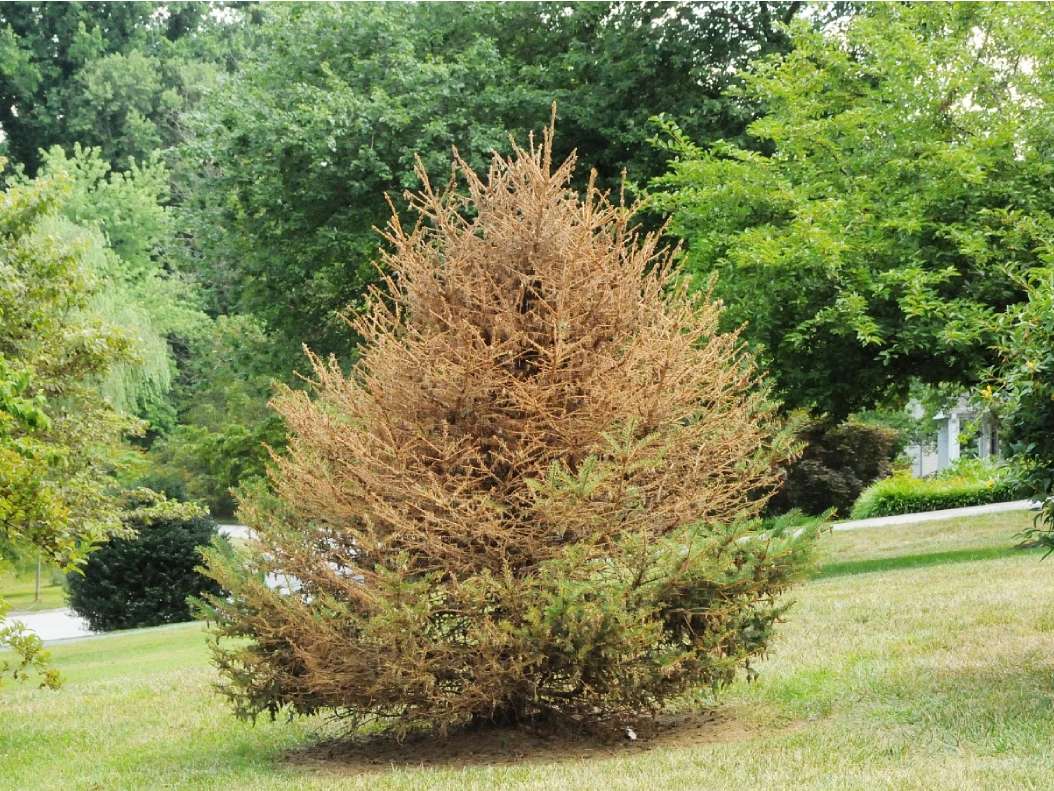
Source: Michael J Raupp
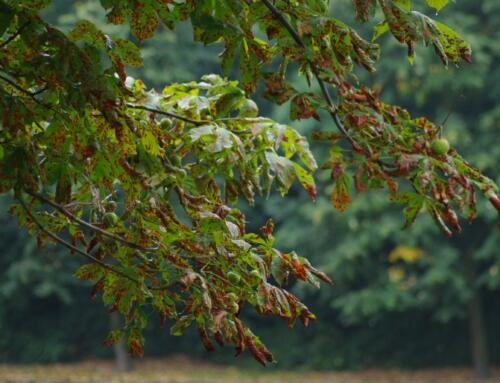
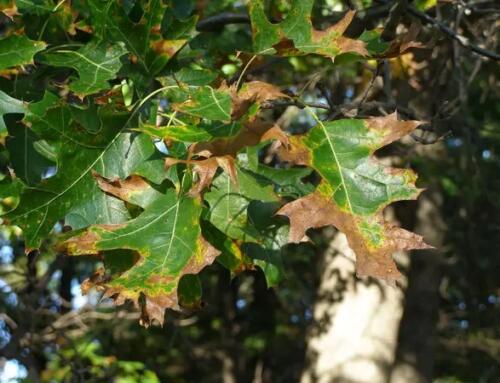
The first visible sign of bagworm damage is often not the bags themselves, but the browning of foliage that starts at branch tips and works inward. This “bronzing” effect is a result of bagworms feeding from the outside in, consuming needles and leaving behind bare twigs.
By the time branches are fully brown, bagworms have usually moved deeper into the canopy and started on fresh growth. What looks like scattered dead branches is usually an active infestation that has been quietly progressing for weeks.
Why Bagworm Damage Often Goes Unnoticed Until It’s Too Late
Bagworm cases are made from the same material that they eat: your tree’s own needles and twigs. This makes their casing blend into your tree almost seamlessly.
As the insect grows, the bag expands, eventually reaching up to two inches long by late summer. Even at a full two inches, they hang motionless and blend with the foliage so well that many people fail to notice them. This camouflage is exactly why bagworms are bad news for your trees: by the time you recognize the symptoms, weeks of feeding have already compromised the tree’s health.
Do Bagworms Kill Trees? (Evergreens vs. Deciduous)
The question of whether bagworms will kill a tree depends entirely on the tree type. Evergreens like arborvitae, juniper, and certain spruces rarely produce new growth on defoliated branches in the way that deciduous trees do. Once bagworms strip the needles, those branches are dead and will not recover.
Heavy bagworm infestations can kill an evergreen in just one season, especially younger or already-stressed trees. Deciduous trees like maples, sycamores, and locusts can usually refoliate the following spring, but repeated defoliation significantly weakens them over time.
Are Bagworms Harmful to Humans or Pets?
While bagworms are harmful to plants, they do not bite, sting, or carry diseases that affect people or animals. The concern is entirely about plant damage. Bags can be handled during removal safely without any protective gear, though gloves are recommended simply to avoid contact with insects and debris.
The Bagworm Life Cycle: Why Timing Is Everything
Knowing when bagworms are vulnerable is the key to effective control. If you miss this window, your options for treatment become much more limited.
From Overwintering Eggs to “Ballooning” Larvae
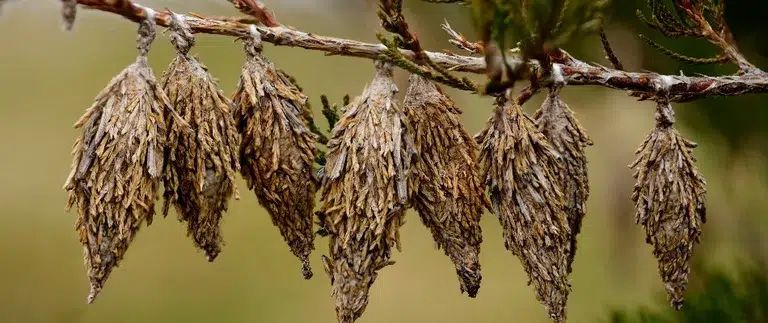
Source: CitiTurf
Over the winter, bagworm eggs are laid in the previous season’s bags. These old bags remain attached to branches through fall and winter, with each one containing between 500 to 1,000 eggs.
In late spring, the eggs hatch and larvae emerge. The larvae are so small that they are nearly invisible, and they use the wind to disperse by “ballooning,” or spinning a silk thread and traveling to neighboring trees by wind. Once they land, they immediately begin building their protective casing and feeding.
When Do Bagworms Hatch? (The 600-900 Growing Degree Day Rule)
Bagworm hatch timing is temperature-dependent, which is why emergence timing is different each year. Generally, larvae begin hatching around 600 to 900 growing degree days, which is typically aligned with when Japanese tree lilac or catalpa trees are in full bloom. If you are tracking hatch timing, watching for these bloom indicators is a reliable signal that larvae are active and vulnerable to treatment. This is the window in which contact insecticides and biological controls are most effective, because the larvae are small and exposed.
Vulnerable Species: Is Your Tree a Target?
Bagworms are not equally attracted to all species of tree. Some species are particularly high-risk, and knowing if your trees are vulnerable helps you focus monitoring efforts where they matter most.
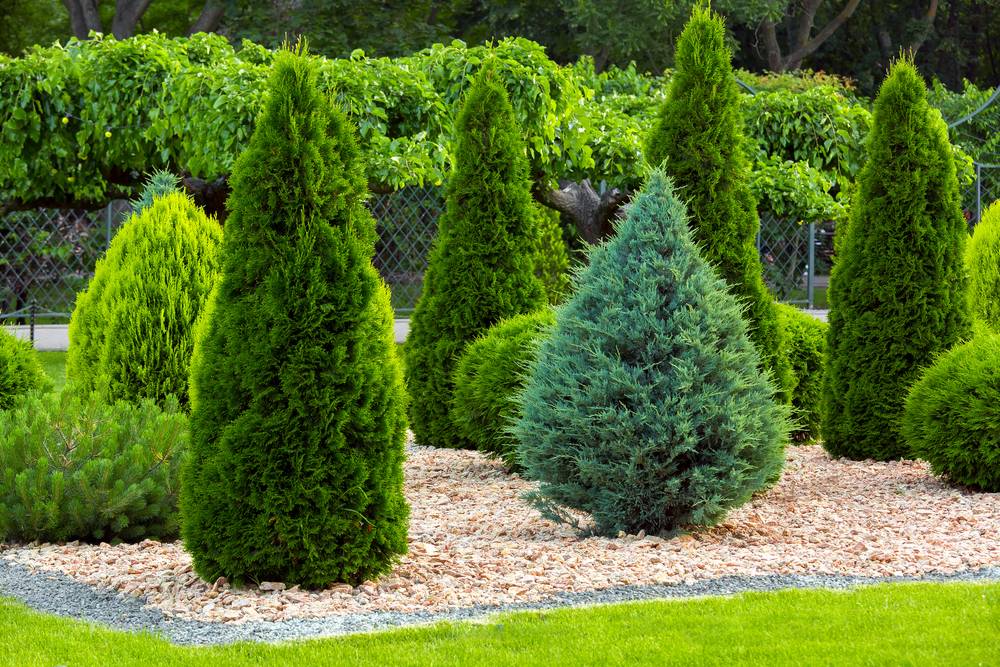
High-Risk Evergreens: Arborvitae, Juniper, and Spruce
Source: PlantSnap
Arborvitae and juniper are especially vulnerable to bagworm infestations. These species of evergreens are often planted as privacy hedges or foundation plants, which makes a single infestation spread quickly across multiple closely-planted trees.
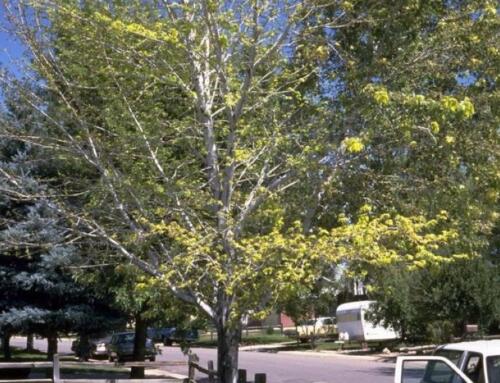
Deciduous Hosts: Maple, Sycamore, and Locust
Although bagworms prefer evergreens, they will also feed on deciduous trees if evergreens are less common. Honeylocust, sycamore, and various maples are common secondary targets.
The good news is that deciduous trees can typically recover from defoliation with proper care and reduced stress. However, bagworms feeding on deciduous trees often go unnoticed even longer, because tree owners tend to assume that the damage is caused by other defoliating insects or seasonal leaf drop.
Digital Tracking Tools for Monitoring Bagworm Spread
Some regions now use digital platforms to track bagworm activity and share early warnings when hatching begins. A Plus Tree uses Treezi, our proprietary tree care software, to track pest activity windows and coordinate treatment timing across properties. Originally built to streamline our own operations, Treezi now helps tree care companies stay on top of seasonal pest pressure without missing critical treatment windows. Local extension services and arborist networks often post alerts, which can be a valuable resource for tree owners.
If you are in an area with known bagworm pressure, checking the availability of these resources can help you best time inspections and treatments for maximum effectiveness.
How to Get Rid of Bagworms: Proven Methods
The most effective approach to bagworm removal depends on when you catch the infestation and how large the affected trees are. Here’s what actually works, depending on different timelines, intensities, and situations.
Manual Removal: The Fall and Winter Strategy
Source: Plant Addicts
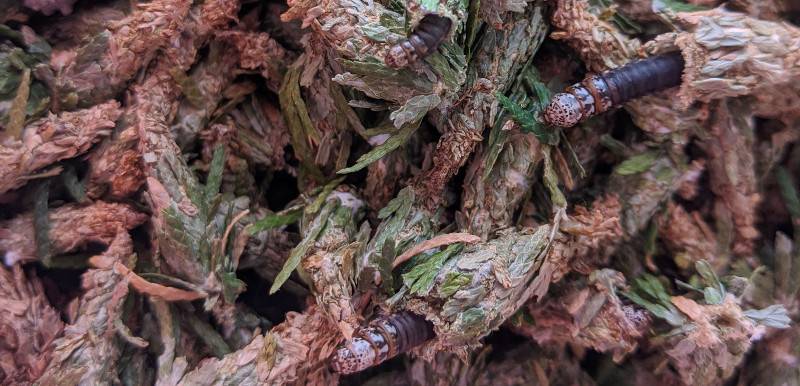
Hand-picking bagworm cases during the dormant season is the single most effective method of controlling infestations for small and medium-sized trees. This is when the bags are most visible and larvae are not actively feeding.
Each bag removed eliminates hundreds of potential hatchlings the following spring. When property owners ask if bagworms are bad enough to justify this effort, the answer is always yes. After removing them from the tree, drop the bags into a bucket of soapy water to kill the eggs, or seal them in a plastic bag and dispose of them. Do not simply leave them on the ground, because the eggs can still hatch and reinfest the area, even when not directly attached to the tree.
For persistent bagworm issues or large properties, professional tree pest and disease management can make a significant difference in coverage, thoroughness, and effectiveness of treatment.
Organic vs. Chemical Treatments: What Actually Works?
Source: A Plus Tree
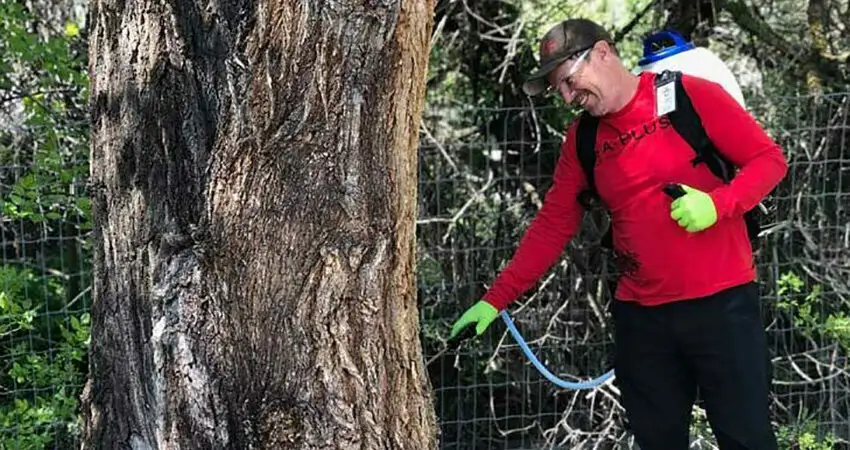
When larvae are active in late spring and early summer, treatment options are greater and more effective.
Organic treatments include Bacillus thuringiensis and spinosad, which both work by targeting caterpillars, including bagworm larvae, without harming good insects and pollinators. Bacillus thuringiensis is gentler, but works best when larvae are still small, usually within the first three weeks after hatching. Once bagworms are larger, their cases thicken, and Bacillus thuringiensis becomes much less effective.
Spinosad can handle slightly larger larvae than Bacillus thuringiensis, but it is also more toxic to bees. Early morning or evening treatment is recommended to avoid application when pollinators are most active.
Chemical insecticides like carbaryl and permethrin can treat larger larvae, but they are generally harsher on beneficial insects, and application timing is still critical. Regardless of the type of treatment, once bagworms seal themselves inside their bags in late summer, sprays become virtually ineffective.
When Should You Call a Professional Arborist?
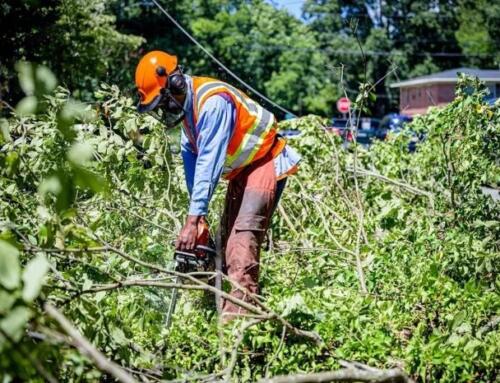
If you have especially tall evergreens, infestations across multiple trees, or repeated bagworm problems despite your own efforts, it is worth considering bringing in professional help. Certified arborists can assess the scope of the infestation, apply treatment at the perfect moment, and evaluate whether other factors, like tree stress, might be contributing to the issue.
For trees that are already heavily defoliated, an arborist can also evaluate whether the tree is still viable or if removal is the right path forward. When bagworm damage is severe, consulting with an arborist helps clarify what your tree needs, what realistic recovery looks like, and next steps.
Why DIY Methods Often Fail for Large Trees
Bagworms on a six-foot ornamental juniper are one thing. Bagworms on a 30-foot spruce are another. Reaching the upper canopy safely, achieving full-coverage with spray treatments, and identifying hidden bags deep in the foliage all become significantly harder as tree size increases.
With DIY treatment, incomplete coverage often leaves enough bagworm survivors to repopulate the tree the following year. In these cases, professional equipment and trained arborists make the difference between partial population control and actual eradication.
A Plus Tree’s Sustainability-First Approach to Pest Management
Bagworm control doesn’t have to mean crisis management or harsh, damaging chemicals. At A Plus Tree, we prioritize a more thoughtful approach to pest control, which balances urgent pest pressure with long-term tree health and environmental responsibility.
How A Plus Tree Balances Pest Control and Urban Sustainability
Effective pest management begins with an understanding of the drivers of the issue. Is the tree under stress from drought, poor soil quality, or improper planting? Is the infestation isolated, or is it a part of a larger pattern across the property?
At A Plus Tree, our certified arborists work to fully understand your trees, address underlying stressors, and use targeted, strategic treatments, transforming tree health care to be proactive rather than reactive. Healthy trees are more resilient to pest pressure and recover more quickly when damage does occur.
Circular Sustainability: Managing Infested Wood Waste
When removing bagworm-infested branches, the last thing you want is to pile them at the edge of your property, giving hundreds of bagworm eggs a cozy place for winter and allowing them to hatch and spread the next season.
Chipping infested material immediately destroys the bags and exposes the eggs, significantly reducing survival rates. Additionally, properly composting chips at high heat further reduces the risk of survival and reinfestation.
It is imperative to not simply remove the bags. Where the infested material ends up and how it is disposed of is crucial to stopping the cycle.
Proactive Stewardship: Monitoring Tree Health Year-Round
The best type of bagworm management happens before the bags appear on your trees. Regular monitoring during the growing season, especially on high-risk species, catches infestations early when manual removal is still possible.
Regularly checking on your trees can also reveal stressors that make your trees more susceptible to infestation. Compacted soil, poor drainage, and nutrient issues all stress trees, making them more vulnerable to pests. Fixing these underlying issues reduces the conditions that repeatedly bring bagworms.
FAQ About Bagworms
What Do Bagworms Turn Into?
Bagworms are moths, though you would never know from looking at them. Female bagworm moths are flightless and never leave their bags. Males emerge as small, dark moths in late summer, mate with females still inside their cases, and then die shortly after. The adult moths themselves don’t feed, sting, or cause any damage. All the harm to your trees happens during the larval feeding stage.
What Kills Bagworms Instantly?
Contact insecticides such as permethrin or carbaryl can kill exposed larvae quickly, but only when applied strategically, during active feeding in late spring and early summer. Once larvae seal their bags, chemical control is no longer effective.
Do Bagworms Return Every Year?
Yes, if bags are not removed. A single bag left on a tree can hatch hundreds of new larvae the following spring. Bagworms can also spread from neighboring trees and properties via ballooning, so even properly-treated trees can become infested if surrounding landscapes are not managed.
How Can I Tell if My Tree Is Dying or Just Stressed?
Browning foliage from bagworm feeding is often confused with drought stress, root damage, or other pest activity. It is crucial to carefully check your trees for bagworm cases if you suspect infestation. If bags are absent but browning continues, other issues may be at play. It can help to check for early signs of spider mites or other common pests that cause similar symptoms. If you’re unsure of the source of your tree’s browning foliage, a certified arborist can help determine the root cause of a declining tree and develop a strategy to combat it.
Can Bagworms Be Prevented Before They Hatch?
The most reliable prevention for bagworms is removing old bags during fall and winter before eggs hatch. Preventative insecticide applications in spring are possible, but they require precise timing and are generally not recommended unless you have a confirmed history of severe infestations on vulnerable species.
Get a Free Tree Assessment — No Obligation
Tell us about your tree. One of our ISA Certified Arborists will review your situation and get back to you within 24 hours.