
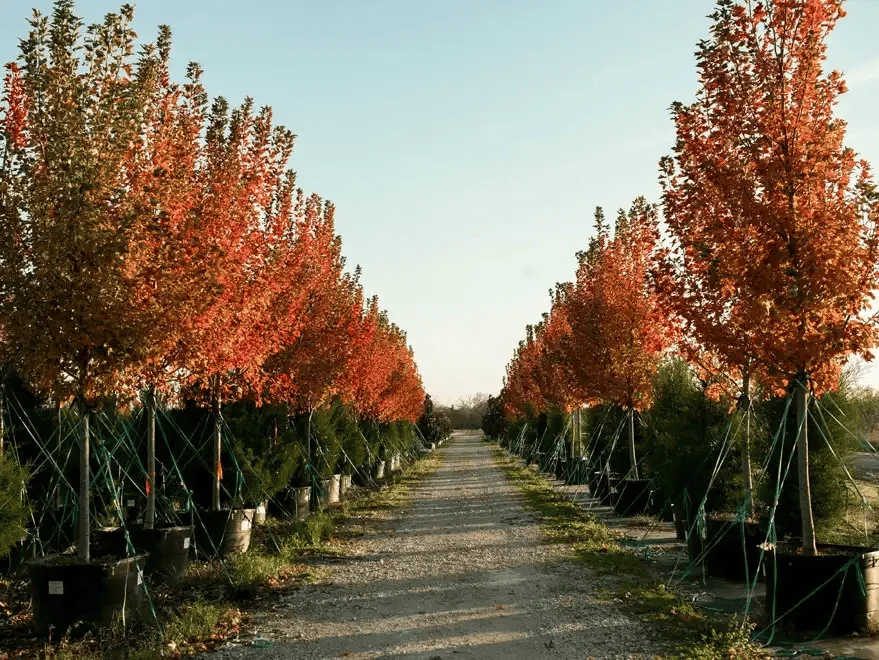
Every fall, the leaves piling up on your lawn can look like hours of raking ahead. They are also free leaf mulch. You can mow a light layer straight into the lawn, or collect the leaves to shred and spread in garden beds and around trees. A quick look at how thick the leaves are, and where you want them to end up, will tell you which approach fits.
What Is Leaf Mulch?
Leaf mulch is fallen leaves used to cover the soil. Shredded leaves can go down right away, while leaf mold forms over months or years as piled leaves decompose into a dark, crumbly material.
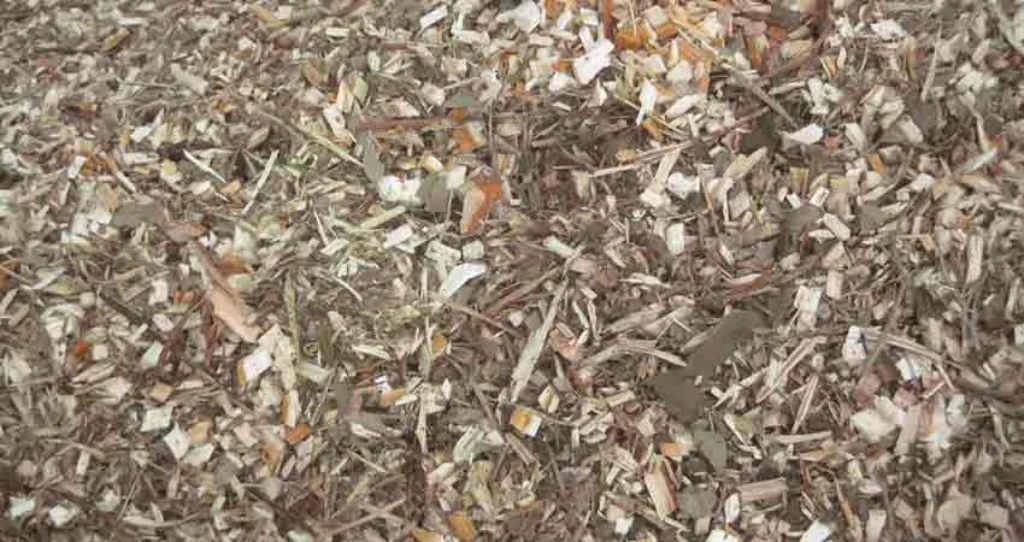
A layer of leaf mulch helps hold moisture in the soil and adds organic matter as it breaks down. If you need more coverage than your own trees provide, A Plus Tree’s Arbor Mulch is a wood-chip option for larger areas.
Not sure if your tree needs professional attention?
A Plus Tree’s ISA Certified Arborists serve homeowners across the West Coast. A free assessment takes 15 minutes and gives you a clear answer.
Should You Mow Leaves Into the Lawn or Collect Them?
The best way to mulch leaves depends on two cues.
First, look at coverage. If you can still see grass through a thin, scattered layer, mowing the leaves in place usually works well. If the leaves form a thick blanket, mowing alone will leave too much material on the turf.
Second, decide where you want the leaves to end up. Mowing returns them to the lawn, and collecting gives you mulch for beds and trees. Many yards use both.
How to Mulch Leaves Into Your Lawn
Mulching leaves into the lawn takes a couple of mower passes and a quick look at the result before you put the mower away.
Mow Dry Leaves Into Small Pieces
Wait for a dry day, because dry leaves break into small pieces more easily than wet ones. Colorado State University Extension’s guide to using leaves in the landscape recommends setting the mower at its highest deck setting and removing the bagging attachment. Check your mower’s manual first, since some models need a mulching plug or setting before they can run without the bag.
The goal is pieces small enough to settle down between the grass blades. Mow slowly so the blades have time to chop the leaves. If large fragments remain after the first pass, mow again in a crosswise direction. A second pass usually leaves pieces small enough to reach the soil surface.
Check That Grass Is Still Visible and Move Any Excess
When you finish mowing, look across the lawn. You should see green grass through a light layer of chopped leaves. If the pieces still blanket the turf or sit in clumps, rake up the excess and spread it more thinly or set it aside. As a guide for next time, the University of Delaware’s fact sheet on recycling leaves suggests mowing leaves in place when the layer is less than about an inch deep. Set any leftover leaves aside for your beds and trees, using the steps below.
How to Make and Use Leaf Mulch for Beds and Around Trees
Collected leaves need a little preparation before they go into beds or around trees. Shredding makes the biggest difference, because whole leaves tend to pack into a dense layer.
Gather the Leaves You Want to Reuse
Start with the leaves you already have on the lawn, driveway, and paths. Rake or blow them onto a tarp or into a loose pile, gathering only what you can shred and spread in one session. Pick out sticks, trash, and anything else that should not end up in your beds. Dry leaves are lighter, easier to move, and shred more cleanly, so plan this step for a dry day.
Shred and Collect Them With a Mower or Leaf Shredder
Shredding is the key step in learning how to make leaf mulch. Broad, wet leaves can overlap like sheets of paper and form a mat that restricts water and air movement. Shredding helps you spread a thinner, more even layer, though the pieces can still mat if piled too deeply.
The simplest tool is a lawn mower with a compatible bag attachment. A mulching mower chops leaves most finely, although a regular mower also shreds them well enough. Run it over a thin layer of leaves and empty the bag often. A dedicated leaf shredder works too, with a bag, bin, or tarp set up to catch the pieces.
Follow the instructions for your equipment, and aim for loose, spreadable pieces rather than a pile of overlapping whole leaves.
Spread Leaf Mulch in Garden Beds
Spread the shredded leaves in an even layer over the bare soil between plants. Keep the layer loose and no deeper than about 2 inches, using less where drainage is poor or the leaves tend to mat. Leave a few inches of open space around plant stems, and keep leaves off rows or spots where you plan to sow seeds. Oregon State University Extension’s advice on leaves in flower beds notes that shredded leaves are less likely to mat or blow away, and spring growth pushes through them more easily.
Check the beds after heavy rain. If you find dense, matted patches, loosen them with a rake or thin them out. In wildfire-prone areas, follow local defensible-space guidance. The UC Marin guidance cited below recommends using noncombustible materials within 5 feet of structures.
Apply Leaf Mulch Around Trees and Shrubs
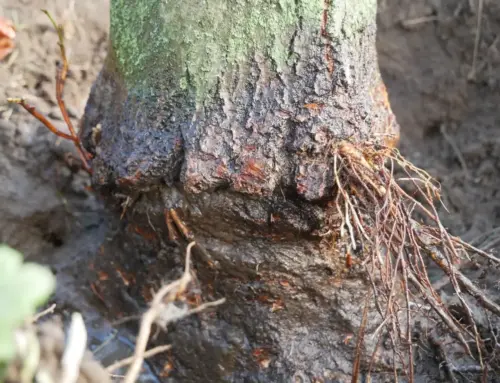
The trunk flare, also called the root flare, is where the trunk widens as it meets the soil, and it should stay visible. If you are unsure where it is, learn how to identify a tree’s root flare.
Spread the shredded leaves in a broad, even layer toward the canopy edge. UC Marin Master Gardeners’ guide to applying mulch recommends keeping mulch about 6 to 12 inches from the trunk. The same guide recommends keeping shredded leaves no deeper than 2 inches and using a thinner layer on poorly drained soil. Here is what this looks like in real life: a flat ring that thins near the trunk, with the flare visible at the center. Leave shrub stems clear too.
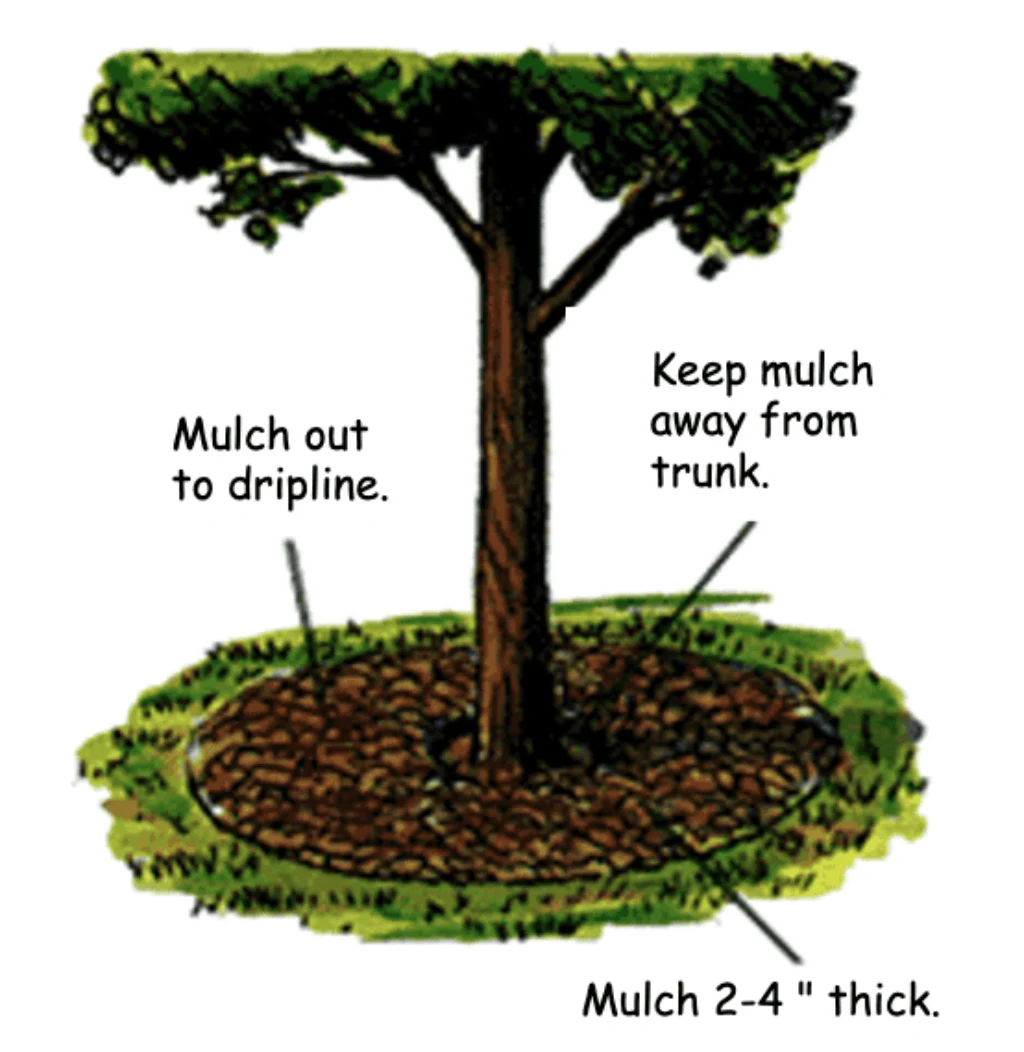
Fall leaves make a good soil cover around trees heading into winter, and our guide explains when to mulch trees for winter.
Get Help Caring for Your Trees
Fallen leaves can do useful work in your yard when the amount and placement suit the spot, whether that means a thin layer mowed into the lawn or a shredded layer around your trees.
Most homeowners can handle this work on their own. If you find a root flare buried under soil or old mulch, or notice thinning canopies or dieback, schedule a consulting arborist assessment with our team.
Frequently Asked Questions About Leaf Mulch
Can You Use Whole Leaves as Mulch?
Yes, in some beds. Small, light leaves can work whole as a thin winter cover. Shred leaves that pack into a dense layer, and always chop leaves finely before leaving them on the lawn.
What’s the Difference Between Leaf Mulch and Leaf Mold?
Leaf mulch is whole or shredded leaves spread on the soil as a cover. Leaf mold is leaves left to decompose for several months to a couple of years into a dark, crumbly material that works well as a soil amendment.
How Do You Keep Leaf Mulch From Blowing Away?
Use shredded leaves, since small pieces settle together and stay put better than loose whole leaves. In an exposed bed, water the layer lightly after spreading it to help the pieces settle into place.
What Can You Do With More Leaves Than You Can Use as Mulch?
Add leaves to compost as carbon-rich brown material, or make leaf mold by keeping them moist in a ventilated bin or perforated, loosely tied bag. Local yard-waste collection is another option where available.
Get a Free Tree Assessment — No Obligation
Tell us about your tree. One of our ISA Certified Arborists will review your situation and get back to you within 24 hours.