
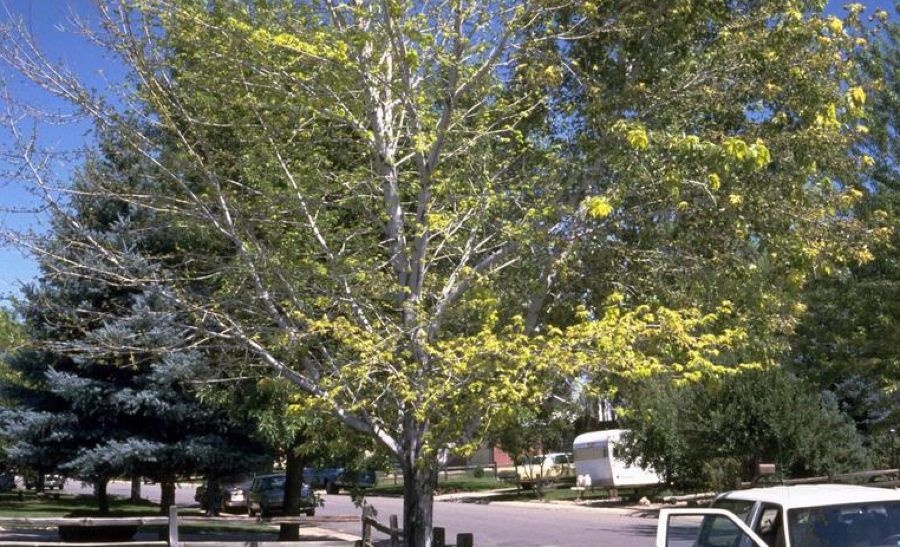
One branch on your maple wilts in mid-July while the rest of the canopy looks perfectly healthy, and nothing about the weather explains it. Verticillium wilt is a soil-borne fungal disease that enters a tree through its roots and blocks the vessels that carry water into the crown. Lopsided decline is its signature.
Here is the honest version up front. No fungicide cures an infected landscape tree. Some trees stabilize and live for years with professional tree pest and disease management; others fade steadily, and the fungus stays in the soil long after the trunk comes down.
Verticillium Wilt at a Glance
| Cause | Verticillium dahliae, a soil-borne fungus |
| How it infects | Through the roots, then upward into the water-conducting sapwood |
| Classic sign | Wilting on one side or one limb while the rest of the canopy looks fine |
| Under the bark | Green, brown, or gray streaking in the outer sapwood, though not always visible |
| Cure | None. No fungicide reliably eliminates the fungus from an infected tree |
| Survival | Possible, depending on species, age, extent of infection, and site conditions |
| In the soil | Survives 10 years or longer as resting structures called microsclerotia |
| Best response | Supportive care, ongoing monitoring, and resistant replacement species |
What Is Verticillium Wilt?
Verticillium wilt is a vascular disease, meaning the fungus attacks the tree’s internal plumbing instead of its leaves or bark. Verticillium dahliae causes the large majority of infections in landscape trees across California and the Pacific Northwest. A second species, Verticillium albo-atrum, turns up mainly in cooler regions and on a narrower group of hosts, so most of what you will read about tree infections points back to dahliae.
The host range is enormous. More than 300 plant species are susceptible, including many landscape trees, shrubs, perennials, and garden vegetables such as tomatoes, potatoes, and eggplant. That breadth matters later, because the ground under a diseased maple does not become safe simply by removing the maple.
How the Fungus Enters Roots and Disrupts Water Movement
Infection starts underground. Resting structures germinate near a tree’s fine roots, and tree root damage can create small wounds that give the fungus an entry point before it travels upward inside the xylem, the network of narrow tubes carrying water from the roots to every leaf.
Think of that network as thousands of separate drinking straws bundled inside the trunk, each feeding its own patch of canopy. The fungus does not flood the bundle all at once. It advances through individual straws, and the tree plugs those straws with gums and tissue growths to halt the spread. Water stops reaching whatever section they supplied. One limb wilts while the branch beside it stays green, because its straws remain open.
That defensive plugging explains something homeowners find confusing. The tree is partly wilting itself, because sealing off infected tissue is how it survives long enough to contain the damage.
Which Trees Are Most Susceptible to Verticillium Wilt?
Species susceptibility ranges from highly vulnerable to genuinely immune, and knowing where your tree falls changes how seriously to take a wilted limb.
- Highly susceptible: maples (Japanese and Norway maples especially), ash, catalpa, elm, redbud, smoke tree, magnolia, olive, tulip tree, and stone fruits such as cherry, plum, and apricot
- Generally resistant: birch, ginkgo, hawthorn, honeylocust, hornbeam, oak, pear, sweet gum, sycamore, willow, and zelkova
- Non-hosts: all conifers, along with monocots such as palms, bamboo, and ornamental grasses
Treat the middle group as lower risk, never as a guarantee. Published resistance lists are only a guideline, because regional conditions, fungal strains, and tree stress can change how a species performs. Only the non-host group is reliably safe.
Not sure if your tree needs professional attention?
A Plus Tree’s ISA Certified Arborists serve homeowners across the West Coast. A free assessment takes 15 minutes and gives you a clear answer.
What Does Verticillium Wilt Look Like?
A wilted branch is an important clue, but it is not a diagnosis. Drought stress, root damage, tree borer damage, and several other diseases all produce foliage that browns and hangs, and telling them apart depends on the pattern rather than the symptom itself. Symptoms also tend to surface during the first stretch of hot, dry summer weather, when the tree’s water demand climbs and the blocked vessels finally show their limits.
Verticillium Wilt Symptoms: One-Sided Wilting, Leaf Scorch, and Branch Dieback
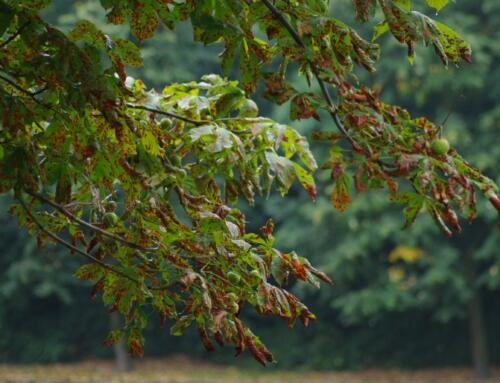
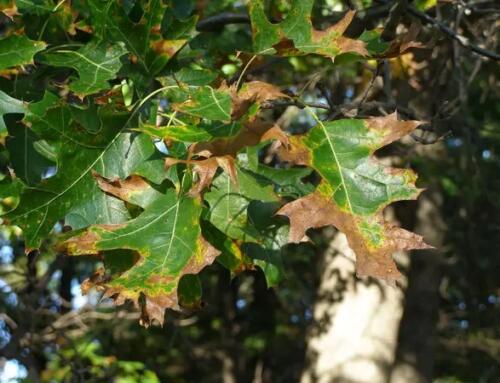
The signature pattern is asymmetry. One limb, one side of the crown, or a single major branch declines while neighboring growth stays normal. Leaves on the affected section wilt suddenly or develop marginal scorch, browning along the outer edges and working inward while the tissue near the midrib holds its color longer.
Watch for foliage that yellows out of season, leaves noticeably smaller than the year before, thinning density in one section of canopy, and dead twigs at the branch tips. Some infected trees push out an unusually heavy seed crop or sprout along the trunk and larger limbs, both of which are stress responses.
Brown, Green, or Gray Streaking Beneath the Bark
Cutting into a symptomatic branch often reveals discoloration in the sapwood, the pale outer ring of wood beneath the bark. Slice a wilting branch at least an inch in diameter and look at the cross section. Infected wood shows streaks or arcs of color in the outer growth rings, sometimes as a broken ring instead of a solid one.
Color depends on the host. Maples typically show olive-green to greenish-brown streaking, smoke tree tends toward yellow-green, and ash, catalpa, and elm produce brown to nearly black discoloration.
Absence of streaking proves nothing. Plenty of confirmed infections show no visible color change at all, particularly early on, so a clean cut does not clear the tree.
Acute vs. Chronic Verticillium Wilt
Acute infections move fast. Leaves wilt and curl within days, foliage turns abnormal shades of yellow or red well before autumn, branches defoliate, and whole limbs die in a single season. A young tree with an acute infection sometimes dies outright the same year symptoms appear.
Chronic infections look like slow, unglamorous decline. The canopy thins, leaves emerge small and pale, growth slows to almost nothing, and dieback creeps through the crown across several years. Easy to misread as old age or poor soil, chronic cases are the ones most often diagnosed late.
One tree may show both patterns, losing a limb acutely in August before the rest of the crown settles into years of gradual thinning.
Verticillium Wilt vs. Drought, Root Problems, Borers, and Other Diseases
Sorting the look-alikes comes down to reading the pattern, the timing, and the wood.
| What you see | Points toward verticillium wilt | Points somewhere else |
| Pattern of wilt | One limb or one side, sharply defined | Whole canopy at once suggests drought, root loss, or trunk girdling |
| Response to deep watering | Little or no improvement in the affected section | Noticeable recovery within days suggests drought stress |
| Sapwood color | Green, brown, or gray streaks in the outer rings | Clean, uniform sapwood points elsewhere, though a clean cut alone does not rule wilt out |
| Trunk and branch surface | No entry holes or sawdust | Small round or D-shaped exit holes, sawdust-like frass, or oozing sap suggest borers |
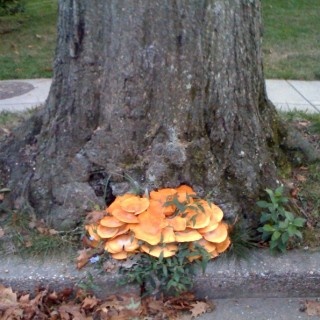
| Base of the trunk | Normal flare, firm bark | Mushrooms, soft or peeling bark, or a buried flare suggests root or crown rot |
| Timing | Onset with the first sustained summer heat | Symptoms right after construction, trenching, or grade changes suggest root damage |
| Leaf scorch detail | Margins brown while tissue near the midrib stays green | Uniform browning across the whole leaf suggests heat or chemical injury |
How Is Verticillium Wilt Diagnosed?
Sapwood streaking is suggestive, never conclusive. Several vascular diseases discolor wood in similar ways, some infected trees show no streaking whatsoever, and wounds or old injuries leave stains that resemble the real thing.
A confident diagnosis comes from combining what the tree shows with what the site history explains, and occasionally from a laboratory. Property owners weighing a large removal or an expensive replanting usually benefit from professional arborist consulting before committing to either.
What an Arborist Evaluates on the Tree and Across the Site
A field assessment starts with how symptoms are distributed across the canopy, since asymmetry carries more diagnostic weight than the wilting itself. From there it covers fresh cuts into symptomatic wood, the condition of the trunk flare and surface roots, and any evidence of borers or decay fungi that would explain the decline differently.
Site history often supplies the answer. Recent trenching, a changed irrigation schedule, imported topsoil, a vegetable bed that failed in the same corner, or a tree removed from that exact spot all shift the interpretation.
When Laboratory Testing May Be Needed
Culture testing confirms the fungus by growing it from symptomatic sapwood, and it is worth the wait when the stakes justify certainty. Consider it before removing a mature specimen tree, before replanting a site where several trees have declined, or when field symptoms remain ambiguous after a thorough inspection.
Regional plant disease diagnostic laboratories accept samples from homeowners and professionals alike, with results in one to three weeks. A negative carries one caveat: the fungus is not recoverable from every sample, so a tree with textbook symptoms is never fully cleared by a single test.
Can a Tree Survive Verticillium Wilt?
Survival is genuinely possible, and plenty of infected trees live for years or decades. Recovery depends less on anything you apply and more on the tree’s own capacity to seal off infected wood faster than the fungus advances.
What Affects a Tree’s Chances of Survival?
Species vulnerability sets the baseline. A moderately susceptible host has better odds than a Japanese maple, which tends toward acute collapse. Age and establishment matter next, because a mature tree with a large root system and years of stored energy isolates the damage far better than a sapling planted two seasons ago.
Extent of infection at diagnosis carries real weight. One affected limb on an otherwise full canopy is workable. Half the crown gone is not. Site conditions finish the picture, and that part you control through adequate soil moisture, uncompacted root zones, and freedom from competing stress.
What Recovery Means When the Fungus Remains in the Soil
Recovery here means the tree holds steady, not that the fungus disappears. A tree that leafs out fully next spring after losing a limb has successfully walled off the infection. The fungus remains in the soil, and often in the tree’s older wood, without actively spreading.
Symptoms sometimes vanish for two or three seasons and return after a drought year, a root disturbance, or nearby construction. Reappearance does not mean the earlier recovery was imaginary. A sealed-off infection holds as long as the tree stays strong enough to maintain the seal, so manage on the assumption that stress is the trigger.
Verticillium Wilt Treatment: What Helps and What Does Not
Learning how to treat verticillium wilt starts with a shift in goal. Nothing available to arborists or homeowners kills the fungus inside living wood, so care becomes entirely supportive: keep the tree strong enough to defend itself, and watch how it responds. The short version:
- Water deeply and infrequently through the dry season, soaking the soil slowly instead of sprinkling the surface
- Mulch two to four inches deep over the roots, pulled back several inches from the trunk
- Fertilize only where a soil test or visible deficiency justifies it, at modest rates
- Prune dead wood, and disinfect tools between every cut
- Skip fungicides, injections, and soil drenches marketed as cures
- Document the canopy each season so you compare photographs instead of memories
Is There a Fungicide for Verticillium Wilt?
No dependable curative fungicide exists for an already infected landscape tree. The fungus lives inside water-conducting tissue and in the surrounding soil, where neither foliar sprays nor trunk injections reach it in useful concentrations. Anyone promising an injection, spray, or drench that eliminates verticillium wilt is selling an outcome nobody delivers, and the money is better spent on irrigation, mulch, and a professional evaluation.
Reduce Stress With Appropriate Irrigation and Mulching
Water is the most useful lever, and appropriate matters more than abundant. Remaining functional vessels have to move moisture through a partially blocked system, so soak slowly to a depth of roughly 12 to 18 inches at the dripline, the ground beneath the outer edge of the canopy. Let the top few inches dry before watering again. Where ordinary surface irrigation does not penetrate the root zone effectively, supplemental deep watering may be appropriate.
Overwatering backfires. Saturated ground starves roots of oxygen and invites root rot organisms, adding a second problem to a tree already short on capacity. Push a long screwdriver down to check before each watering.
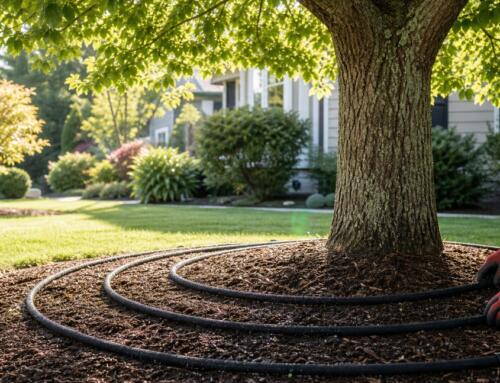
Mulch handles the rest. Two to four inches of coarse arbor mulch across the root zone moderates soil temperature, holds moisture, and prevents the mower and string trimmer wounds that create fresh entry points. Keep it off the trunk, leaving bare ground around the flare.
Base Fertilization on Tree and Soil Conditions
Fertilizer is not medicine, and a stressed tree does not automatically need feeding. Heavy nitrogen pushes soft growth that the compromised vascular system then struggles to supply, which occasionally speeds up the decline.
Start with a soil test. Where results or foliar symptoms show a genuine deficiency, a modest application supports recovery. Where fertility is adequate, skip it and put the effort into water and mulch instead.
Prune Dead Wood at the Right Time and Clean Equipment
Remove dead and dying wood, and resist the urge to chase symptoms aggressively. A branch wilting in July has often already been sealed off, and cutting into wood that has not fully died back opens the very tissue the tree is isolating. Waiting until dormancy, when the extent of dieback is unmistakable, produces better decisions.
Tool sanitation is not optional. Disinfect saws and pruners between cuts and between trees with a 70 percent alcohol wipe or a 10 percent bleach solution followed by a fresh water rinse. Contaminated equipment moves this pathogen efficiently, and one afternoon of pruning through a neighborhood does real damage.
How to Tell Whether the Tree Is Stabilizing or Still Declining
Judge progress by seasons, not by weeks. Photograph the whole canopy from the same spot each spring and midsummer, then compare the images instead of trusting your memory of last year.
Signs the tree is stabilizing:
- Full leaf-out on limbs that were healthy the previous season
- Normal leaf size and color across the unaffected portion of the crown
- New shoot growth of reasonable length at the branch tips
- No fresh sections of wilt through the summer
Signs the tree is still declining:
- New limbs failing each season
- Foliage that comes out smaller and paler year over year
- Shoot extension shrinking to almost nothing
- Dieback advancing from the branch tips toward the trunk
Here is what this looks like in real life. A Norway maple in a Sacramento front yard loses one lower limb in August. The owner improves irrigation, mulches properly, and photographs the canopy. The following June it leafs out fully everywhere else, and the summer after that the crown holds again. Nothing was cured, and the tree is doing fine. A neighbor’s Japanese maple loses another limb each season despite identical care, and that trajectory points toward removal.
Once decline produces substantial deadwood, large dead branches can threaten people and property, shifting the question from tree health toward risk as well.
When Tree Removal Is the Best Management Option
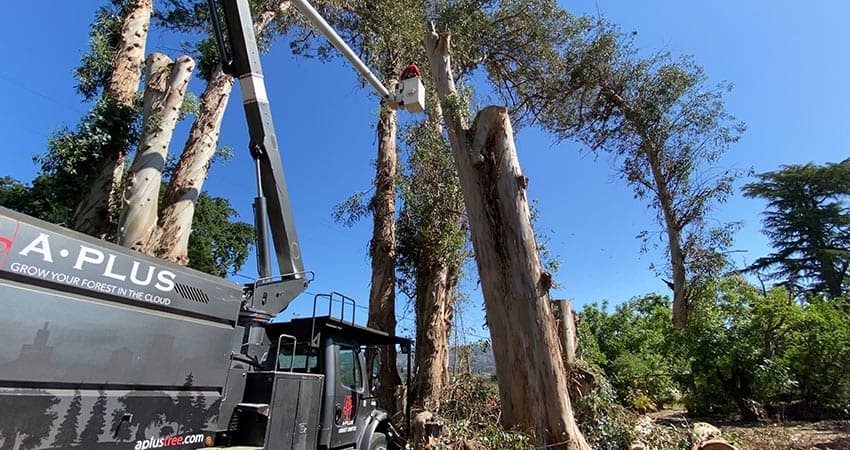
Removal becomes the sound management decision when the trajectory stops improving. Consider it once dieback exceeds roughly half the canopy, when decline continues across two or three seasons under good care, or when a young tree of a highly susceptible species collapses acutely.
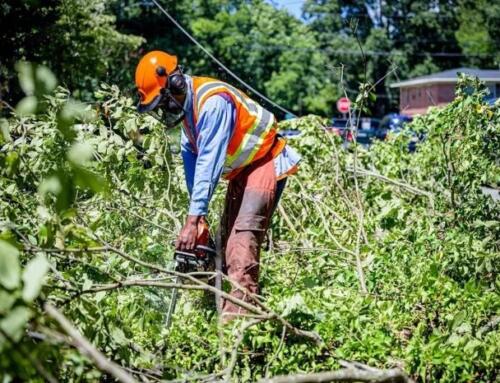
Portfolio properties face an added calculation, since a declining tree in a courtyard or parking area occupies space, consumes maintenance budget, and delays a replacement that establishes faster the sooner it goes in. Scheduling professional tree removal while the trunk and limbs remain structurally sound costs less and carries far less risk than waiting for the same work under emergency conditions.
When Verticillium Wilt Becomes a Safety Risk
Disease diagnosis and tree risk assessment answer separate questions. Diagnosis asks what is wrong with the tree. Risk assessment asks what happens if part of it fails, and where. Location drives the urgency more than the diagnosis does, since a declining tree in an open lawn threatens far less than the same tree over a walkway.
Call for prompt professional evaluation when you see:
- Large dead limbs overhead, or branches hanging partially detached
- Rapid canopy loss across a single season
- Dieback above driveways, sidewalks, roads, parking areas, play structures, or building entries
Dead wood keeps its own schedule. Limbs from a declining tree come down in ordinary wind, well before any storm arrives.
The Fungus Outlasts the Tree: Managing Verticillium Wilt Across a Property
Removing an infected tree removes the symptom. The fungus persists in the soil as microsclerotia, dense resting structures that survive 10 years or longer with no host present until susceptible roots grow nearby. Managing the disease therefore means managing the ground as well as the tree standing in it.
Limit the Movement of Infested Soil and Plant Debris
Soil is the primary vehicle. Avoid moving it from around a diseased tree to other parts of the property, clean equipment before working elsewhere, and rinse tracked dirt off boots and tires when leaving a known infected area. A contaminated shovel travels farther in one afternoon than the fungus would on its own in a decade.
Wood and debris from a diagnosed tree require a separate plan. Keep suspected infected material apart from general green waste and handle it according to the confirmed diagnosis and local disposal requirements, which vary between jurisdictions. Chipping, composting, and hauling decisions follow that guidance, not convenience.
Choose Resistant Replacements and Build Greater Species Diversity
Replanting the same species into the same ground repeats the problem. When planting a replacement tree, choose from the non-host groups where possible, meaning conifers, palms, and other monocots, or from the resistant broadleaf species listed earlier. Diversity across the wider property matters as much as any single choice, because a courtyard planted entirely in maples gives the fungus a continuous path from one root system to the next.
Solarization comes up regularly, and its usefulness depends on specifics. The method needs clear plastic over moist soil for four to six weeks during a sustained stretch of hot, sunny weather. Results vary with climate, seasonal timing, soil type, aspect, and how carefully the sheeting is maintained. Heat penetration also falls off with depth, so solarization suits a cleared planting bed far better than the root zone of an established tree. Whether it fits your property is a site-by-site question for your arborist.
Map and Monitor At-Risk Trees Across Larger Properties
Scale changes the problem. An HOA, apartment community, commercial campus, or municipal corridor may hold dozens of susceptible trees, and tracking which showed symptoms in which year becomes impossible from memory or scattered work orders.
A tree inventory solves that. ArborPlus records species, location, condition, and history for every tree in a portfolio, so symptoms, maintenance, removals, replacement plantings, and follow-up inspections live in one place. Patterns surface at that scale. Three declining maples along one irrigation line reveal something that three separate service calls never would.
The Bottom Line on Verticillium Wilt
Verticillium wilt earns a careful response, not an urgent one. One-sided wilting and streaked sapwood point toward it, a laboratory confirms it, and no product cures it. What genuinely helps is steady water, proper mulch, restrained fertilization, clean pruning tools, and honest observation across several seasons, because the tree’s own defenses do the real work.
Think past the individual tree as well. The soil stays infested for a decade or more, which makes resistant replacements, species diversity, and good records the difference between one lost maple and a slow pattern of losses. If a tree on your property is declining and you are unsure whether the symptoms add up, an arborist evaluation is the right next step.
Frequently Asked Questions About Verticillium Wilt
Are Conifers Susceptible to Verticillium Wilt?
No. Conifers are non-hosts and do not develop verticillium wilt. Pines, firs, spruces, cedars, and redwoods are all safe, along with palms, bamboo, and ornamental grasses.
Can Verticillium Wilt Spread From One Tree to Another?
Yes, through soil, root contact and root grafts between neighboring trees, and contaminated pruning tools or plant material. Airborne spread between trees is not a meaningful pathway.
Can Verticillium Wilt Spread to My Vegetable Garden?
Yes. The same fungus infects tomatoes, potatoes, eggplant, peppers, and strawberries. Avoid siting susceptible vegetable beds in soil where an infected tree previously grew.
Is Verticillium Wilt Harmful to People or Pets?
No. Verticillium is a plant pathogen with no effect on human or animal health. Fruit from an infected tree remains safe to eat, though yields often drop.
Get a Free Tree Assessment — No Obligation
Tell us about your tree. One of our ISA Certified Arborists will review your situation and get back to you within 24 hours.