
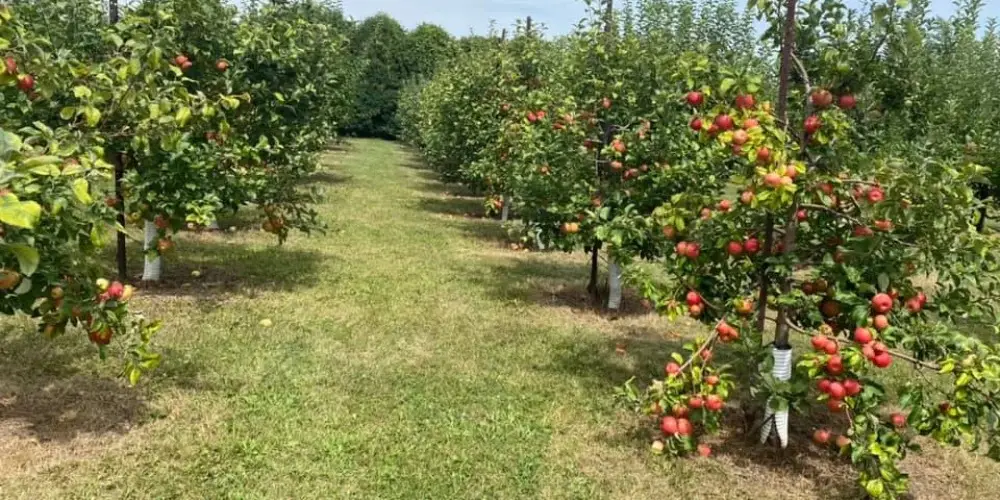
If you have a fruit tree in your yard, you already know how rewarding it can be, the blossoms in spring, the shade in summer, and the satisfaction of seeing fruit develop. You may also know how quickly that beauty can turn into a mess when too much fruit starts dropping onto your driveway, patio, or lawn.
Proper fruit tree care can make a big difference. With the right pruning approach and some seasonal attention, your tree can stay healthy and productive without taking over your outdoor space.
This guide explains why fruit reduction matters, how and when to prune, and what to do when the issue goes beyond routine maintenance.
Why Prune Fruit Trees for Health and Cleanliness
A lot of homeowners think of pruning as something you do to make a tree look neater. With fruit trees, pruning also supports the tree’s health, reduces excess fruit, and helps keep your property safer and easier to maintain. For homeowners thinking more broadly about tree pruning and trimming, fruit trees are a good example of how thoughtful pruning improves both appearance and long-term performance.
Common Issues From Over-Fruiting
When a fruit tree sets more fruit than it can support, the strain shows up in several ways. Branches can bend under the weight, split at the attachment point, or break outright. In some cases, a heavy limb fails with very little warning, which can damage nearby structures and leave the tree open to decay and disease.
Too much fruit also creates problems on the ground. Fallen fruit attracts wasps, rats, and fruit flies. As it breaks down, it can support fungal and bacterial issues around the base of the tree. At the same time, the tree has to spend so much energy on that oversized crop that other parts of its health can suffer, including root growth, defense, and structural development.
Good fruit tree care means addressing those issues early, before the yard is already covered in soft, rotting fruit.
Key Benefits of Fruit Reduction Techniques
When fruit production is brought under control, the tree usually responds well. Fewer fruits competing for the same water, nutrients, and sunlight often means larger fruit, better flavor, and more even ripening. The tree also tends to stay stronger structurally, while pest and disease pressure can become easier to manage.
There is also a practical benefit that matters to most homeowners. Patios, walkways, and driveways stay cleaner, cleanup takes less time, and the tree becomes easier to live with.
The Difference Between Orchard Farming and Urban Tree Care
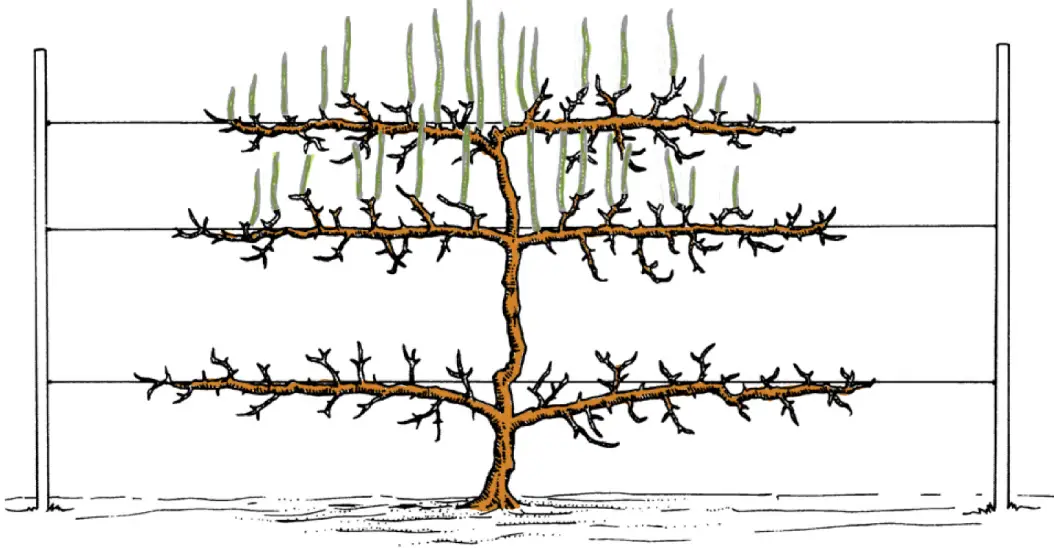
Commercial orchard growers usually manage trees for maximum production. Their systems are built around yield, harvest timing, sprays, and large-scale cleanup. That is very different from caring for a fruit tree in a residential yard.
In an urban landscape, the priorities are not the same. Your tree may be growing near your home, your neighbor’s fence, parked cars, or utility lines. The goal is not to get every possible fruit from the tree. The goal is to keep it healthy, attractive, and manageable, while still enjoying the fruit it produces.
That difference is important because the best care plan for a home fruit tree is usually centered on balance rather than maximum output.
Not sure if your tree needs professional attention?
A Plus Tree’s ISA Certified Arborists serve homeowners across the West Coast. A free assessment takes 15 minutes and gives you a clear answer.
Understanding Fruit Tree Growth Stages
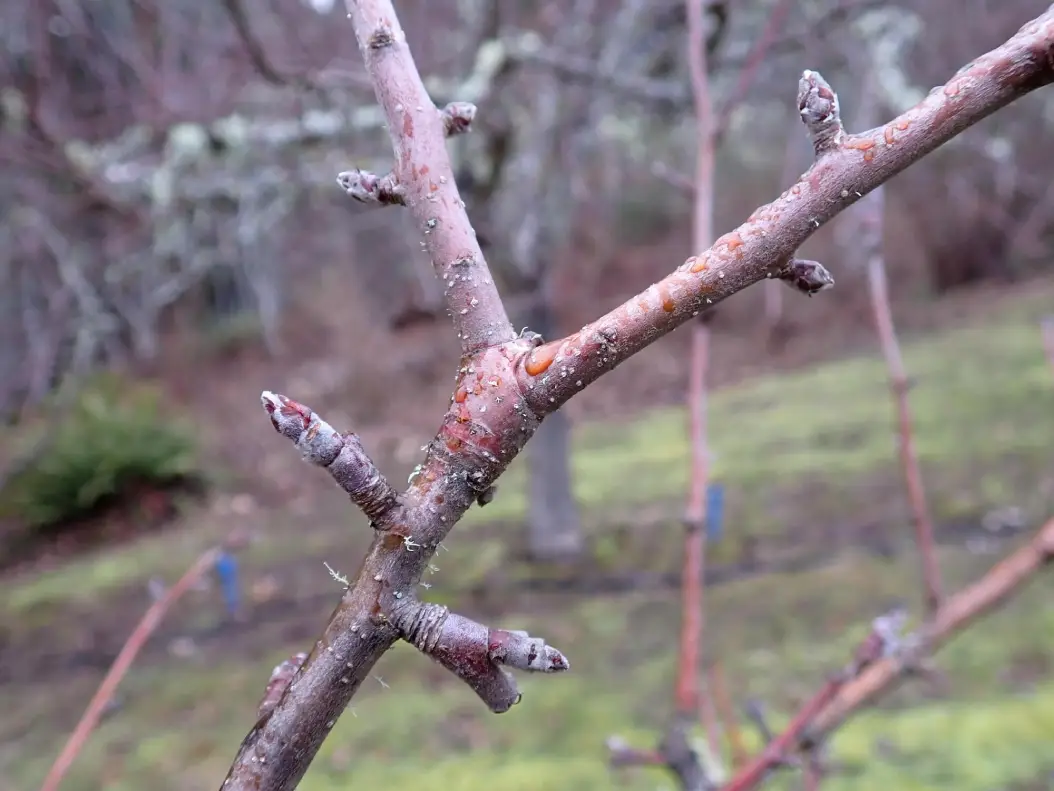
A fruit tree does not need the same care at every point in its life. The right approach depends a lot on the tree’s age and development. Knowing what stage your tree is in helps you make better pruning decisions and avoid mistakes that can affect it for years.
Saplings (1 to 4 Years): Establishment Phase
In the first few years, a young fruit tree is focused on building roots and establishing structure. If it begins to flower, it is usually best to remove most or all of those flowers. That can feel disappointing, though letting a young tree put too much energy into fruit too early can slow its development.
At this stage, pruning should be light and purposeful. The main goal is to create a strong scaffold, a stable framework of well-spaced branches that can support the tree later on. Remove crossing branches, guide growth outward, and avoid letting the canopy become crowded too soon. Many of the same fundamentals also apply to best practices for newly planted trees, especially during the first few years of establishment.
Water matters a lot during this phase, and so does restraint with fertilizer. Too much nitrogen can push weak, overly fast growth when what the tree really needs is steady, durable structure.
Adolescent Trees (4 to 10 Years): Training and Structural Forming
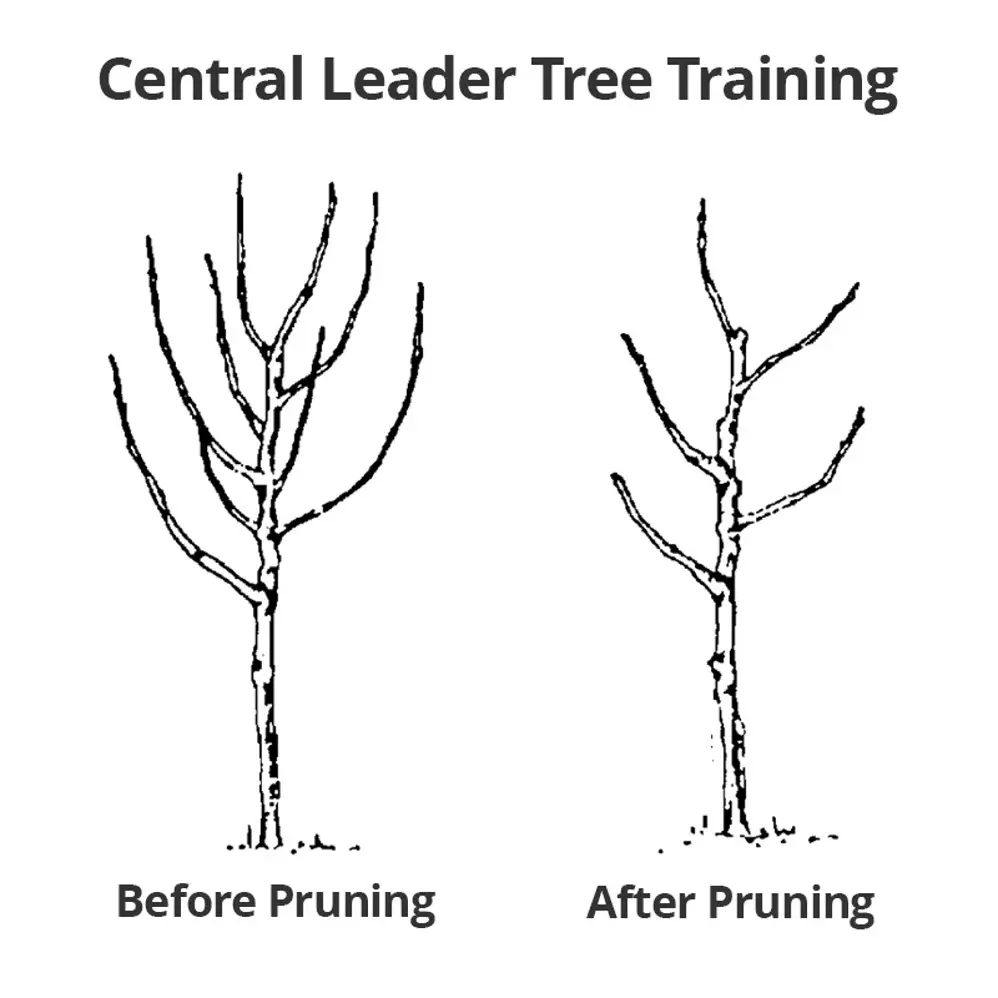
This is the period when the tree begins taking on its long-term form. Small structural issues can become big ones if they are ignored. Competing leaders, rubbing limbs, narrow branch angles, and dense growth are all easier to correct now than they will be later.
The main focus during this stage is opening the canopy, improving branch spacing, and managing the overall size of the tree while the wood is still relatively easy to work with. If the tree is near a roofline, fence, or overhead utility area, this is the time to guide it in a better direction.
Decisions made here often shape how manageable the tree will be for the next decade or more.
Mature Trees (10+ Years): Maintenance and Productivity Management
Once a fruit tree is mature, the work becomes less about building structure and more about maintaining balance. Annual pruning helps remove dead, diseased, and crossing branches, while also managing size and renewing older wood that is no longer as productive.
This is also the stage where fruit-load management becomes more important. A mature apple or pear can set an enormous crop in a strong season. Without some combination of reduction pruning and hand thinning, the weight alone can start to stress the branch structure.
A useful rule of thumb is to avoid removing more than 25 to 30 percent of the canopy in one season. If the tree is overgrown, gradual correction over two or three years is usually safer than one aggressive pruning job.
Essential Care: Soil, Water, and Environment
Pruning matters, but it is only one part of fruit tree care. The conditions around the tree, including sunlight, water, soil, and airflow, play a major role in how well the tree grows and how much stress it can handle.
Sunlight Requirements for Tree Health
Most fruit trees need at least six to eight hours of direct sunlight each day. Without enough sun, fruit production can drop, the canopy can become stretched and crowded, and disease pressure often increases.
Dense canopies also hold moisture longer, which makes fungal issues like powdery mildew and brown rot more likely. Regular pruning helps here too, because opening the canopy improves light penetration and air movement throughout the tree.
Water Management for Urban Trees
Established fruit trees generally do better with deep, infrequent watering than with shallow irrigation every few days. Deep watering encourages the roots to grow farther into the soil, where moisture tends to be more stable.
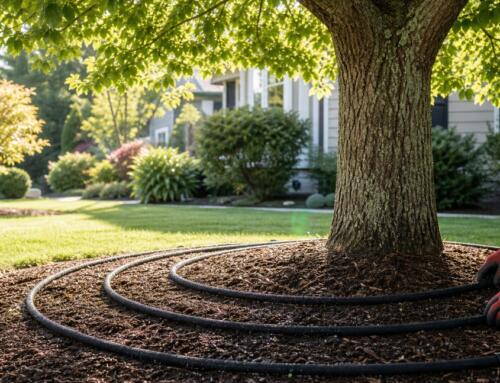
A three- to four-inch layer of mulch around the root zone can help retain moisture and moderate soil temperature, but keeping the mulch at least a few inches away from the trunk matters just as much. Piling mulch against the trunk can create its own problems over time.
During long dry periods, deep watering is one of the best ways to help a fruit tree carry a crop without becoming overly stressed or dropping fruit too early.
Nutrient Balance: Fertilizing for Health vs. Excess Growth
It is easy to assume that more fertilizer will mean a healthier tree, though that is not always true. Excess nitrogen often pushes leafy growth at the expense of fruiting and can lead to softer, weaker wood.
A soil test is the best place to start if you are unsure what the tree actually needs. In many home landscapes, a modest balanced fertilizer application in early spring is enough. If the tree is growing steadily and the leaves look healthy, heavy feeding may do more harm than good. For trees that do need support, a targeted approach to tree fertilization usually makes more sense than routine overfeeding.
Pruning Techniques That Reduce Fruit Load
Knowing how to cut is just as important as knowing when to cut. The type of pruning you do will affect how the tree responds, not only this season, but in future years as well.
Heading vs. Thinning Cuts
A heading cut shortens a branch back to a bud or smaller side branch. That usually stimulates new growth below the cut, which can make the canopy denser over time.
A thinning cut removes the entire branch back to its point of origin. This opens the canopy, improves airflow, and reduces the number of fruiting sites without creating the same kind of vigorous regrowth.
For fruit reduction, thinning cuts are usually the more useful tool. They reduce overcrowding and help manage future fruit production in a steadier, more controlled way.
Summer Pruning for Fruit Suppression
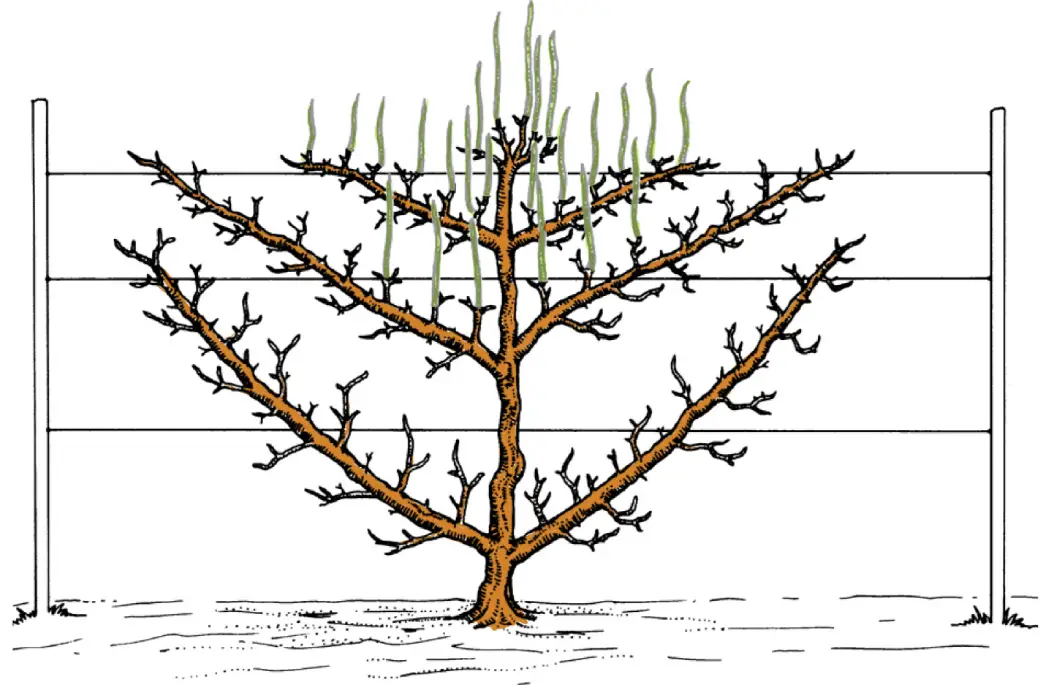
Summer pruning, usually done between June and August, can help slow the tree down. Because the tree is actively growing at that time, pruning has a dwarfing effect on the growth of apple trees rather than the invigorating effect more often associated with dormant-season pruning.
This makes summer pruning especially helpful for trees that have been over-producing for several seasons. It is also a good time to remove water sprouts, those tall upright shoots that often grow from major limbs and rarely contribute much of value.
Structural Pruning: Reducing Low-Hanging and Heavy Limbs
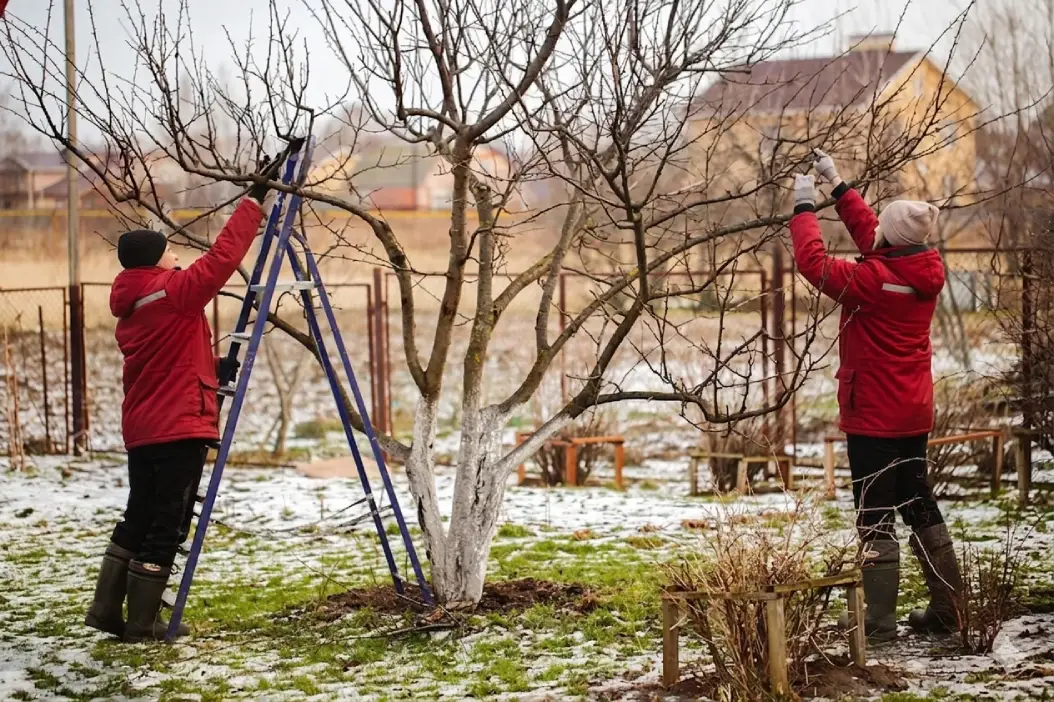
Low branches that hang over a driveway, patio, or walkway tend to create the most obvious mess because they drop fruit exactly where people walk, sit, or park. Raising or reducing those limbs can make a noticeable difference in how usable the space feels.
It is also worth paying attention to branch attachments. Limbs with narrow V-shaped unions are generally weaker than branches with broader U-shaped attachments. Under a heavy crop, those weak unions are often where failures happen first.
If a branch is large, heavy, or positioned over something important, it is smart to involve a certified arborist before making major cuts. Homeowners who are unsure about timing can also review when to prune trees and general pruning dos and don’ts before taking action.
Seasonal Pruning Guidelines by Fruit Type
Timing matters with fruit trees, and it is not the same for every species. Pruning at the wrong time can remove fruiting wood you wanted to keep or increase the chance of disease entering fresh cuts.
Apples and Pears
Apples and pears are usually pruned in late winter, often between February and early March, before growth starts again. These trees produce much of their fruit on spurs, which are short, older fruiting shoots. Those spurs should be managed selectively, not removed across the canopy without a plan.
Heavy fall pruning is usually not a good idea because it can encourage tender new growth that is more vulnerable going into colder weather.
Cherries and Plums
Cherries are often best pruned in mid-summer, after harvest, when conditions are warmer and drier. That timing helps reduce the risk of problems like silver leaf disease and bacterial canker entering pruning wounds.
Plums are also often better pruned in late summer. In both cases, clean tools between trees so disease is not transferred as you work.
Peaches, Nectarines, and Apricots
These species fruit on one-year-old wood, so annual pruning tends to be more involved. If older wood is left in place too long, fruit production shifts outward onto longer, weaker branches that are harder to manage.
Late winter, as buds begin to swell, is often the best time to prune. For apricots in particular, dry weather matters because wet conditions can increase the risk of infection through fresh wounds.
Fruit Thinning: When Pruning Is Not Enough
Even a well-pruned tree can still set more fruit than it should, especially in a strong pollination year. When that happens, pruning alone may not be enough, and hand thinning becomes part of the plan.
Why Thinning Improves Fruit Quality and Tree Safety
Thinning removes some of the developing fruit while it is still small, so the tree does not have to support more than it can handle. The fruit that remains often grows larger, ripens more evenly, and develops better flavor.
It also helps protect the tree. Branches carrying less weight are less likely to split, and the tree is less likely to fall into a cycle of heavy production one year followed by very little fruit the next.
Timing and Spacing Tips for Manual Thinning
The best time to thin is usually after the tree’s natural June drop, once it becomes clear how much fruit is still hanging on. General spacing guidelines include:
- Apples and pears: one fruit per spur cluster, with 6 to 8 inches between fruits
- Peaches and nectarines: 6 to 8 inches between fruits
- Plums: 3 to 4 inches between fruits
- Cherries: often do not require thinning, though heavy clusters can sometimes be reduced
It helps to work branch by branch and step back from time to time to look at the whole canopy. If a limb still looks heavily loaded, it probably is.
Pest and Disease Management for Cleaner Trees
Even healthy fruit trees can run into pest and disease problems. The goal is to catch issues early, reduce stress where you can, and keep small problems from turning into larger ones.
Identifying Common Pests
Codling moth is a common issue for apples and pears, and pheromone traps can help you monitor adult activity in spring. Peach twig borer affects stone fruit and may show up as wilting shoot tips early on. Aphids often gather on new growth, especially underneath leaves, while scale insects can look like small bumps attached to bark.
One of the most useful habits for a homeowner is slowing down and looking closely. A quick walk around the tree every week or two often tells you much more than reacting after damage becomes obvious.
Disease Prevention
Sanitation goes a long way with fruit trees. Remove mummified fruit that stays on the tree through winter, and clear fallen fruit and leaves from the ground when disease has been an issue.
If you are dealing with fire blight on apples or pears, watch for the hooked, blackened shoot tips often called a shepherd’s crook. Infected wood should be cut back below visible damage, and tools should be sterilized between cuts to avoid spreading the disease.
When to Call a Certified Arborist for Treatment
It is a good idea to call a certified arborist when you see major dieback, oozing cankers on larger limbs, fast-moving pest damage, or a mix of symptoms that do not point to one simple cause.
When several problems show up at once, there is often an underlying stress issue behind them. A professional assessment can help you avoid guessing and keep a manageable problem from becoming a more expensive one. In cases like that, broader tree health care may be just as important as pruning alone.
Maintenance Schedule for Clean, Productive Trees
Fruit tree care works best when it is approached as a routine rather than a one-time project. A little attention at the right time of year is usually more effective and easier than trying to correct everything at once.
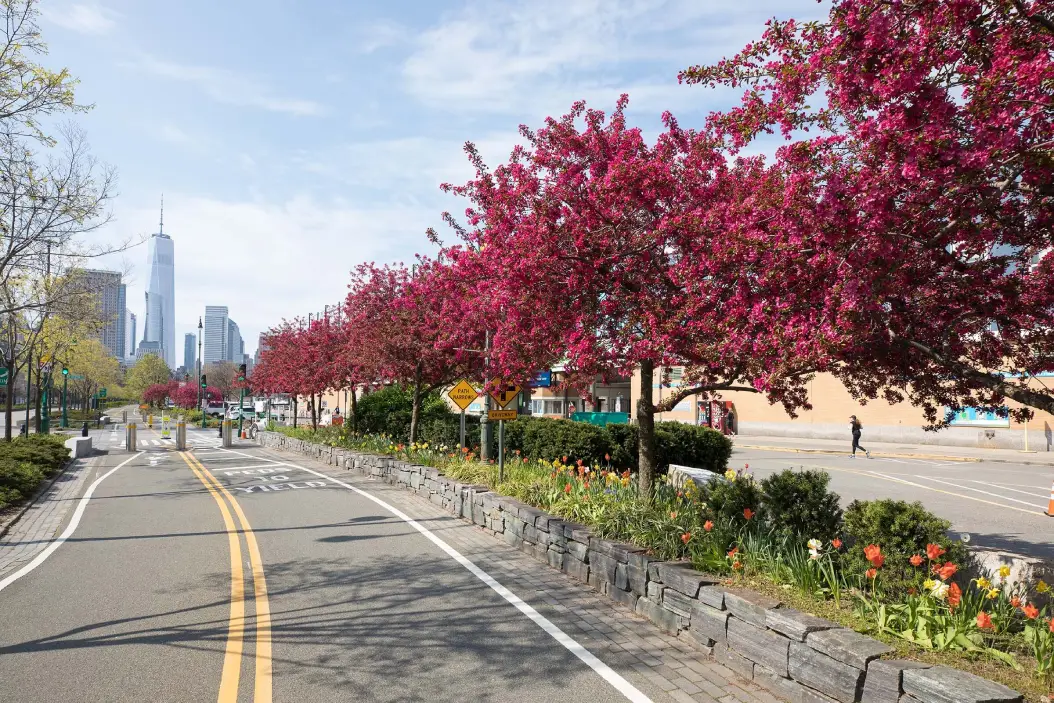
Seasonal Task Summary Table
| Season | Primary Tasks |
| Spring | Pest monitoring, dormant oil if needed, watering support, disease watch during bloom, thinning after June drop |
| Summer | Finish thinning, summer pruning, deep watering during dry spells, remove fallen fruit promptly |
| Fall | Remove fallen fruit and leaves, clean up debris around the base |
| Winter | Dormant pruning, tool cleaning, soil improvement if needed |
Spring Tasks (Bloom and Bud Break)
Spring is often the busiest season for observation. Set out codling moth traps before bloom, apply dormant oil before bud break if scale or mites were a problem the year before, and watch bloom and early growth for disease symptoms.
After the tree goes through June drop, begin thinning if the crop still looks heavy. In many years, that one step makes the biggest practical difference.
Summer Tasks (Growth Control and Thinning)
Summer is the time to finish thinning, remove water sprouts, and manage growth that is making the canopy too dense or too tall. It is also the season when watering matters most, especially during dry stretches.
Prompt cleanup matters too. Fallen fruit left under the tree for long periods tends to attract pests and increase disease pressure.
Fall and Winter Tasks (Dormancy and Sanitation)
In fall, remove dropped fruit and rake leaves, especially if disease was present during the season. Once the tree is dormant, winter becomes the main pruning season for many deciduous fruit trees.
This is also a good time to clean and sharpen tools, take a closer look at the tree’s structure, and plan lighter corrective work before spring growth begins again.
A Smarter Approach to Cleaner, Healthier Fruit Trees
A fruit tree should make your yard better, not harder to manage. The goal is to help it produce at a level that makes sense for its health, its structure, and the space around it.
In most yards, that comes down to a few steady habits, prune with structure in mind, thin fruit when the crop is too heavy, water deeply during dry periods, and stay on top of seasonal cleanup. Those smaller, timely decisions usually do more for a tree than one major correction after years of neglect.
If you are dealing with a mature tree that drops fruit over walkways, carries limbs that already look strained, or has become more work than it should be, a professional assessment can help you reset the balance. In many cases, the best next step is to have a certified arborist guide the tree back to a healthier, more manageable form.
FAQs About Fruit Tree Care and Pruning
What Is Fruit-Reduction Pruning?
Fruit-reduction pruning is the selective removal of branches to lower the number of fruiting sites. It helps the tree support a more manageable crop with less stress, less mess, and less structural risk.
How Does Pruning Prevent Fruit Mess and Pests?
Pruning reduces overcrowded fruiting wood and helps keep fruit from hanging over walkways, patios, and driveways. Less fallen fruit usually means fewer pests, less decay, and a cleaner yard.
What Happens if I Do Not Prune My Fruit Tree?
Without regular pruning, the canopy often becomes dense and harder to manage. Fruit shifts toward weaker outer growth, airflow declines, and both cleanup needs and structural risk usually increase.
Will Professional Pruning Hurt Next Season’s Harvest?
Light maintenance pruning usually does not have a major effect on the next crop. Heavier reduction pruning may reduce volume for a season, though it often improves quality and supports long-term health.
Get a Free Tree Assessment — No Obligation
Tell us about your tree. One of our ISA Certified Arborists will review your situation and get back to you within 24 hours.