
Maybe there’s a corner of your yard that stays soggy for days after every rain, or a low spot where the lawn stays damp well into spring. If you want to plant there, consider trees that like wet soil. The right choice depends on how wet the spot gets and for how long, your local climate, and how much room the tree will have once it’s fully grown.
Which Trees Grow Well in Wet Soil?
Bald cypress, river birch, swamp white oak, red maple, and black tupelo are among the best trees for wet areas. Most handle soil that stays moist or floods for part of the year, and only a few tolerate long periods of standing water.
For help choosing and planting the right species, see our tree planting and transplanting services.
Wet Soil Tree Comparison
| Tree | Moisture tolerance | Sunlight | Mature height and spread (feet) | USDA zones | Main limitation |
| Bald cypress | Moist to wet; tolerates prolonged flooding | Full sun | 50 to 70 tall, 20 to 45 wide | 4 to 9 | Large size; may form knees near water |
| River birch | Moist to wet; tolerates periodic flooding | Full sun to part shade | 40 to 70 tall, 30 to 60 wide | 4 to 9 | Yellow leaves in alkaline soil |
| Swamp white oak | Moist to wet; tolerates temporary flooding and drier spells | Full sun | 50 to 60 tall and wide | 4 to 8 | Prefers acidic soil; needs substantial space |
| Red maple | Moist to wet; flood tolerance varies by cultivar | Full sun to part shade | 40 to 70 tall, 30 to 50 wide | 3 to 9 | Yellow leaves in alkaline soil |
| Black tupelo | Moist to wet; tolerates occasional flooding | Full sun to part shade | 30 to 50 tall, 20 to 30 wide | 3 to 9 | Difficult to transplant; avoid alkaline soil |
| Dawn redwood | Moist to wet; best where soil drains | Full sun | 70 to 100 tall, 15 to 25 wide | 5 to 8 | Very large; needs ample planting space |
| American sycamore | Moist to wet; tolerates wet and compacted soil | Full sun to part shade | 75 to 100 tall, similar spread | 4 to 9 | Massive size, heavy litter, anthracnose |
| American hornbeam | Moist; tolerates occasional flooding | Full sun to shade | 20 to 30 tall and wide | 3 to 9 | Slow growth; poor fit for alkaline soil |
| Sweetbay magnolia | Moist to wet; tolerates swampy sites | Full sun to part shade | 10 to 35 tall and wide | 5 to 10 | Deciduous in colder climates |
| Atlantic white cedar | Moist to wet; tolerates occasional flooding | Full sun | 40 to 50 tall, 10 to 20 wide | 4 to 8 | Needs acidic soil; little drought tolerance |
Ranges are typical for each species and vary with cultivar, climate, and site.
Not sure if your tree needs professional attention?
A Plus Tree’s ISA Certified Arborists serve homeowners across the West Coast. A free assessment takes 15 minutes and gives you a clear answer.
Understand How Wet Your Planting Site Is
Wet soil covers a wide range of conditions. Before you compare species, decide which of these three situations best describes your planting spot.
Moist Soil That Still Drains
Some soil stays damp most of the year without staying waterlogged. Think of it like a wrung-out sponge. It holds water, but it still has air spaces that roots need. Puddles soak in soon after rain, and the ground rarely feels squishy underfoot. Most trees in this guide, including red maple, black tupelo, and American hornbeam, are most likely to do well here.
Seasonally Saturated Soil and Occasional Flooding
Other sites stay soggy for weeks during the rainy season, then dry out. Timing, duration, and frequency all matter, and a site that floods every year narrows your options. Here is what this looks like in real life: a low corner of the yard holds water after winter rains, then turns hard and dry by late summer. Swamp white oak is one of the better matches for that cycle, since it tolerates both temporary flooding and drier periods.
Prolonged Standing Water
Prolonged saturation reduces the oxygen available to roots, so the range of suitable trees narrows considerably. Iowa State University Extension’s guide to trees for wet soils notes that most trees and shrubs don’t like wet soils. If your site holds standing water for much of the year, have it assessed before planting. The cause may be drainage, grading, or a high water table that a tree alone won’t fix.
10 Trees That Tolerate Wet Soil
Each profile below explains why the tree might suit your property and what could rule it out. Use the comparison table for quick size, sun, and zone details.
1. Bald Cypress
Bald cypress (Taxodium distichum) is the strongest choice on this list for truly wet ground. It grows naturally in southern swamps, and U.S. Forest Service research on baldcypress planted on a flood-prone site describes it as a good species where prolonged flooding is common and few others survive. Although it has needles, it’s deciduous, turning rusty orange before dropping its foliage each fall.
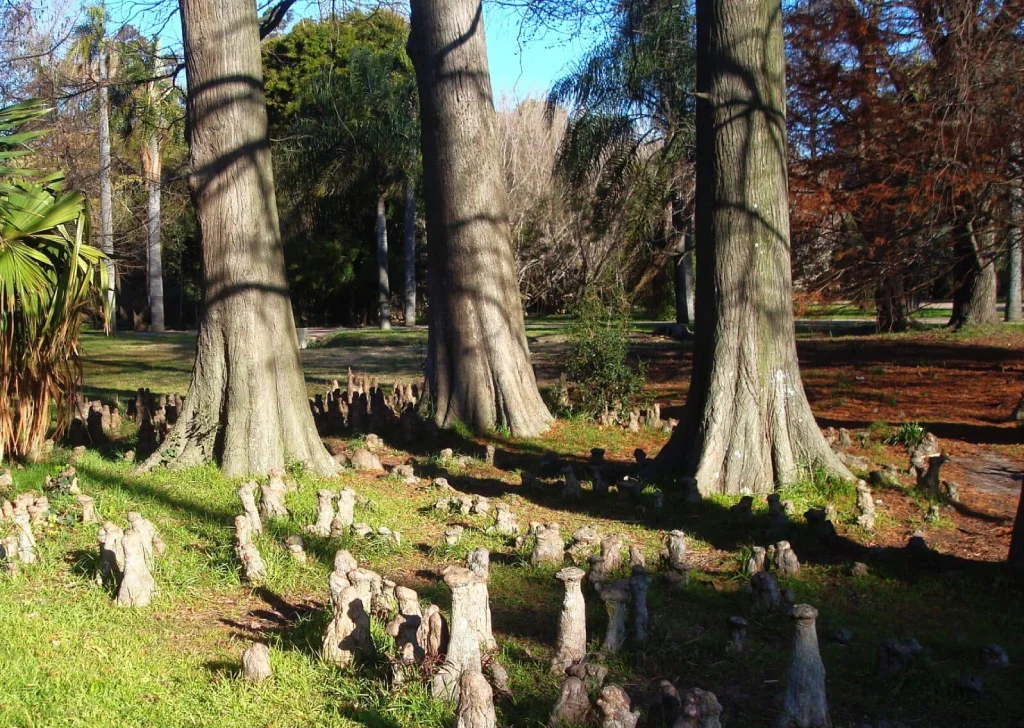
Plan for a tall, pyramidal tree that can reach 70 feet. In wet sites, it may also produce knees, woody bumps that rise from the roots. Their purpose is still debated, and they can make mowing difficult.
2. River Birch
River birch (Betula nigra) is known for its reddish brown bark, which peels back to reveal lighter layers underneath and adds interest in every season. It grows naturally along streams and floodplains, so it handles moist soil and periodic flooding well. It performs best in acidic soil, and its leaves can turn yellow in alkaline soil.
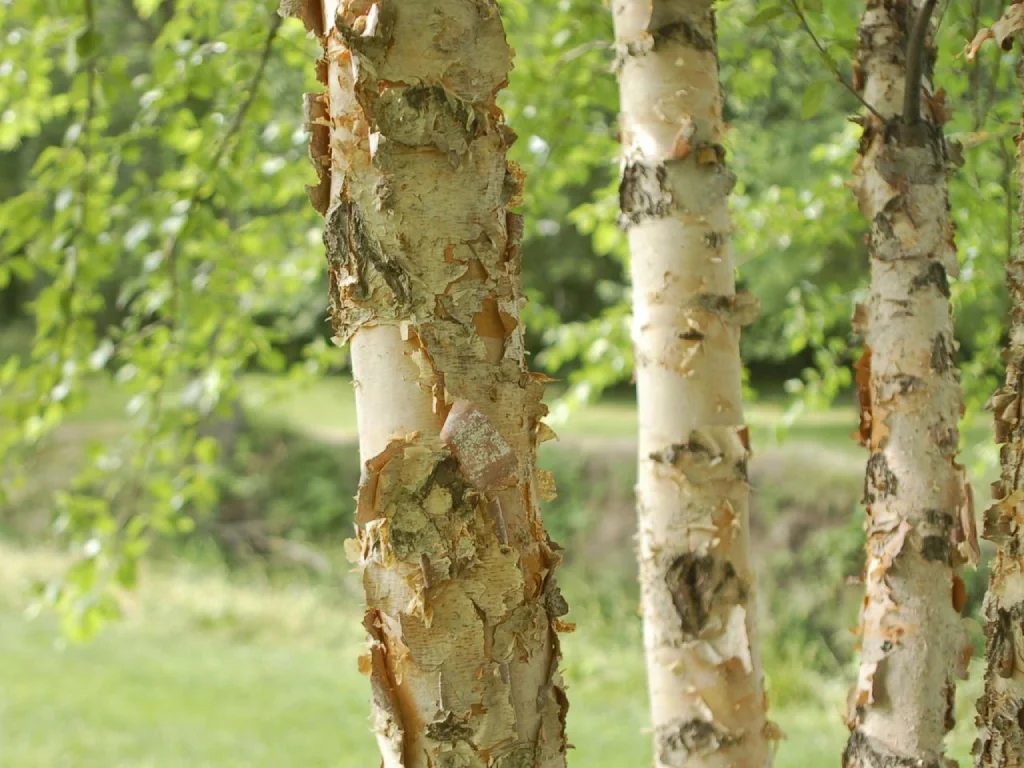
Nurseries sell both single-trunk and multistem forms. Multistem trees spread wider at ground level, so leave extra space near walks and patios, and plan for a tree up to 70 feet tall.
3. Swamp White Oak
Swamp white oak (Quercus bicolor) is a sturdy shade tree for open, sunny yards with room for a broad canopy up to about 60 feet tall and wide. Despite its name, it isn’t suited to every swampy site. It tolerates temporary flooding and wet soil, and it also handles drier periods better than many wet-site trees. That makes it a good fit for low areas that flood in winter or spring and dry out later. It prefers acidic soil and full sun, and it can be harder to find in nurseries than more common shade trees.
4. Red Maple
Red maple (Acer rubrum) is popular for its red spring flowers and bright fall color. The species grows naturally in both swamps and drier uplands, so wet-site performance varies. Many nursery trees are cultivars selected for form or color, and their flood tolerance differs.
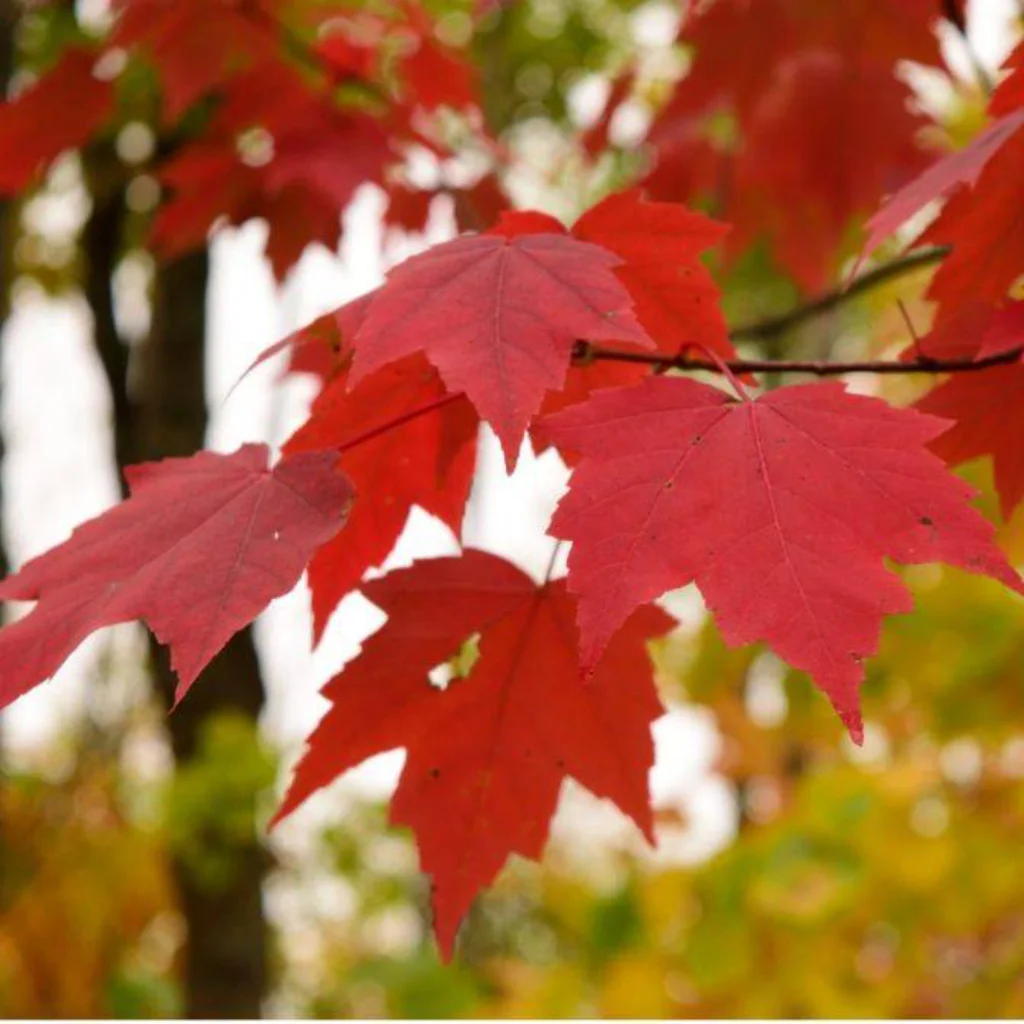
Freeman maples, a red and silver maple hybrid, are often sold next to red maples, so check the label. Ask for the specific cultivar and how it performs on wet sites before buying. Red maple can also develop yellow, chlorotic leaves in alkaline soil.
5. Black Tupelo
Black tupelo (Nyssa sylvatica), also called blackgum, offers glossy summer leaves and showy red, orange, and purple fall color. It tolerates moist to wet soil and occasional flooding, and it prefers acidic soil. Check the scientific name when buying, because common names for tupelos can overlap.
NC State Extension’s black tupelo profile describes tolerance of poorly drained soil and some standing water, but that does not establish suitability for every permanently flooded site.
6. Dawn Redwood
Dawn redwood (Metasequoia glyptostroboides) looks like an evergreen conifer, but it drops its soft needles each fall, much like bald cypress. It’s also one of the largest trees here, reaching 70 to 100 feet tall with a narrow, pyramidal form, so it needs open space well away from buildings and utility lines.
Dawn redwood tolerates wet soil and suits damp low spots, but it grows best in moist soil that still drains. Don’t expect it to handle long periods of standing water the way bald cypress can.
7. American Sycamore
American sycamore (Platanus occidentalis) is a native bottomland tree with striking white, patchy bark. It tolerates wet and compacted soil, but its size limits where it belongs. Clemson Cooperative Extension’s sycamore fact sheet describes a massive tree that can grow 75 to 100 feet tall with a similar or greater spread. Expect leaf, twig, and seed ball litter, plus anthracnose leaf blight in cool, wet springs. London planetree, a hybrid often planted instead, is usually less affected by anthracnose.
8. American Hornbeam
American hornbeam (Carpinus caroliniana), also called musclewood for its smooth, rippled gray bark, is a smaller option at about 20 to 30 feet tall and wide. It grows slowly and handles full sun to fairly deep shade, so it works under taller trees or along a shaded wet edge. It tolerates moist soil and occasional flooding rather than constant saturation, and it doesn’t do well in alkaline soil. Its smaller size helps, but its roots and canopy still need room, so don’t assume it fits tight against a foundation or driveway.
9. Sweetbay Magnolia
Sweetbay magnolia (Magnolia virginiana) is a useful option among flowering trees that like wet soil, particularly where moist, acidic conditions suit it. Its fragrant, creamy white flowers open in late spring and appear sporadically into summer, and its leaves have silvery undersides that flash in the wind.
Unlike most magnolias, it tolerates swampy, boggy sites and prefers consistently moist to wet, acidic soil. Size and foliage vary by region. NC State Extension’s sweetbay magnolia profile notes that it typically grows 10 to 35 feet tall and wide, can be evergreen in the South, and is deciduous in colder climates. Some cultivars hold their leaves farther north, so check the cultivar rather than the species description.
10. Atlantic White Cedar
Atlantic white cedar (Chamaecyparis thyoides) is the only conifer on this list that keeps its foliage year-round, with soft, blue-green, scale-like leaves on a narrow, upright form. It grows naturally in freshwater swamps and bogs near the East Coast and needs moist to wet, acidic soil, ideally sandy or peaty.
It handles wet ground better than most evergreens but has little drought tolerance, so it is a poor match for sites that dry out in summer. The name is misleading, since it isn’t a true cedar, and it is a different tree from western red cedar.
Narrow Your Shortlist by What You Need
Use the comparison table for exact size, sunlight, and moisture tolerance. These pairings can help you decide.
- Shade in an open, sunny area: Swamp white oak and bald cypress are trees that like wet soil and full sun. Both make sense only where a large yard can hold their mature canopies.
- A smaller planting space: American hornbeam and sweetbay magnolia stay smaller than the shade trees. Even so, check the distance to foundations and paving before you commit.
- Showy flowers: Consider sweetbay magnolia when fragrant blooms matter more than a broad shade canopy and the tree suits your local climate.
- Year-round foliage: Atlantic white cedar is the reliable evergreen option but struggles where summers are dry. Sweetbay magnolia keeps its leaves only in milder climates.
Check Climate Soil and Planting Space
A tree that tolerates wet soil still has to fit your climate, soil chemistry, and available space. Check these before you buy.
Regional Climate Native Range and Seasonal Drying
The USDA Plant Hardiness Zone Map is based on average annual extreme minimum winter temperature, so a zone match says nothing about summer heat or dry seasons. That matters in the West. Most trees in this guide are native to eastern North America, and dawn redwood comes from China.
In much of California, Oregon, and Washington, a site that floods in winter may dry out by late summer, which can stress sweetbay magnolia, river birch, and Atlantic white cedar. A local extension office or native plant society can suggest wet-site natives for your area.
Soil pH and Space for Mature Trees
Several of these trees, including river birch, red maple, and swamp white oak, struggle in alkaline soil. If you don’t know your soil’s pH, a soil test before planting can rule out a poor match. Then measure the space. Compare the tree’s mature height and spread with the distance to buildings, pavement, overhead utilities, septic systems, and drainage lines. Root and canopy needs vary by species and site, so no single setback works for every tree.
Before You Choose a Tree
- How long does water stand after heavy rain, and in which season?
- Does the spot dry out in summer?
- How many hours of direct sun does it get?
- Does the tree suit your regional climate, not only your hardiness zone?
- Do you know your soil pH?
- Is there room for the tree’s mature height and spread?
- Are buildings, pavement, utilities, or drainage lines nearby?
If you can’t answer a key question, especially about drainage or nearby infrastructure, have the site evaluated before you buy.
Planting and Caring for Trees in Wet Soil
On wet sites, soil conditions matter more than the calendar. Plant when the soil is workable, not when it is soggy or puddled, even if it is the usual planting season. Our spring tree planting guidance covers timing in more detail, but let actual soil conditions decide.
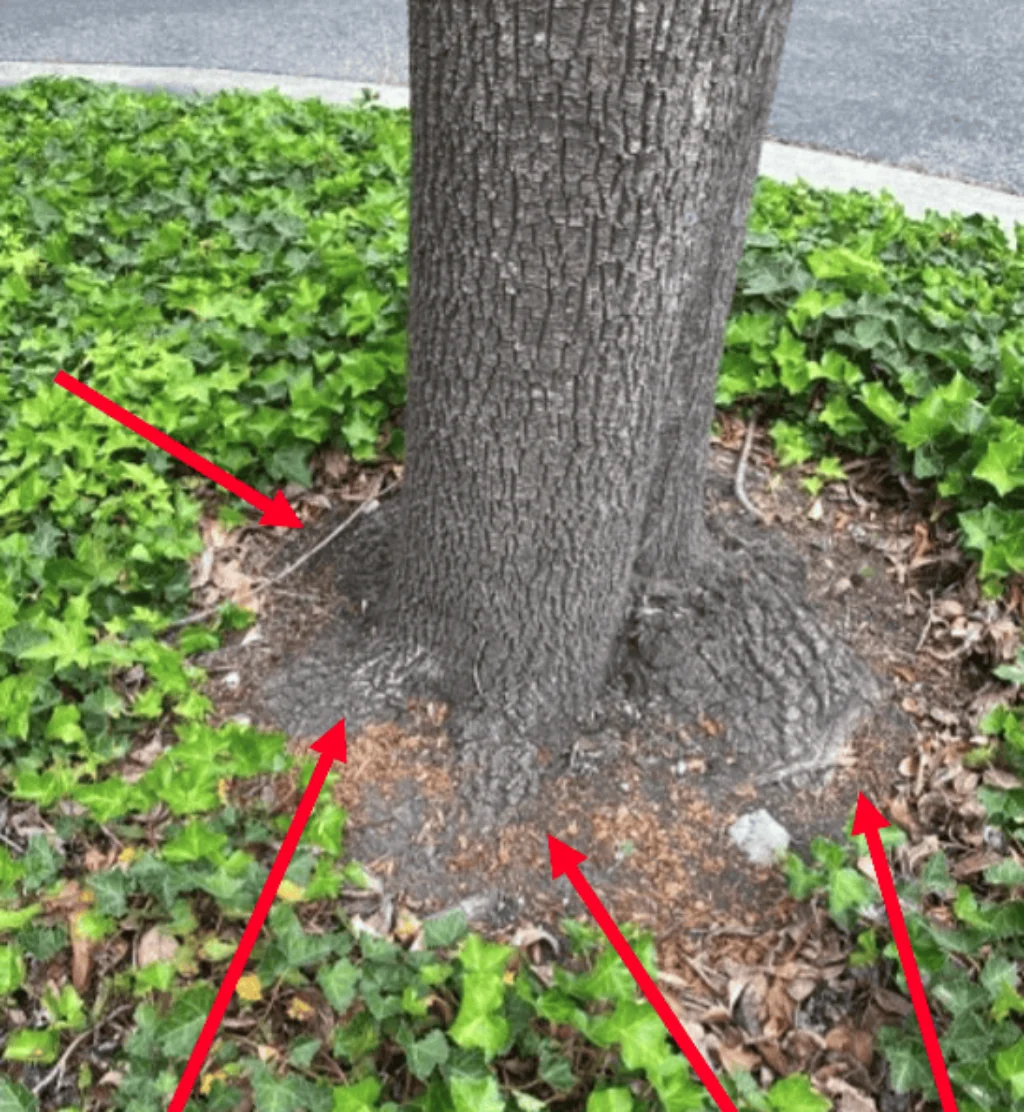
Set the tree so its root flare, where the trunk widens into the main roots, sits at or slightly above the surrounding soil level. In heavy clay, avoid digging a deep, smooth-sided hole and filling it with loose amendments, since that can trap water around the roots. Check root-zone moisture through both wet and dry seasons, and water when needed during establishment. A site that flooded in winter can still become too dry in summer. Leave regrading or drainage work to a professional.
When to Ask an Arborist Before Planting
Consider a professional assessment if water stands for long periods, if trees have already failed in the same spot, or if you are unsure whether there is enough room near buildings, utilities, or drainage systems. It also helps when planting or grading could affect an established tree nearby.
If you are unsure which tree will suit the site, contact us about arborist consulting. An ISA Certified Arborist can assess the conditions and help you decide what to do before planting.
Frequently Asked Questions About Trees That Like Wet Soil
Can Trees Dry Up a Wet Yard?
Trees can help reduce excess soil moisture, but they rarely solve persistent waterlogging on their own. Poor drainage, a high water table, or concentrated runoff may still need assessment and appropriate site improvements.
Which Trees Can Tolerate Standing Water?
Bald cypress tolerates prolonged flooding, while river birch and swamp white oak suit some periodically flooded sites. Match the species to the depth, duration, and season of flooding before planting.
Can You Plant Trees in Wet Clay Soil?
Yes, but clay and saturation aren’t the same thing. Clay can hold moisture without staying waterlogged. Choose a species suited to how long the soil actually stays wet, and avoid planting holes that collect water.
Which Trees Grow Quickly in Wet Soil?
River birch, American sycamore, and dawn redwood are fast growers. Fast growth often comes with a large mature size, so make sure the space can handle the tree’s full height and spread.
Are Bald Cypress and Dawn Redwood Evergreen?
No. Both are deciduous conifers. They have needles and cones like evergreens, but their needles change color in fall and drop for winter. A new set of needles grows back each spring.
Get a Free Tree Assessment — No Obligation
Tell us about your tree. One of our ISA Certified Arborists will review your situation and get back to you within 24 hours.